Skip to content
Nature Observer

Useful articles about nature and the world around us

  • Home

Environmental Hazards

  • Home
  • Environmental Hazards
  • Page 2
The Most Powerful Tsunamis in History
Posted inClimate Environmental Hazards History

The Most Powerful Tsunamis in History

Tsunamis are among the most devastating natural disasters on Earth, capable of destroying entire coastlines within minutes. These massive ocean waves are usually triggered by underwater earthquakes, volcanic eruptions, landslides,…
Posted by DeKa November 25, 2025
Supervolcanoes of Earth and Their Eruptions
Posted inClimate Environmental Hazards Global Challenges

Supervolcanoes of Earth and Their Eruptions

Supervolcanoes are among the most powerful natural forces on the planet, capable of releasing thousands of times more material than typical volcanic eruptions. Unlike ordinary volcanoes, which are often recognized…
Posted by DeKa November 25, 2025
What to Do If a Volcanic Eruption Begins Near You
Posted inBe smart Climate Environmental Hazards

What to Do If a Volcanic Eruption Begins Near You

A volcanic eruption is one of the most dangerous natural events on Earth, capable of releasing ash clouds, lava flows, toxic gases, and fast-moving pyroclastic currents. When an eruption begins…
Posted by DeKa November 25, 2025
Mud Volcanism: A Unique Geological Phenomenon Beneath the Earth’s Surface
Posted inClimate Environmental Hazards Nature

Mud Volcanism: A Unique Geological Phenomenon Beneath the Earth’s Surface

Mud volcanism is a fascinating geological process in which mixtures of water, gases, and fine sediments erupt from the Earth’s subsurface, forming structures that resemble traditional lava volcanoes — but…
Posted by DeKa November 24, 2025
The Laschamp Excursion: When Earth’s Magnetic Field Nearly Collapsed
Posted inBe smart Climate Environmental Hazards

The Laschamp Excursion: When Earth’s Magnetic Field Nearly Collapsed

The Laschamp Excursion was a dramatic geomagnetic event that occurred approximately 42,000 years ago, during which Earth’s magnetic field weakened drastically and temporarily reversed its polarity. Named after the village…
Posted by DeKa November 24, 2025
What Would Happen If Earth’s Magnetic Field Weakened 12 Times Today?
Posted inClimate Environmental Hazards Global Challenges

What Would Happen If Earth’s Magnetic Field Weakened 12 Times Today?

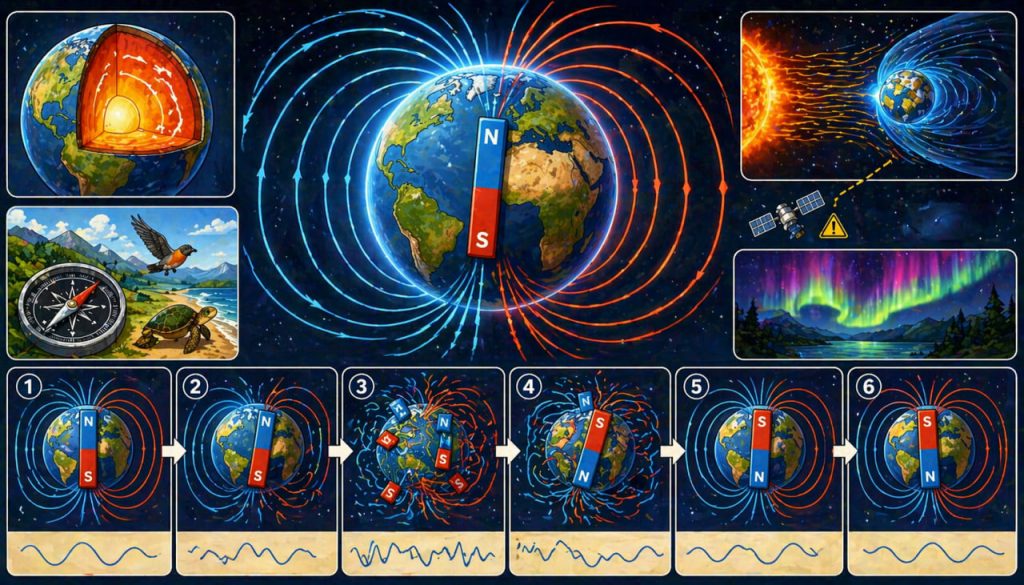
Earth’s magnetic field is an essential shield that protects the planet from solar wind, cosmic radiation, and charged particles from the Sun. It stabilizes the upper atmosphere, helps maintain satellite…
Posted by DeKa November 24, 2025
What Would Happen If Water Met a Rising Mantle Plume Beneath the Mariana Trench?
Posted inClimate Crisis Environmental Hazards

What Would Happen If Water Met a Rising Mantle Plume Beneath the Mariana Trench?

The Mariana Trench is the deepest part of the world’s oceans, plunging nearly 11 kilometers beneath the surface. It lies above a subduction zone where the Pacific Plate dives beneath…
Posted by DeKa November 24, 2025
How to Descend a Mountain Safely and Correctly
Posted inBe smart Environmental Hazards Stay Safe

How to Descend a Mountain Safely and Correctly

Descending a mountain may seem easier than climbing up, but in reality it is one of the most technically demanding and risky parts of any hike. When going downhill, the…
Posted by DeKa November 21, 2025
What to Do If You Get Caught in a Forest Fire
Posted inBe smart Environmental Hazards Stay Safe

What to Do If You Get Caught in a Forest Fire

Finding yourself in a forest fire is one of the most dangerous and stressful situations a person can experience. Wildfires spread quickly, create intense heat, and fill the air with…
Posted by DeKa November 21, 2025
Doomsday Glacier: Why the Thwaites Glacier Threatens Global Sea Levels
Posted inClimate Crisis Environmental Hazards

Doomsday Glacier: Why the Thwaites Glacier Threatens Global Sea Levels

The Thwaites Glacier in West Antarctica — often called the “Doomsday Glacier” — is one of the most critical and unstable ice formations on Earth. Scientists monitor it closely because…
Posted by DeKa November 21, 2025

Posts navigation

Previous page 1 2 3 4 … 17 Next page
Recent Posts
  • Do Unicorns Exist in Nature? Science Behind the Myth
  • Krypton: The Mysterious Noble Gas Hidden in the Air
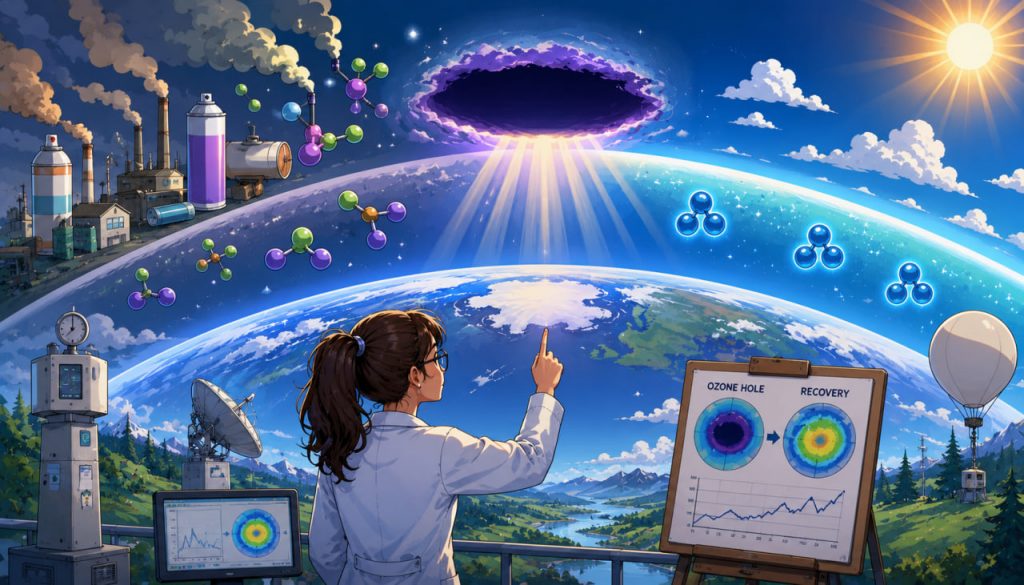
  • The Ozone Hole Over Antarctica: Causes, Consequences, and Recovery Efforts
  • What Happens to Plastic After We Throw It Away?
  • How Can We Solve the Global Waste Problem?
Categories
  • Be smart
  • Climate
  • Crisis
  • Ecology
  • Environmental Hazards
  • Global Challenges
  • Green City
  • Guardians of Nature
  • History
  • Nature
  • News
  • Nourished Future
  • Ocean Secrets
  • Our Planet
  • Pets
  • Stay Safe
  • Tech & Nature
  • Uncategorized
  • What if?
Copyright 2025 — Nature Observer. All rights reserved. Bloghash WordPress Theme
Scroll to Top