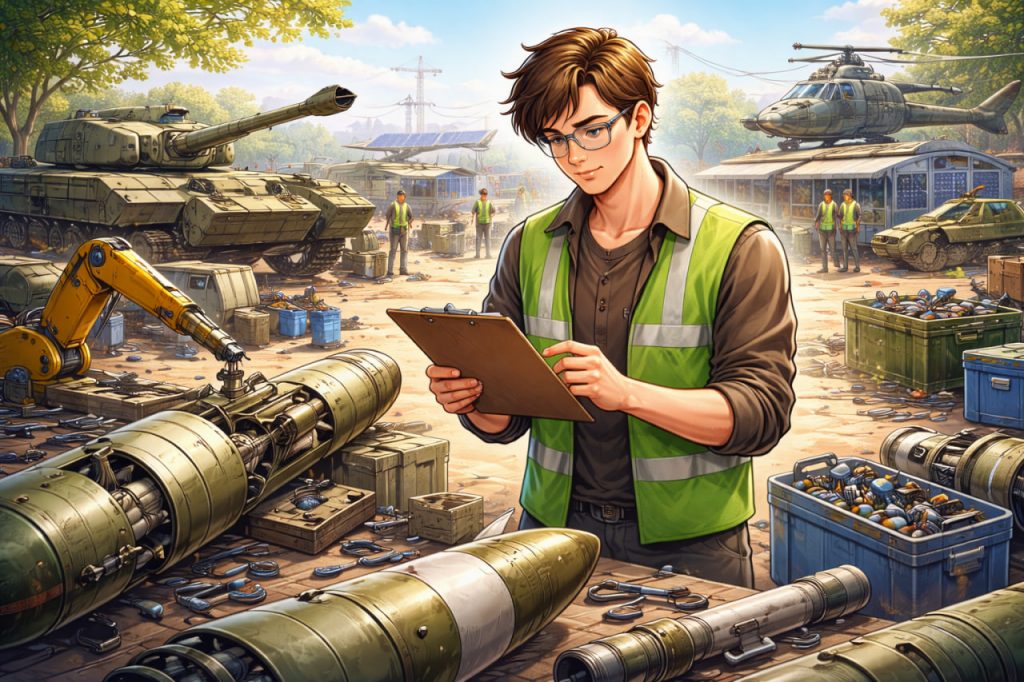
The idea of a world without war raises an immediate and complex question: what happens to the enormous stockpiles of weapons already produced? Modern humanity has spent decades manufacturing conventional arms, heavy equipment, and advanced military technologies, resulting in unprecedented levels of global armament. Simply stopping conflicts would not automatically make these weapons disappear. Their existence would continue to influence politics, security, and the environment. Addressing this issue would require coordinated international effort, long-term planning, and a redefinition of how societies view safety and power. The challenge is not only technical, but deeply ethical and political.
The Scale of Global Armaments
Global military stockpiles include everything from small arms and ammunition to tanks, aircraft, naval fleets, and strategic systems. Many of these weapons are distributed across thousands of storage facilities worldwide. Some are actively maintained, while others are aging and becoming increasingly dangerous due to deterioration. The financial investment embedded in these arsenals represents decades of economic prioritization. Understanding the scale of existing weaponry is the first step toward deciding how to responsibly manage or dismantle it.
Safe Decommissioning and Disarmament
One of the most direct solutions would be systematic decommissioning. This involves disassembling weapons, neutralizing explosive components, and safely disposing of hazardous materials. Such processes already exist but would need to be expanded dramatically. According to security analyst Dr. Michael Anders:
“Disarmament is not simply destruction;
it is a controlled transformation of dangerous systems into inert materials.”
Decommissioning reduces the risk of accidental detonations, theft, and black-market circulation, but it requires strict oversight and transparency to be effective.
Conversion to Civilian and Scientific Use
Some military technologies could be repurposed for peaceful applications. Vehicles, engineering equipment, and certain materials can be converted for disaster response, infrastructure projects, and scientific research. Military logistics systems could support humanitarian operations, while surveillance technologies might be adapted for environmental monitoring. This approach preserves economic value while reducing destructive potential. However, not all weapons are suitable for conversion, and strict limits would be necessary to prevent misuse.
Environmental and Health Considerations
Weapons production and storage have significant environmental impacts. Explosives, fuels, and heavy metals contaminate soil and water if not handled properly. Large-scale disarmament would need to include environmental remediation, cleaning up former test sites, factories, and storage areas. Failure to address these issues could create long-term health risks for nearby communities. Responsible disposal must therefore prioritize ecological safety alongside security concerns.
Economic and Social Transition
The global arms industry employs millions of people. Abruptly eliminating it without alternatives could cause widespread economic disruption. A peaceful transition would require retraining workers and redirecting industries toward civilian manufacturing, renewable energy, and infrastructure development. History shows that large-scale economic shifts are possible when guided by clear policy and investment. Redirecting resources from weapons to social development could reshape economies and reduce inequality.
International Oversight and Trust
Managing existing weapons in a world without war would demand unprecedented levels of international cooperation. Mutual inspections, shared verification systems, and binding agreements would be essential to prevent rearmament. Trust-building measures would play a central role, as fear and suspicion have historically driven arms accumulation. Transparent oversight mechanisms could transform weapons from symbols of power into shared responsibilities for global safety.
A New Definition of Security
Ultimately, the question of what to do with weapons reflects a deeper issue: how societies define security. In a world without war, security would shift from military dominance to resilience, cooperation, and sustainability. Education, healthcare, environmental protection, and disaster preparedness could become the primary pillars of safety. Addressing existing weapons would be both a practical necessity and a symbolic step toward redefining human priorities.
Interesting Facts
- A significant portion of global weapons are never used in combat.
- Weapon stockpiles require continuous maintenance to remain safe.
- Some military technologies have already been adapted for civilian rescue operations.
- Disarmament programs can take decades to complete safely.
- Environmental cleanup is often the most expensive part of decommissioning.
Glossary
- Disarmament — the reduction or elimination of weapons.
- Decommissioning — the safe dismantling and disposal of military equipment.
- Arms Stockpile — stored weapons and ammunition maintained for potential use.
- Remediation — the cleanup of contaminated environments.
- International Oversight — cooperative monitoring between states to ensure compliance.