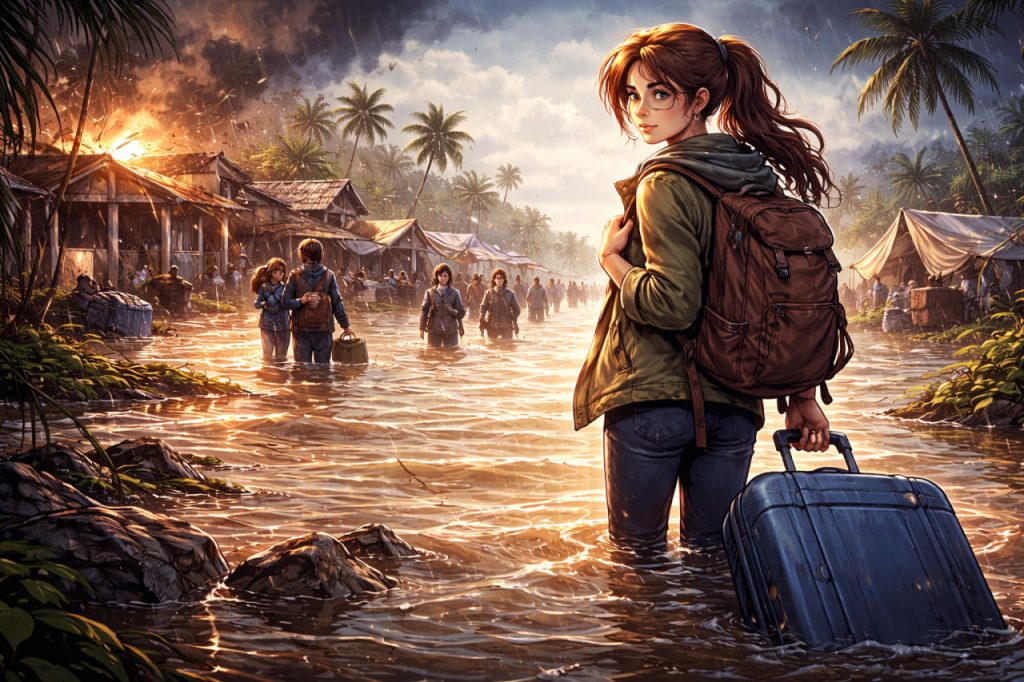
Climate refugees are individuals and communities forced to leave their homes due to environmental changes linked to climate disruption. Rising sea levels, prolonged droughts, extreme storms, desertification, and flooding increasingly threaten livelihoods and habitability in many regions. Unlike traditional migration driven by economic or political factors, climate displacement is often gradual, making it harder to define and address legally. As global temperatures rise, the number of people affected by climate-related disasters continues to grow. Climate migration has become one of the defining humanitarian challenges of the 21st century. Understanding its causes and consequences is essential for shaping future policy and global cooperation.
What Drives Climate Displacement
Climate displacement is usually triggered by a combination of environmental and socioeconomic pressures. Coastal erosion and rising sea levels threaten low-lying island nations and delta regions. Prolonged droughts reduce agricultural productivity, undermining food security and local economies. Intensified storms destroy infrastructure and homes, leaving communities with limited recovery capacity. Environmental policy expert Dr. Helena Ruiz explains:
“Climate migration rarely happens overnight.
It is the result of accumulating stress that slowly makes life unsustainable.”
These factors often intersect with poverty and weak governance, amplifying vulnerability.
Regions Most Affected
Certain regions are particularly vulnerable to climate-related displacement. Small island states face existential threats from rising oceans. Parts of Sub-Saharan Africa and South Asia experience recurring droughts and flooding. Coastal megacities also confront growing risks as populations expand in flood-prone areas. Even developed nations are not immune, as extreme weather events increase globally. The geographic distribution of climate risks means that displacement may become more widespread in the coming decades.
Legal and Political Challenges
One major complication is that international law does not formally recognize “climate refugees” as a distinct legal category. Traditional refugee definitions focus on persecution rather than environmental factors. As a result, many climate-displaced individuals lack clear legal protection. Policymakers face the challenge of adapting migration frameworks to emerging realities. International cooperation will be essential to manage cross-border movement responsibly and humanely.
Economic and Social Impacts
Climate displacement places strain on host communities and infrastructure. Rapid migration can increase demand for housing, healthcare, employment, and education. Without adequate planning, tensions may rise between displaced populations and local residents. However, migration can also create economic opportunities when integrated effectively. Long-term solutions depend on sustainable urban planning and investment in resilience.
Adaptation and Prevention Strategies
Reducing climate displacement requires both mitigation and adaptation strategies. Strengthening coastal defenses, improving water management, and investing in climate-resilient agriculture can reduce vulnerability. Early warning systems help communities prepare for extreme events. In some cases, planned relocation programs may be necessary. Preventative measures are often more cost-effective than responding to emergencies after disasters occur.
The Future Outlook
As climate patterns continue to shift, migration linked to environmental change is likely to increase. Governments, international organizations, and communities must prepare for long-term population movement. Addressing climate displacement requires coordinated climate policy, economic development, and humanitarian planning. The issue reflects the interconnected nature of global environmental and social systems. Recognizing climate refugees as part of the broader climate challenge is a crucial step toward sustainable solutions.
Interesting Facts
- Rising sea levels threaten millions living in low-lying coastal regions.
- Drought is one of the most common drivers of climate-related migration.
- Extreme weather events have increased in frequency and intensity.
- Urban areas are increasingly affected by climate displacement.
- Adaptation measures can significantly reduce forced migration risk.
Glossary
- Climate Refugee — a person displaced due to climate-related environmental changes.
- Sea-Level Rise — increase in ocean levels caused by warming temperatures.
- Desertification — land degradation in dry regions.
- Adaptation — adjustments made to reduce climate impact risks.
- Resilience — the ability to withstand and recover from disruptions.