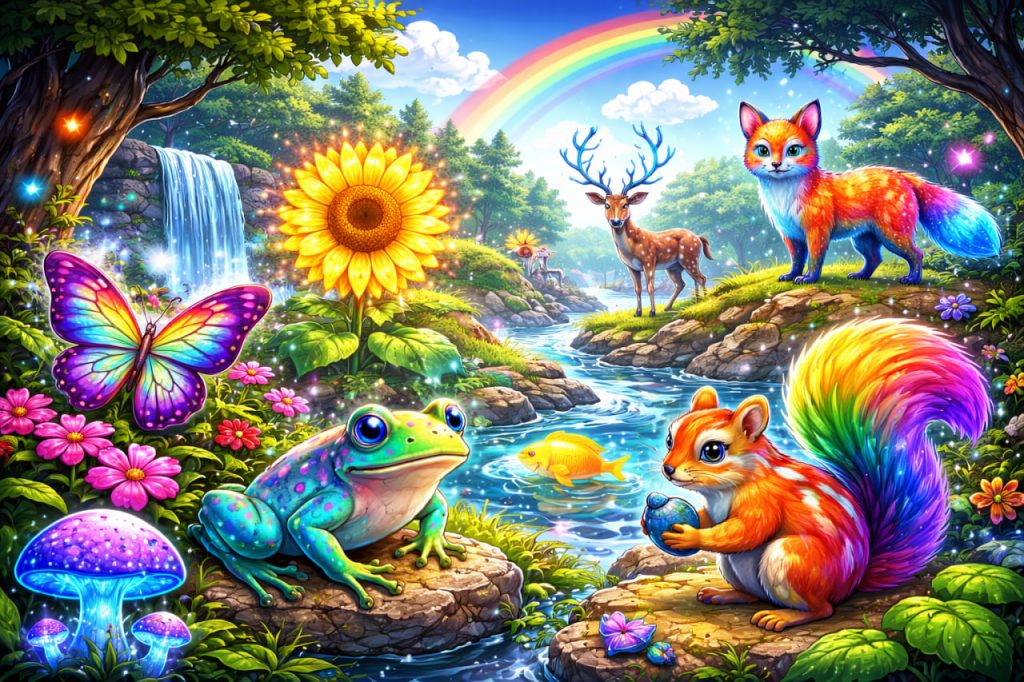
The word “mutant” is often associated with science fiction, superheroes, or dangerous transformations, but in real science, it has a much more ordinary meaning. A mutant is simply an organism that has undergone a genetic change known as a mutation. These changes occur naturally in all living organisms, including humans, animals, and plants. Mutations are a constant part of life and happen every time cells divide and copy DNA. Most mutations are harmless, and many go completely unnoticed. Some mutations can even be beneficial and help organisms adapt to their environment. Rather than being rare or extraordinary, mutations are a normal and essential part of biology.
What Is a Mutation
A mutation is a change in the DNA sequence of an organism. These changes can occur randomly during DNA replication or be caused by external factors such as radiation, chemicals, or viruses. Geneticist Dr. Michael Harris explains:
“Mutations are a natural and essential part of biology,
providing the variation needed for evolution.”
Mutations can be very small, affecting just a single gene, or larger, involving entire sections of DNA. Some mutations are inherited and passed from parents to offspring, while others occur during a person’s lifetime. Not all mutations lead to visible changes, and many have no effect at all. Understanding mutations helps scientists explain how organisms change over time.
Types of Mutations
Mutations can be classified based on their effects. Some mutations are neutral, meaning they do not affect the organism in any noticeable way. Others are harmful, potentially causing diseases or reducing survival. However, some mutations are beneficial, giving organisms advantages such as resistance to diseases or better adaptation to environmental conditions. Over time, beneficial mutations can become more common through natural selection. This process drives evolution and diversity in life forms. The balance of these mutation types shapes how species develop.
Why “Mutants” Are Misunderstood
In movies and popular culture, mutants are often portrayed as unusual beings with extreme abilities or appearances. This creates a misleading impression of what mutations actually do. In reality, mutations rarely result in dramatic visible changes. Most occur at the molecular level and do not lead to superpowers or extreme differences. Scientific understanding shows that mutations are subtle and gradual processes. The idea of dramatic mutants is largely fictional. Real-life mutations are much more ordinary and less noticeable.
Mutations and Medicine
Mutations play a crucial role in medicine and biological research. Some diseases are caused by genetic mutations, and studying them helps scientists develop treatments. Genetic testing can identify mutations and assess health risks. Modern technologies such as gene editing allow scientists to correct certain mutations. This opens new possibilities for treating genetic disorders. At the same time, understanding mutations helps in developing vaccines and therapies. Mutations are therefore both a challenge and an opportunity in medicine.
Why Mutations Matter for Life
Mutations are the foundation of biological diversity and evolution. Without them, all organisms would be genetically identical and unable to adapt to changing environments. Over millions of years, mutations have allowed life to evolve into the wide variety of species we see today. They enable populations to survive new challenges and environmental changes. Even though some mutations can be harmful, the overall process is essential for life. Mutations are not exceptions—they are a fundamental part of how life works. Understanding them helps us better understand ourselves and the natural world.
Interesting Facts
- Mutations occur naturally in all living organisms
- Most mutations are harmless or neutral
- Some mutations can provide evolutionary advantages
- DNA replication errors are a common source of mutations
- Mutations are essential for evolution and diversity
Glossary
- Mutation — change in DNA sequence
- Mutant — organism with a genetic change
- DNA — molecule carrying genetic information
- Natural Selection — process where beneficial traits spread
- Gene Editing — technology to modify DNA