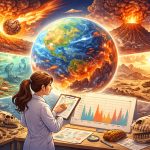
Earth has not always been the relatively warm and stable planet we know today. At several points in deep geological history, it may have entered extreme ice ages so severe that glaciers covered nearly the entire surface. This idea is known as the “Snowball Earth” hypothesis, suggesting that oceans froze over and ice extended from the poles to the equator. These events occurred hundreds of millions of years ago and fundamentally changed the planet’s climate and life. While the exact extent of global freezing is still debated, there is strong evidence that Earth experienced near-global glaciation. Understanding these periods helps scientists study climate systems and long-term planetary change.
When Did Snowball Earth Occur
The most significant Snowball Earth events are believed to have occurred during the Cryogenian Period, around 720 to 635 million years ago. During this time, at least two major glaciations—often called the Sturtian and Marinoan events—covered vast portions of the planet in ice. Geological evidence, such as glacial deposits found in what are now tropical regions, supports the idea that ice reached very low latitudes. This suggests that the planet was far colder than at any point in recent history. These glaciations lasted for millions of years, making them some of the longest extreme climate events ever recorded.
How Could the Entire Planet Freeze
The transition into a Snowball Earth state likely involved a combination of climate feedback mechanisms. One key factor is the albedo effect, where ice reflects sunlight back into space. As ice expands, more sunlight is reflected, causing further cooling and more ice formation. Changes in atmospheric composition, especially reductions in greenhouse gases like carbon dioxide, may have triggered the initial cooling. Continental positions and ocean circulation also played roles in redistributing heat. Once the process began, it could accelerate rapidly, pushing the planet into a globally frozen state.
What Happened to the Oceans and Life
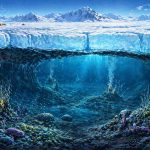
If Earth became fully frozen, the oceans would have been covered by thick layers of ice, possibly hundreds of meters deep. However, some scientists suggest that areas of open water or thin ice may have persisted near volcanic regions or equatorial zones. Life during this period likely survived in extreme environments, such as deep ocean hydrothermal vents or beneath the ice. Microorganisms adapted to cold and low-light conditions may have continued to exist. These survival strategies allowed life to persist through one of the most challenging periods in Earth’s history.
How Did Earth Thaw Again
The end of a Snowball Earth event is thought to have been driven by volcanic activity. Even during global glaciation, volcanoes continued to release carbon dioxide into the atmosphere. Over millions of years, this gas accumulated because it was not being removed by normal weathering processes. Eventually, the concentration of greenhouse gases became high enough to trigger rapid warming. This led to a dramatic melting of ice, possibly resulting in intense rainfall and rapid environmental change. The transition from frozen to warm conditions may have been abrupt on geological timescales.
Evidence Supporting the Theory
Scientists support the Snowball Earth hypothesis using multiple lines of evidence. Glacial deposits found in ancient tropical regions indicate that ice existed near the equator. Certain rock formations, such as banded iron formations, suggest changes in ocean chemistry consistent with global ice cover. Additionally, layers of sediment known as “cap carbonates” appear immediately after glacial deposits, indicating rapid warming and increased carbon dioxide levels. While some details remain debated, the overall evidence strongly supports the occurrence of extreme global glaciation events.
Why Snowball Earth Matters Today
Studying Snowball Earth helps scientists understand how climate systems can shift dramatically under certain conditions. It highlights the importance of feedback loops and atmospheric composition in regulating global temperature. These ancient events also provide insight into how life can survive extreme environments and adapt to changing conditions. While modern climate change operates on different timescales and mechanisms, the study of past extremes offers valuable context. Snowball Earth remains one of the most fascinating examples of how dynamic and unpredictable our planet can be.
Interesting Facts
- Snowball Earth events may have lasted tens of millions of years.
- Ice may have reached equatorial regions, which are usually warm.
- The planet likely reflected most sunlight due to global ice cover.
- Volcanic gases played a key role in ending the frozen state.
- These events occurred long before complex life became widespread.
Glossary
- Snowball Earth — a hypothesis that Earth was once almost entirely frozen.
- Cryogenian Period — a geological period marked by extreme glaciations.
- Albedo Effect — the reflection of sunlight by surfaces like ice.
- Greenhouse Gases — gases that trap heat in the atmosphere.
- Hydrothermal Vents — underwater openings that release heat and minerals.