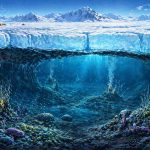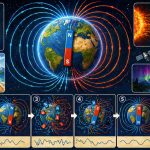
Deep-sea trenches are the deepest parts of the ocean, formed where tectonic plates converge and one plate is forced beneath another in a process called subduction. Among them, the Mariana Trench is the deepest known point on Earth, reaching depths of nearly 11,000 meters. At such extreme depths, conditions are radically different from the surface: total darkness, near-freezing temperatures, and immense pressure. Despite this, life not only exists but has adapted in remarkable ways. Studying these environments helps scientists understand the limits of life and the structure of Earth’s crust.
What Is the Mariana Trench
The Mariana Trench is located in the western Pacific Ocean and represents the deepest known oceanic trench. Its lowest point, often referred to as the Challenger Deep, lies deeper than Mount Everest is tall. This trench was formed by the movement of tectonic plates, where the Pacific Plate is being pushed beneath the Mariana Plate. Over millions of years, this process created a long, narrow depression in the ocean floor. The trench extends for thousands of kilometers and is one of the most extreme environments on the planet.
Extreme Conditions
Conditions in the Mariana Trench are among the harshest on Earth. Pressure at the deepest point exceeds 1,000 times the atmospheric pressure at sea level. Temperatures remain just above freezing, and sunlight cannot penetrate these depths, creating complete darkness. Food is scarce, and energy sources are limited. These factors make survival extremely challenging. Yet, life has adapted to thrive under these conditions.
Life in the Depths
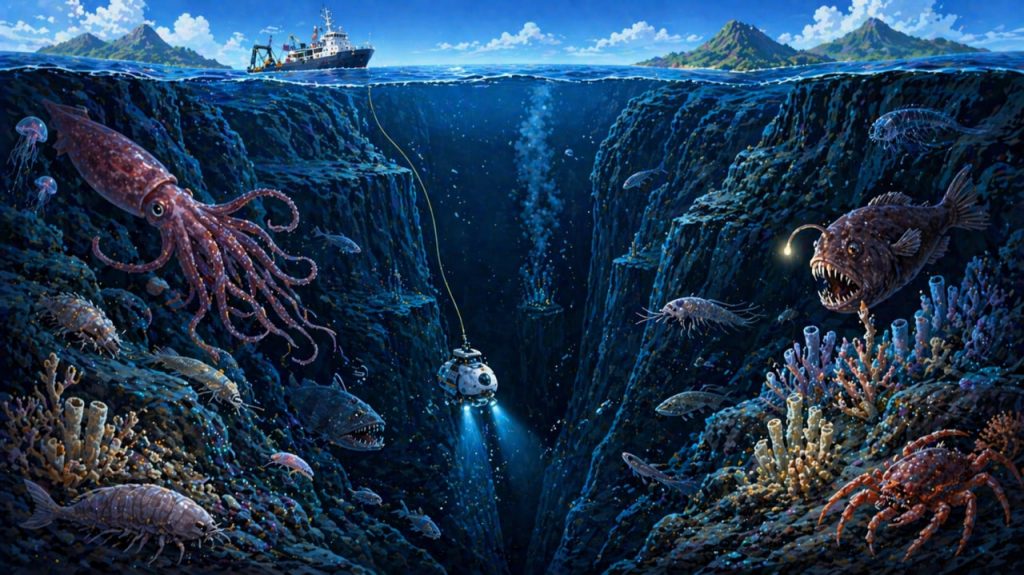
Despite the extreme environment, a variety of organisms inhabit the trench. These include microorganisms, crustaceans, and specialized fish. Many of these creatures have soft, flexible bodies that can withstand high pressure. Some species produce bioluminescence, generating light through chemical reactions to attract prey or communicate. Others rely on detritus—organic material falling from upper ocean layers—as a food source. The discovery of life at such depths has changed our understanding of biological limits.
Adaptations to Pressure and Darkness
Deep-sea organisms have evolved unique adaptations to survive. Their cell structures are resistant to pressure, and their metabolism is often slower due to limited energy availability. Eyes may be reduced or absent, while other senses become more developed. Some creatures use chemical signals or vibrations to navigate and find food. These adaptations demonstrate how life can evolve to fit even the most extreme environments.
Scientific Exploration
Exploring the Mariana Trench is a major technological challenge. Specialized submersibles are required to withstand extreme pressure and darkness. Only a few manned missions have reached the deepest parts, supported by robotic exploration and remote sensing. These missions have provided valuable data about geology, biology, and ocean chemistry. Each expedition reveals new species and insights into deep-sea ecosystems.
Why It Matters
Studying deep-sea trenches helps scientists understand Earth’s structure, including tectonic processes and the cycling of materials between the surface and interior. It also expands knowledge about extreme life forms, which may have implications for biotechnology and astrobiology. Environments like the Mariana Trench serve as models for potential life in similar extreme conditions elsewhere in the universe. These studies show that life is more resilient and adaptable than once believed.
Interesting Facts
- The Mariana Trench is deeper than Mount Everest is tall.
- Pressure at the bottom can exceed 1,000 atmospheres.
- Some organisms produce their own light through bioluminescence.
- Only a few human missions have reached the deepest point.
- New species are still being discovered in deep-sea trenches.
Glossary
- Deep-Sea Trench — a deep depression in the ocean floor formed by tectonic activity.
- Subduction — the process where one tectonic plate moves beneath another.
- Bioluminescence — the ability of organisms to produce light.
- Challenger Deep — the deepest known point in the ocean.
- Detritus — organic material that falls from upper ocean layers.