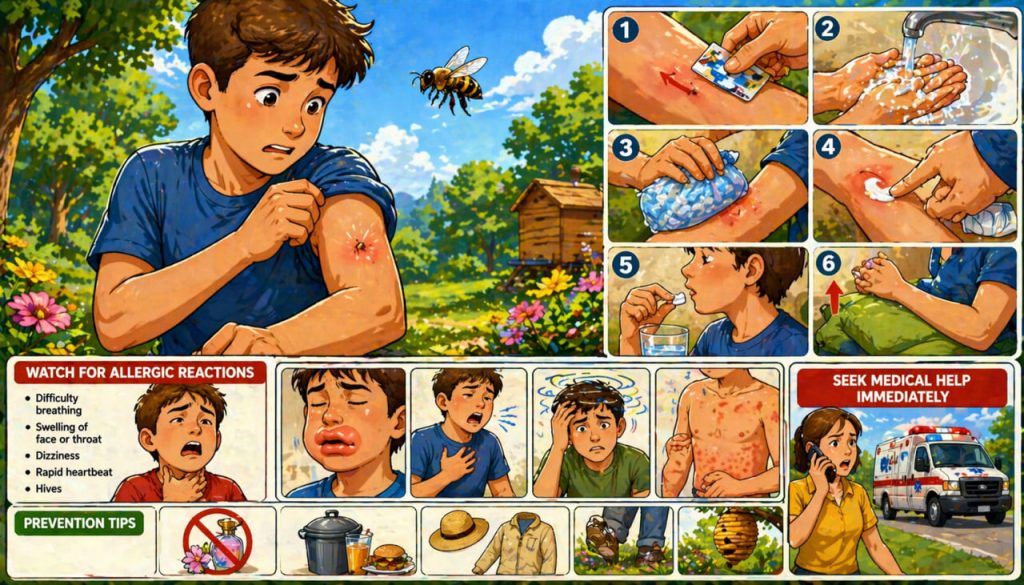
Bee stings are a common outdoor hazard, especially during warm seasons when people spend more time in nature. While most bee stings are harmless and cause only mild discomfort, they can sometimes lead to severe allergic reactions that require immediate medical attention. Knowing how to respond quickly and correctly is essential for minimizing pain, preventing complications, and ensuring safety. This guide provides a detailed, evidence-based overview of what to do if you are stung by a bee.
Why Bees Sting
Bees sting primarily as a defense mechanism. Unlike wasps, honeybees can sting only once because their barbed stinger becomes lodged in the skin, causing the bee to die shortly afterward.
Bees are more likely to sting when:
- Their hive is disturbed
- They feel threatened or trapped
- Strong scents or bright colors attract them
Understanding this behavior helps reduce the risk of provoking a sting.
Immediate Reaction to a Bee Sting
The first few minutes after a bee sting are critical. Acting quickly can reduce the amount of venom entering the body.
Steps to take immediately:
- Move away from the area to avoid additional stings
- Stay calm and avoid panicking
- Locate the sting site
- Seek medical help immediately
If the bee left its stinger behind, it will continue to release venom for several seconds.
Remove the Stinger Properly
Removing the stinger as quickly as possible is one of the most important steps.
Best method:
- Scrape the stinger out using a fingernail or a flat object (like a credit card)
- Avoid squeezing the stinger with fingers or tweezers, as this can inject more venom
Speed matters more than the method. The faster the stinger is removed, the less venom enters the body.
Clean the Area and Reduce Swelling
After removing the stinger:
- Wash the area with soap and water
- Apply a cold compress or ice pack (wrapped in cloth) for 10–15 minutes
- Elevate the affected area if possible
These steps help reduce swelling, pain, and inflammation.
Managing Pain and Itching
Bee stings often cause redness, itching, and discomfort.
To relieve symptoms:
- Use antihistamine creams or oral antihistamines
- Apply hydrocortisone cream
- Take over-the-counter pain relievers if necessary
Avoid scratching the area, as this can lead to infection.
Recognizing Allergic Reactions
Most bee stings are mild, but some individuals may experience allergic reactions ranging from moderate to severe.
Mild allergic reactions:
- Larger swelling around the sting
- Increased redness and itching
Severe allergic reaction (anaphylaxis):
- Difficulty breathing
- Swelling of the face, lips, or throat
- Rapid heartbeat
- Dizziness or fainting
According to the American College of Allergy, Asthma & Immunology (ACAAI):
“Anaphylaxis is a medical emergency that requires immediate treatment with epinephrine. Delayed response can be life-threatening.”
If any severe symptoms appear, call emergency services immediately.
When to Seek Medical Help
Medical attention is necessary if:
- The sting is inside the mouth or throat
- There are signs of severe allergic reaction
- Multiple stings occur (especially in children or elderly individuals)
- Symptoms worsen over time
Prompt treatment can prevent serious complications.
Special Cases: Multiple Stings
Multiple bee stings can deliver a significant amount of venom, even in individuals without allergies.
Risks include:
- Toxic reaction to venom
- Severe swelling and pain
- Systemic symptoms such as fever or nausea
In such cases, medical evaluation is strongly recommended.
Prevention: How to Avoid Bee Stings
Preventing stings is easier than treating them.
Helpful tips:
- Avoid wearing bright colors and strong perfumes outdoors
- Keep food and drinks covered
- Wear protective clothing when in nature
- Stay calm if a bee approaches—do not swat at it
- Be cautious near flowering plants and hives
Respecting bees and their environment reduces the likelihood of stings.
Why Bees Are Important
Despite the risk of stings, bees are essential for ecosystems and agriculture. They are key pollinators responsible for the reproduction of many plants and crops.
Without bees:
- Food production would decline significantly
- Ecosystems would become unbalanced
- Biodiversity would suffer
Protecting bees is crucial for environmental sustainability.
Interesting Facts
- Honeybees can only sting once, but wasps can sting multiple times.
- The pain of a bee sting comes from both venom and the body’s immune response.
- Some people develop immunity to bee venom over time.
- Bee venom is being studied for potential medical uses.
- Bees play a role in pollinating about one-third of the food we eat.
Glossary
- Venom — a toxic substance injected by an animal as a defense mechanism.
- Anaphylaxis — a severe, life-threatening allergic reaction.
- Antihistamine — a medication that reduces allergic symptoms.
- Inflammation — the body’s response to injury, causing redness and swelling.
- Epinephrine — a medication used to treat severe allergic reactions.