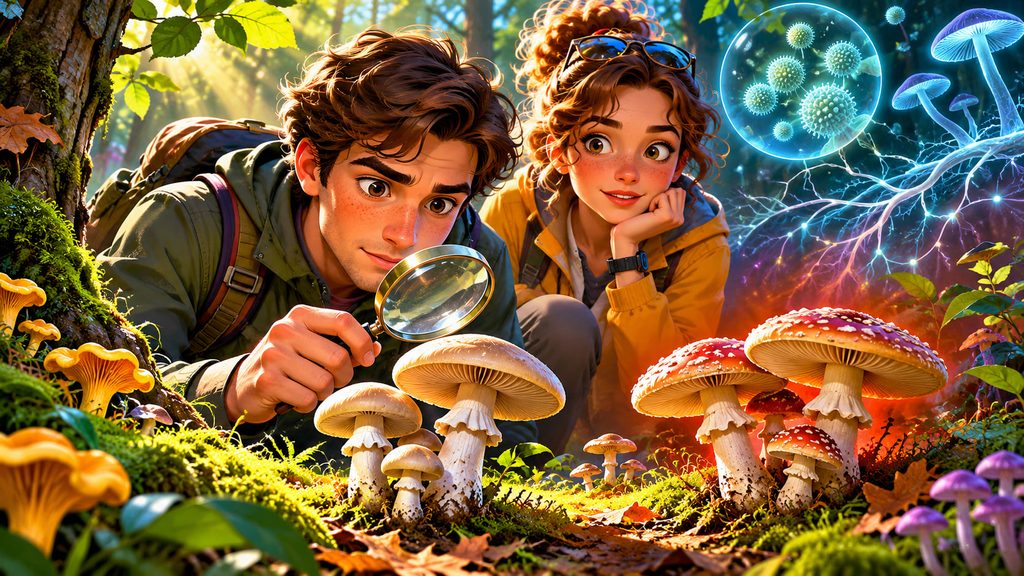
A peaceful walk through the forest can quickly turn into an exciting treasure hunt when mushrooms begin appearing beneath trees, along moss-covered paths, and among fallen leaves. For many people, collecting wild mushrooms is a beloved tradition that combines fresh air, nature, and the pleasure of preparing food gathered by hand. But behind the beauty of these fascinating organisms lies a danger that even experienced mushroom hunters sometimes underestimate.
Some wild mushrooms are delicious and nutritious, while others contain toxins capable of causing severe illness, organ failure, or death. The most frightening part is that a deadly mushroom can look remarkably similar to an edible species, making identification far more complicated than simply checking its color or shape. Understanding the hidden risks of wild mushrooms can help prevent mistakes that may have devastating consequences.
Why Can Wild Mushrooms Be Dangerous?
Mushrooms belong to the kingdom of fungi, a remarkable group of organisms that includes thousands of species with very different biological characteristics. Some are edible, others are inedible or cause digestive discomfort, and a relatively small number contain extremely dangerous natural toxins. These substances are produced by the fungi themselves and may remain active even after mushrooms have been cooked or dried.
The difficulty lies in the extraordinary variety of mushroom appearances. The same species can look different depending on its age, weather conditions, and growing environment, while completely unrelated species sometimes develop nearly identical characteristics. A mushroom that looks familiar is not necessarily safe, especially when it has been collected in an unfamiliar geographical region.
The Most Dangerous Mushroom Look-Alikes
One of the world’s most notorious poisonous mushrooms is the death cap, scientifically known as Amanita phalloides. This species contains amatoxins, powerful compounds that can severely damage the liver and potentially lead to fatal poisoning. Death caps have been mistaken for edible mushrooms in several parts of the world, particularly when collectors are familiar with similar-looking species from another country.
Another dangerous group includes the destroying angels, several predominantly white mushrooms belonging to the genus Amanita. Their pale appearance can seem harmless, yet some contain toxins capable of causing life-threatening organ damage. False morels present another identification challenge because certain species resemble edible morels while containing compounds that can produce serious poisoning.
The real danger is not that poisonous mushrooms always look frightening, but that many appear completely ordinary. Even experienced collectors can make mistakes when relying on superficial similarities instead of a complete identification.
Can You Recognize a Poisonous Mushroom by Its Appearance?
A popular belief suggests that brightly colored mushrooms are poisonous while brown or white mushrooms are safe. In reality, mushroom toxicity cannot be determined through color alone, and some extremely dangerous species have subtle, unremarkable appearances. Other traditional tests involving silver spoons, onions, insect damage, or whether animals eat a mushroom are equally unreliable.
Taste and smell are also poor indicators of safety. Certain deadly mushrooms reportedly have mild flavors, while some perfectly edible species possess strong or unusual odors. The absence of bitterness, discoloration, or visible damage therefore provides no reliable evidence that a mushroom is suitable for consumption.
There is no universal visual sign or simple household test that can distinguish every poisonous mushroom from an edible one. A suspicious appearance may be a reason to avoid a specimen, but an ordinary appearance is never proof of safety.
How Do Experts Identify Wild Mushrooms?
Professional mycologists examine several characteristics together when identifying mushrooms. These include the structure of the cap, the arrangement of gills or pores underneath it, the shape of the stem, and features around its base. They also consider the surrounding environment, nearby trees, the material on which the fungus grows, and how its appearance changes during development.
Additional identification methods may involve examining spores, studying microscopic structures, or using genetic analysis. Even these techniques require experience because some species are exceptionally difficult to distinguish. A photograph showing only the mushroom’s cap may hide essential characteristics needed for accurate identification.
Clinical toxicologist Rose Ann Gould Soloway has emphasized the risks of confusing poisonous mushrooms with edible varieties and the importance of expert identification. Her guidance reflects a fundamental principle of mushroom safety: confidence and familiarity are not substitutes for a verified identification by a qualified specialist.
What Happens to the Body After Mushroom Poisoning?
Mushroom poisoning can produce very different symptoms depending on the species consumed and the toxins involved. Some poisonous mushrooms cause nausea, vomiting, abdominal cramps, and diarrhea relatively quickly, while others affect the nervous system and may lead to confusion, hallucinations, or seizures. Certain toxins primarily damage the liver or kidneys, creating a much more serious medical emergency.
Amatoxin poisoning is particularly dangerous because symptoms may not appear until six to twenty-four hours after ingestion. When severe gastrointestinal symptoms finally develop, significant internal damage may already be underway. In some cases, the person temporarily feels better before serious liver injury becomes apparent, creating a misleading impression of recovery.
Delayed symptoms are one of the most dangerous characteristics of certain mushroom poisonings. Feeling healthy immediately after a meal does not guarantee that the mushrooms were safe.
Does Cooking Destroy Mushroom Toxins?
Cooking is essential for preparing many edible mushrooms, but it should never be considered a method for making unidentified wild mushrooms safe. Some natural mushroom toxins are remarkably resistant to heat and remain dangerous after boiling, frying, roasting, or drying. The amatoxins found in death caps, for example, are not reliably destroyed by ordinary cooking methods.
At the same time, correctly identified edible mushrooms may still require appropriate preparation. True morels, which are prized for their distinctive flavor, should be thoroughly cooked because eating them raw or insufficiently cooked can cause illness. Spoilage and improper storage can also create food-safety problems even when the original mushroom species is edible.
The essential distinction is that proper cooking can make certain known edible mushrooms suitable for consumption, but it cannot turn an unidentified poisonous mushroom into safe food.
Can Smartphone Apps Identify Mushrooms Reliably?
Modern identification applications have made mushroom recognition more accessible, allowing users to photograph a specimen and receive a suggested species within seconds. These tools can be interesting for learning about fungi, but their results are not sufficiently reliable to establish whether a wild mushroom is safe to eat.
In a published study comparing three mushroom-identification applications using photographs of 78 specimens, even the most accurate application correctly identified only about 49% of the tested mushrooms. The study also found cases in which potentially deadly species were incorrectly classified, demonstrating the limitations of relying on image recognition alone.
Artificial intelligence may recognize visual patterns, but it cannot reliably inspect hidden structures, environmental details, or microscopic characteristics from an ordinary photograph. A mushroom identification app should never be the final authority when deciding whether a wild mushroom is edible.
What Should You Do If Someone Eats an Unknown Mushroom?
Suspected mushroom poisoning requires prompt attention, even when the person feels completely normal. Contact a local poison control center or seek urgent medical advice immediately after a potentially dangerous mushroom has been eaten, rather than waiting for symptoms to develop. Severe symptoms such as confusion, seizures, collapse, or breathing difficulties require emergency medical services.
If possible, preserve a remaining mushroom specimen or take clear photographs to help specialists identify what was consumed. Information about when the mushroom was eaten, how it was prepared, and whether anyone else shared the meal can also help medical professionals assess the situation. Do not induce vomiting or attempt home remedies unless specifically instructed by a medical professional.
Early medical evaluation can make an important difference in serious poisoning cases. The safest response to a suspected toxic mushroom is immediate professional advice, not observation at home to see whether symptoms appear.
How to Enjoy Mushroom Hunting Safely
Mushroom hunting can still be a fascinating way to explore forests and learn about biodiversity without taking unnecessary risks. Beginners can join organized excursions led by experienced mycologists, photograph unfamiliar species, and study their ecological roles without collecting them for food. For meals, mushrooms purchased from reputable food suppliers are generally a much safer choice.
People who decide to collect edible wild mushrooms should obtain reliable, species-specific identification from a qualified local expert rather than depending on memory, internet photographs, or general rules. Every specimen intended for consumption must be identified with certainty, and any doubtful mushroom should be left uneaten. Particular care is needed around young children, who may pick up and taste mushrooms growing in gardens or parks.
Wild fungi play essential roles in nature by decomposing organic material and forming relationships with plants. Appreciating their remarkable biology does not require putting them on the dinner table, and observing an unfamiliar mushroom can be just as rewarding as collecting it.
Have you ever discovered an unusual mushroom in the forest that looked edible but made you hesitate? What do you think is the biggest mistake people make when collecting wild mushrooms? Share your thoughts in the comments!
Interesting Facts
- Some of the deadliest mushrooms have mild or ordinary appearances, making taste, smell, and color unreliable indicators of toxicity.
- A mushroom is only the visible reproductive structure of a fungus; much of the organism often exists underground as a network of microscopic filaments.
- Death cap toxins can survive ordinary cooking, boiling, and drying.
- Some dangerous mushroom poisonings cause no noticeable symptoms for many hours after consumption.
- Mushroom identification sometimes requires microscopic examination or DNA analysis because different species can look almost identical.
- Certain fungi form beneficial partnerships with tree roots, helping plants obtain water and minerals from the soil.
- The same mushroom species can change significantly in appearance as it grows, making identification from a single photograph especially difficult.
Glossary
- Mycology — The scientific study of fungi, including mushrooms, molds, and yeasts.
- Mycologist — A scientist or specialist who studies and identifies fungi.
- Amatoxins — A group of highly poisonous compounds found in certain mushrooms that can cause severe liver damage.
- Amanita — A genus of mushrooms containing both edible and extremely poisonous species.
- Mycelium — A network of microscopic fungal filaments that forms the main growing structure of many fungi.
- Gills — Thin, plate-like structures beneath the caps of many mushrooms where spores are produced.
- Spores — Microscopic reproductive cells that allow fungi to spread and reproduce.
- Mushroom Poisoning — Illness caused by consuming toxic mushrooms or their harmful compounds.
- Mycorrhiza — A mutually beneficial association between a fungus and plant roots.
- Toxicology — The scientific study of harmful substances and their effects on living organisms.