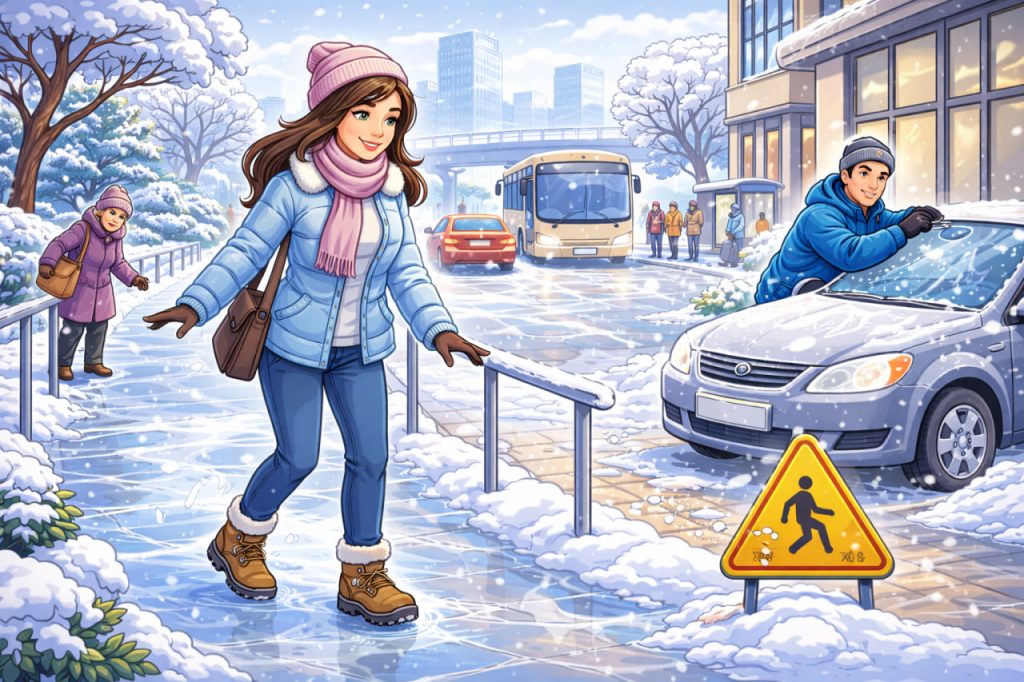
Icy sidewalks and roads turn an ordinary commute into a real safety challenge. Black ice, compacted snow, and sudden temperature changes dramatically increase the risk of falls, traffic accidents, and injuries. What makes icy conditions especially dangerous is their unpredictability—surfaces that appear safe may be extremely slippery. Many winter injuries occur not during extreme storms, but on seemingly routine mornings. Reaching work safely in icy conditions requires awareness, preparation, and small behavioral adjustments rather than heroic effort. Understanding how the body, footwear, vehicles, and environment interact with ice is key to reducing risk.
Why Ice Is More Dangerous Than Snow
Ice creates a near-frictionless surface that compromises balance and braking ability. Unlike fresh snow, which provides some traction, ice prevents shoes and tires from gripping the ground. Sudden slips often happen during transitions—stepping off a curb, entering a building, or crossing shaded areas. According to injury prevention specialist Dr. Andrew Collins:
“Most ice-related injuries happen at low speed,
during ordinary movements people underestimate.”
This makes caution during everyday actions far more important than speed or strength.
Walking Safely on Icy Surfaces
When walking on ice, stability matters more than pace. Short, slow steps help keep the center of gravity over the feet. Slightly bending the knees lowers balance height and improves control. Hands should remain free—using a phone or carrying heavy bags increases fall risk. Footwear with textured, flexible soles significantly improves traction, while smooth or hardened soles increase danger. Choosing routes with cleared paths, handrails, and pedestrian traffic can reduce exposure to untreated ice.
Commuting by Car or Public Transport
Driving in icy conditions requires increased distance, reduced speed, and gentle control inputs. Sudden braking or sharp steering easily leads to loss of control. Bridges, overpasses, and shaded roads freeze first and remain icy longer. Transportation safety expert Dr. Rebecca Moore notes:
“On ice, the safest decision is often not better driving,
but slower decision-making.”
For public transport users, platforms, stairs, and vehicle entry points are high-risk areas. Holding handrails and allowing extra time reduces pressure and mistakes.
Timing, Planning, and Flexibility
Leaving earlier than usual lowers stress and reduces the temptation to rush. Checking weather updates and local road conditions helps avoid the most dangerous routes. If conditions are severe, remote work or delayed arrival may be safer than commuting at peak risk times. Employers increasingly recognize that winter safety outweighs punctuality. Flexibility is not weakness—it is risk management.
What to Do If You Slip
If a fall feels unavoidable, minimizing injury becomes the priority. Trying to stay rigid increases fracture risk. Relaxing the body slightly and attempting to fall sideways rather than backward can reduce head impact. After a slip, standing up slowly and reassessing footing helps prevent a second fall. Knowing how to react reduces panic and injury severity.
Interesting Facts
- Most ice-related injuries occur within short walking distances.
- Ice is hardest to detect in shaded and early-morning areas.
- Rushing increases fall risk more than poor footwear alone.
- Vehicle braking distance on ice can increase several times.
- Many winter injuries happen near workplaces, not far from home.
Glossary
- Black Ice — thin, nearly invisible ice on pavement.
- Traction — the grip between footwear or tires and the ground.
- Center of Gravity — the point where body mass is balanced.
- Overpass — elevated roadway that freezes faster than ground roads.
- Risk Management — actions taken to reduce potential harm.