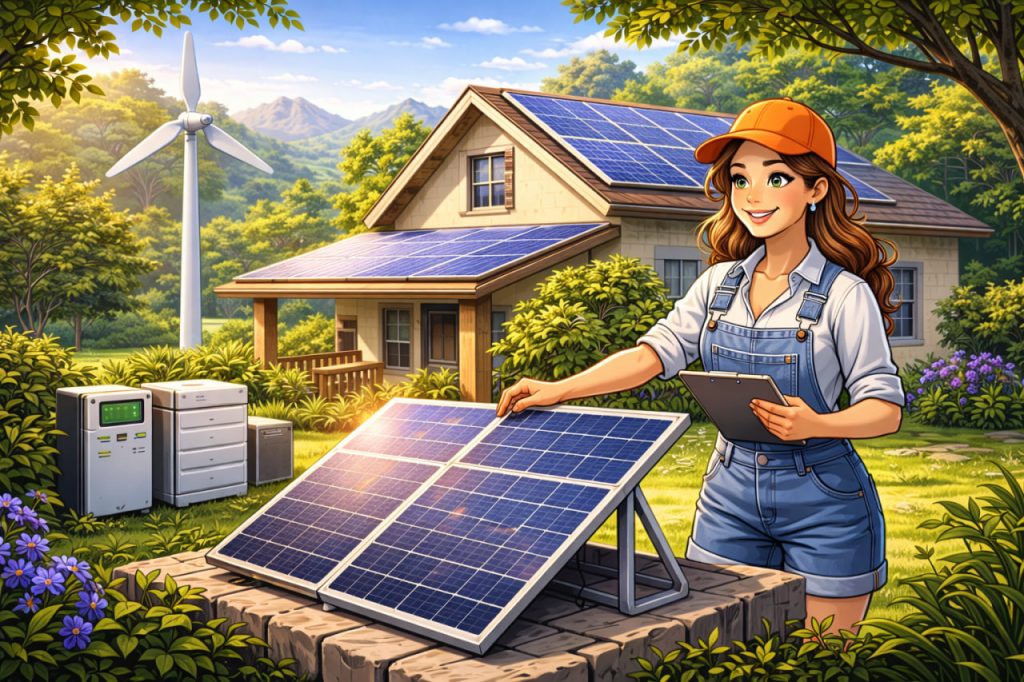
Microgeneration refers to the production of electricity on a small scale, typically at the level of individual homes, farms, or small buildings. Instead of relying entirely on centralized power plants, households can install compact renewable energy systems that generate electricity locally. The most common technologies used in microgeneration are small solar panels and mini wind turbines, which allow homeowners to produce part of their own electricity. As renewable technologies become more affordable and efficient, microgeneration is gaining popularity as a practical solution for reducing energy costs and increasing energy independence.
How Microgeneration Systems Work
Microgeneration systems are designed to produce electricity directly at the place where it will be used. Solar panels installed on rooftops capture sunlight and convert it into electrical energy through photovoltaic cells. Small wind turbines generate electricity by converting the kinetic energy of wind into mechanical rotation that powers a generator. These systems are usually connected to a home energy system that distributes electricity throughout the building.
According to renewable energy engineer Dr. Laura Benson:
“Microgeneration allows households to participate directly in energy production while reducing reliance on centralized power infrastructure.”
Many systems also include inverters that convert the generated electricity into the form used by household appliances.
Solar Panels for Residential Use
Solar panels are among the most common forms of microgeneration technology. Rooftop photovoltaic systems can generate electricity during daylight hours, often producing enough power to cover a significant portion of a household’s daily energy needs. In sunny regions, these systems may even generate excess electricity that can be stored or supplied to the electrical grid. Solar technology is particularly attractive because it requires relatively little maintenance once installed.
Mini Wind Turbines
Small wind turbines offer another option for residential energy generation, especially in rural or open areas with consistent wind conditions. Unlike the large wind turbines used in commercial wind farms, residential turbines are designed to operate at lower heights and produce smaller amounts of electricity. These systems can complement solar panels because wind conditions may remain favorable even when sunlight is limited.
Energy Storage and Smart Systems
Many microgeneration systems use battery storage technologies to store excess electricity produced during periods of high generation. This stored energy can be used later when solar panels or wind turbines are producing less electricity. Modern energy management systems can also monitor electricity production and consumption in real time, helping homeowners optimize how their energy is used.
Benefits for Homeowners
Microgeneration offers several potential advantages. Generating electricity locally can reduce dependence on external energy suppliers and help stabilize household energy costs. In some regions, homeowners can also benefit from programs that allow them to sell excess electricity back to the grid. Additionally, using renewable energy technologies contributes to reducing overall carbon emissions.
Challenges and Considerations
Despite its advantages, microgeneration also requires careful planning. The effectiveness of solar panels depends on sunlight availability, while wind turbines require sufficient wind speeds to operate efficiently. Installation costs, local regulations, and grid connection rules may also influence the feasibility of home energy systems. Evaluating these factors helps determine the most suitable technologies for each location.
The Growing Role of Home Energy Systems
As renewable energy technologies continue to advance, microgeneration may play an increasingly important role in decentralized energy systems. By combining solar panels, wind turbines, and battery storage, homeowners can create flexible energy solutions that complement national power grids while supporting sustainable electricity generation.
Interesting Facts
- Rooftop solar systems can generate electricity directly from sunlight.
- Mini wind turbines are designed for small-scale residential energy production.
- Battery storage systems allow homes to store excess electricity for later use.
- Microgeneration helps support decentralized energy systems.
- Some households can supply excess electricity back to the power grid.
Glossary
- Microgeneration — small-scale electricity production for homes or small buildings.
- Photovoltaic Panel — a device that converts sunlight into electricity.
- Mini Wind Turbine — a small wind-powered generator designed for residential use.
- Energy Storage — technology used to store electricity for later consumption.
- Decentralized Energy System — an energy system where electricity is generated close to where it is used.