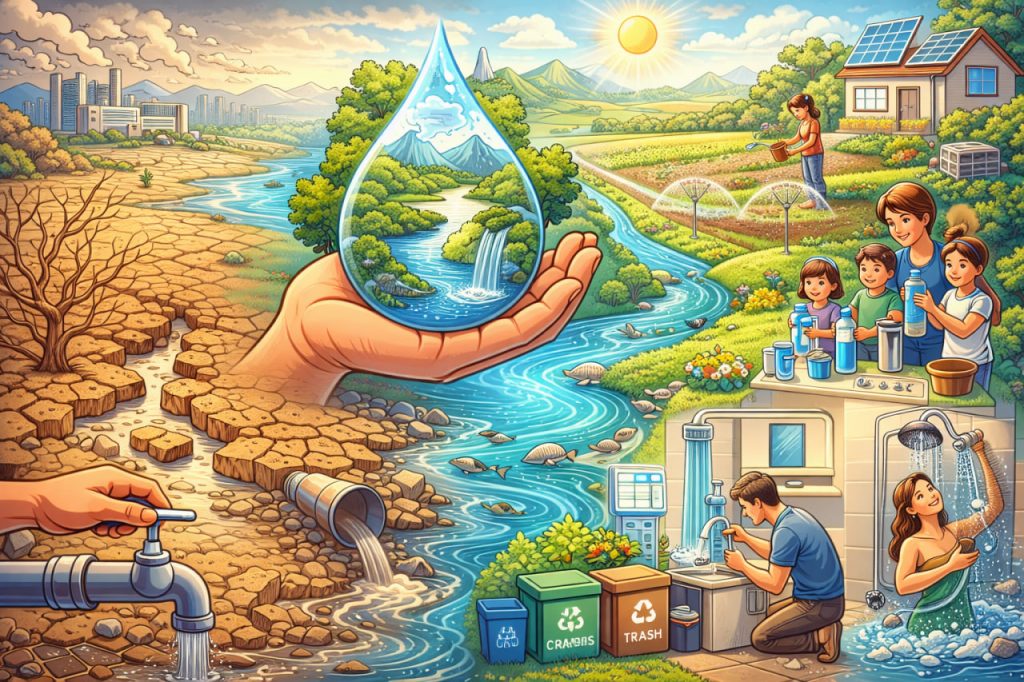
Freshwater is one of the most vital resources on Earth, yet it is far more limited than it may seem. Although water covers most of the planet, only a small fraction is suitable for human consumption. Growing populations, climate change, pollution, and inefficient use are placing increasing pressure on freshwater supplies. In many regions, water scarcity is already a daily reality rather than a future threat. Understanding why freshwater is limited and how it can be preserved is essential for environmental stability and human well-being.
Why Freshwater Is Limited
Only a tiny percentage of Earth’s water is available as accessible freshwater. Most of it is locked in glaciers, ice caps, or deep underground reserves. Rivers, lakes, and shallow groundwater—the main sources for human use—represent a very small share of the total. As demand increases, these sources are depleted faster than they can naturally replenish. Climate change further disrupts precipitation patterns, making water availability less predictable. Freshwater scarcity is therefore both a natural and human-made problem.
Global Causes of Water Scarcity
Water shortages are driven by multiple interacting factors. Population growth increases demand for drinking water, agriculture, and industry. Intensive farming consumes large volumes of water, often inefficiently. Pollution from industry and agriculture renders many water sources unsafe for use. Urbanization places additional stress on infrastructure. Together, these pressures reduce both the quantity and quality of available freshwater.
Environmental and Social Consequences
Water scarcity affects ecosystems and human societies alike. Rivers and lakes shrink, wetlands disappear, and aquatic species lose habitats. For people, water shortages can lead to poor sanitation, food insecurity, and health problems. Communities with limited access to clean water are often the most vulnerable. Competition over water resources can also increase social and political tension. Freshwater scarcity is therefore not only an environmental issue but a humanitarian one.
The Role of Climate Change
Climate change intensifies existing water challenges. Rising temperatures increase evaporation, reducing surface water levels. Changing rainfall patterns lead to more frequent droughts in some regions and floods in others. Melting glaciers initially increase water flow, but eventually reduce long-term supply. These changes make water management more complex and urgent. Climate resilience depends heavily on responsible water use.
How Water Can Be Conserved
Protecting freshwater begins with efficient use. Reducing leaks, improving irrigation systems, and using water-saving technologies significantly lower consumption. Everyday actions—shorter showers, mindful household use, and avoiding unnecessary waste—also matter. Treating and reusing wastewater where possible reduces pressure on natural sources. Conservation is most effective when combined with systemic change rather than relying on individual action alone.
Why Awareness and Policy Matter
Water conservation requires informed societies and strong governance. Public awareness helps people understand the true value of water. Effective policies regulate pollution, protect watersheds, and ensure fair distribution. According to water resource specialist Dr. Elena Ruiz:
“Freshwater scarcity is not just about lack of water,
but about how societies manage, protect, and value this resource.”
This perspective highlights the importance of long-term planning over short-term use.
Water as a Shared Responsibility
Freshwater does not belong to one generation alone. Its protection requires cooperation between individuals, industries, and governments. Sustainable water use supports ecosystems, food systems, and public health. Treating water as a shared resource rather than an unlimited commodity changes how decisions are made. Preserving freshwater today protects life and stability tomorrow.
Interesting Facts
- Less than 1% of Earth’s water is easily accessible freshwater.
- Agriculture is the largest consumer of freshwater globally.
- Polluted water sources reduce supply even where water is abundant.
- Climate change increases both droughts and floods.
- Water conservation is often cheaper than developing new supplies.
Glossary
- Freshwater — water suitable for drinking and daily use.
- Water Scarcity — lack of sufficient freshwater resources.
- Watershed — an area that supplies water to a river or lake.
- Water Conservation — actions that reduce water waste.
- Sustainable Use — resource use that does not harm future availability.