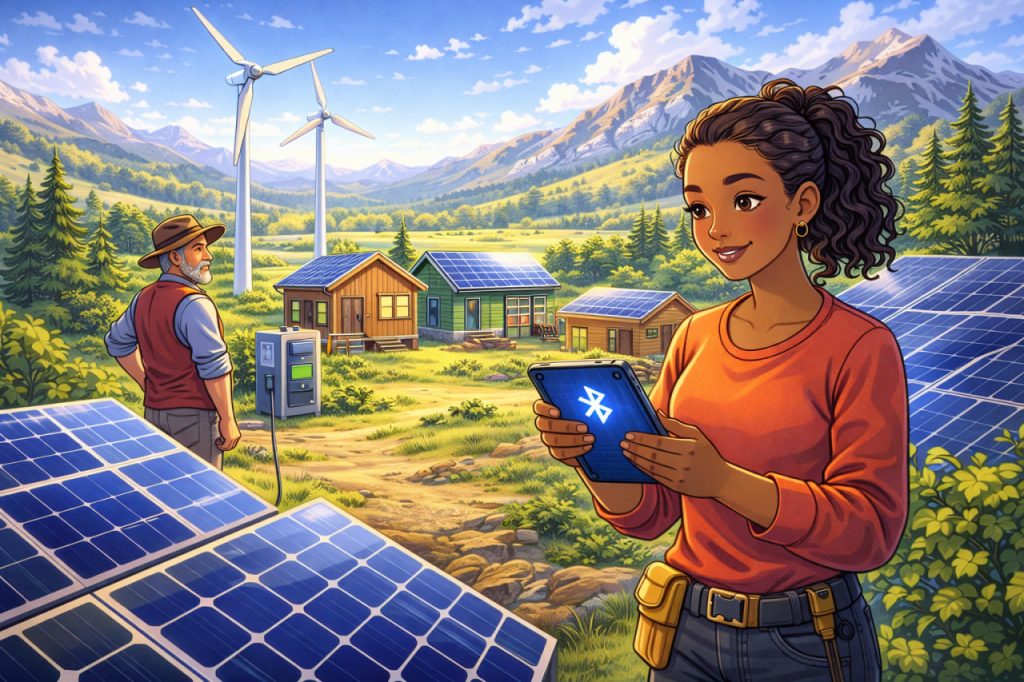
Many remote regions around the world face significant challenges when it comes to reliable electricity supply. Mountains, islands, deserts, and sparsely populated territories are often located far from major power grids, making the construction of traditional energy infrastructure expensive and technically difficult. For many communities in these areas, renewable energy technologies have become a practical and sustainable solution. Systems based on solar panels and wind turbines allow remote settlements to generate electricity locally without relying on long transmission lines or fossil fuel deliveries. By producing energy directly where it is needed, renewable technologies help improve living conditions, support local economies, and reduce environmental impact.
Challenges of Energy Supply in Remote Regions
Providing electricity to isolated areas often requires complex infrastructure and high operational costs. Extending national power grids over long distances can involve building transmission lines across difficult terrain such as mountains, forests, or frozen landscapes. In some regions, electricity is produced using diesel generators that require regular fuel deliveries. According to energy infrastructure researcher Dr. Elena Petrov:
“Transporting fuel to remote communities can be expensive and logistically challenging, especially in harsh climates.”
Because of these challenges, many remote communities are exploring local renewable energy systems as an alternative.
Solar Power for Off-Grid Communities
Solar energy is one of the most accessible renewable resources for remote areas. Photovoltaic panels can be installed on rooftops, community buildings, or small ground-mounted systems to generate electricity from sunlight. Solar installations require relatively little maintenance and can operate for many years once installed. In sunny regions, solar systems can provide a significant portion of the electricity needed for homes, schools, and medical facilities. Battery storage systems are often used alongside solar panels to store electricity produced during the day for use at night.
Wind Energy in Remote Landscapes
Wind turbines provide another valuable energy source for areas with consistent wind conditions. Coastal regions, open plains, and mountainous landscapes often experience strong and steady winds that can be converted into electricity. Small and medium-sized wind turbines are particularly useful for isolated communities where energy demand is moderate. Energy engineer Dr. Mark Jensen explains:
“Combining solar and wind systems allows communities to balance energy production across different weather conditions.”
When sunlight decreases, wind power may still generate electricity, helping maintain a stable energy supply.
Hybrid Systems and Energy Storage
Many remote renewable energy systems use hybrid solutions that combine solar panels, wind turbines, and battery storage. These systems are designed to ensure reliable electricity even when weather conditions change. Batteries store excess electricity generated during periods of strong sunlight or wind and release it when energy production decreases. Some systems also include backup generators to provide additional reliability in extreme conditions.
Benefits for Communities and the Environment
Renewable energy systems can significantly improve quality of life in remote areas. Reliable electricity allows communities to operate schools, healthcare facilities, communication systems, and local businesses more effectively. At the same time, renewable technologies reduce dependence on fossil fuels and lower greenhouse gas emissions. By generating energy locally, remote communities can gain greater energy independence and resilience.
Interesting Facts
- Solar panels can operate effectively even in cold climates with clear sunlight.
- Small wind turbines can provide electricity for isolated homes or villages.
- Hybrid renewable systems often combine solar panels, wind turbines, and battery storage.
- Renewable energy reduces the need for fuel transportation to remote regions.
- Off-grid systems allow communities to produce electricity without connection to national power grids.
Glossary
- Renewable Energy — energy produced from natural sources that are continually replenished, such as sunlight or wind.
- Photovoltaic Panel — a device that converts sunlight into electricity.
- Wind Turbine — a machine that converts wind energy into electrical power.
- Off-Grid System — an energy system that operates independently from the main electricity network.
- Energy Storage — technology that stores electricity for later use.