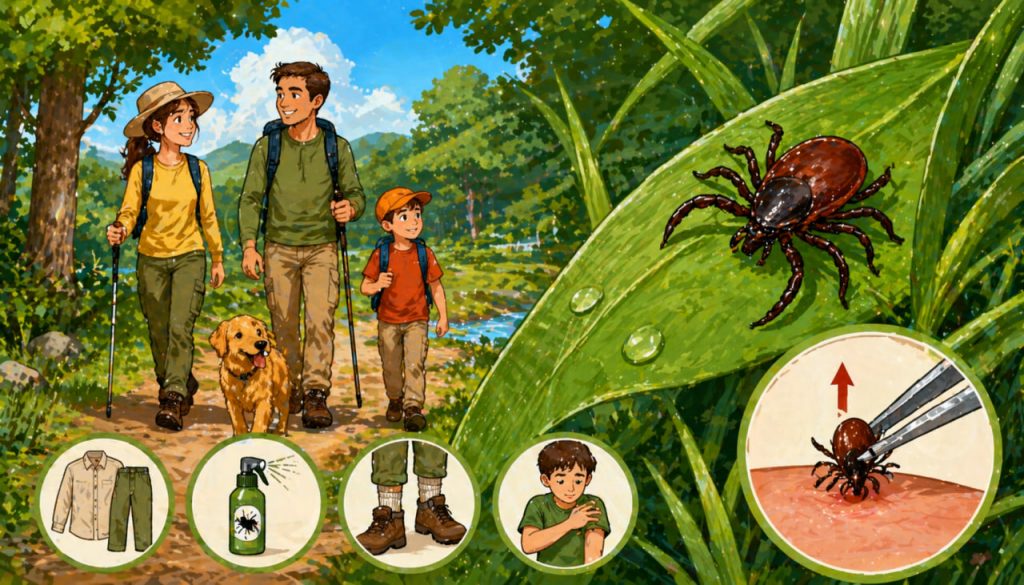
Ticks are small parasitic arachnids that feed on the blood of animals and humans. Despite their tiny size, they can pose serious health risks by transmitting diseases such as Lyme disease and tick-borne encephalitis. Found in forests, grasslands, and even urban parks, ticks are a growing concern in many parts of the world.
Understanding how ticks live, how they spread disease, and how to protect yourself is essential for staying safe during outdoor activities.
What Are Ticks?
Ticks belong to the arachnid family, making them relatives of spiders and mites. Unlike insects, they have eight legs and lack wings or antennae. There are hundreds of tick species worldwide, but only a few are known to transmit diseases to humans.
Ticks go through several life stages:
- Larva
- Nymph
- Adult
At each stage, they require a blood meal to grow and develop. This feeding behavior is what makes them effective disease carriers.
Where Do Ticks Live?
Ticks thrive in environments with moisture and vegetation. Common habitats include:
- Forests and wooded areas
- Tall grasses and shrubs
- Leaf litter and soil
- Gardens and city parks
They do not jump or fly. Instead, ticks use a behavior called “questing,” where they climb onto grass or leaves and wait for a host to brush past. Once attached, they crawl to a suitable feeding site on the skin.
Ticks are most active during warm months, especially spring and early summer, although some species remain active in mild winter conditions.
How Ticks Transmit Diseases
Ticks are vectors, meaning they carry and transmit pathogens such as bacteria, viruses, and parasites. When a tick bites, it inserts its mouthparts into the skin and begins feeding. During this process, pathogens can enter the host’s bloodstream.
Common tick-borne diseases include:
- Lyme disease
- Tick-borne encephalitis (TBE)
- Rocky Mountain spotted fever
- Anaplasmosis
The risk of transmission often increases the longer a tick remains attached. In many cases, removing a tick within the first 24 hours significantly reduces the risk of infection.
Dr. Lars Eisen, an entomologist with the U.S. Centers for Disease Control and Prevention (CDC), notes:
“Prompt tick removal is one of the most effective ways to reduce the likelihood of pathogen transmission.”
Signs and Symptoms of Tick Bites
Tick bites are often painless and may go unnoticed. However, some signs include:
- A small red bump at the bite site
- Mild itching or irritation
- In some cases, a rash (such as the bull’s-eye rash associated with Lyme disease)
Symptoms of tick-borne diseases can appear days or weeks later and may include:
- Fever and chills
- Fatigue
- Muscle and joint pain
- Headaches
Early detection is crucial for effective treatment.
How to Protect Yourself from Ticks
Preventing tick bites is the best way to avoid tick-borne diseases. Simple precautions can significantly reduce your risk.
Effective strategies include:
- Wearing long sleeves and long pants in wooded areas
- Tucking pants into socks
- Using insect repellents containing DEET or permethrin
- Staying on clear trails and avoiding tall grass
- Performing thorough body checks after outdoor activities
Showering soon after being outdoors can also help remove ticks before they attach.
How to Remove a Tick Safely
If you find a tick attached to your skin, remove it as soon as possible using the correct method.
Steps for safe removal:
- Use fine-tipped tweezers
- Grasp the tick as close to the skin as possible
- Pull upward steadily without twisting
- Clean the bite area with antiseptic
Avoid using home remedies like oil, heat, or alcohol directly on the tick before removal, as these can increase the risk of pathogen transmission.
Ticks and Pets
Ticks also pose a risk to pets, especially dogs and cats that spend time outdoors. Pets can bring ticks into the home, increasing the risk of human exposure.
Preventive measures for pets include:
- Tick collars or topical treatments
- Regular grooming and inspection
- Avoiding tick-infested areas
Consulting a veterinarian for proper prevention is recommended.
Why Tick Awareness Is Increasing
Climate change and environmental shifts are expanding tick habitats into new regions. Warmer temperatures and changes in wildlife populations allow ticks to survive and reproduce in areas where they were previously uncommon.
This expansion increases the importance of public awareness and preventive measures.
Interesting Facts
- Ticks can survive for months without feeding.
- Some tick species can detect body heat and carbon dioxide from a distance.
- Nymph-stage ticks are responsible for most Lyme disease cases due to their small size.
- A single tick can consume several times its body weight in blood.
- Ticks have existed for over 100 million years, dating back to the age of dinosaurs.
Glossary
- Arachnid — A class of arthropods that includes spiders, mites, and ticks.
- Vector — An organism that transmits pathogens from one host to another.
- Pathogen — A microorganism that can cause disease.
- Lyme Disease — A bacterial infection transmitted by ticks, often causing rash and flu-like symptoms.
- Tick-Borne Encephalitis (TBE) — A viral infection affecting the central nervous system.
- Questing — A behavior where ticks wait on vegetation to attach to a host.
- Permethrin — An insecticide used to treat clothing for protection against ticks.
- DEET — A common chemical used in insect repellents.