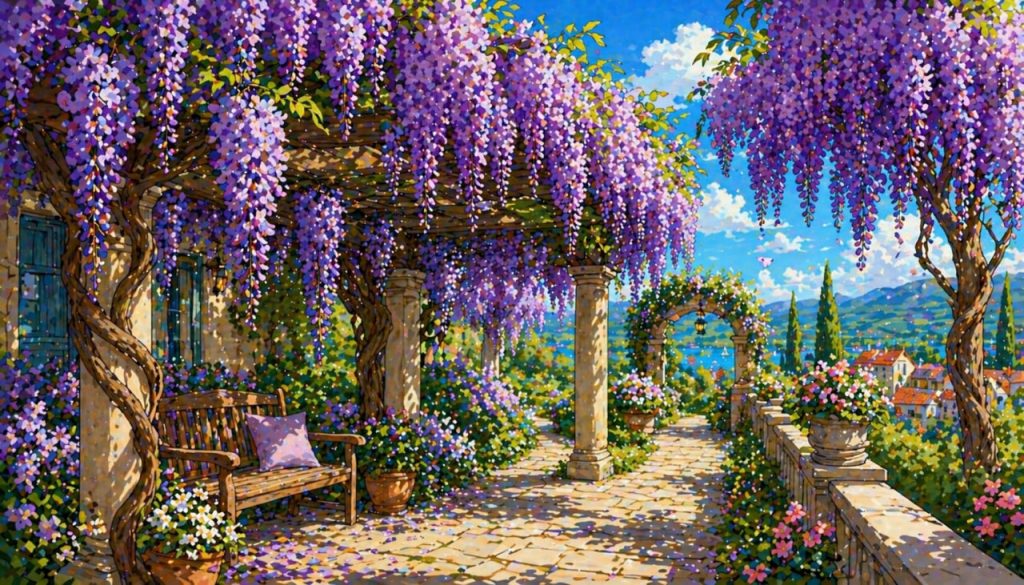
Wisteria is one of the most visually striking flowering plants in the world. Known for its cascading clusters of fragrant blossoms, this climbing vine transforms gardens, pergolas, and walls into breathtaking displays of color. With proper care and understanding, wisteria can become a long-lasting and dramatic centerpiece in any landscape.
This guide explores everything you need to know about wisteria—from its origins and growth habits to practical care tips and common challenges.
What Is Wisteria?
Wisteria is a genus of flowering plants in the pea family. It includes several species, most notably Chinese wisteria (Wisteria sinensis) and Japanese wisteria (Wisteria floribunda). These plants are woody vines, meaning they grow thick, twisting stems that can climb and wrap around structures.
What makes wisteria unique is its long, drooping clusters of flowers, called racemes, which can reach lengths of up to 50 centimeters or more. These blooms typically appear in shades of purple, blue, white, or pink and are often highly fragrant.
Why Wisteria Is So Popular
Wisteria has been cultivated for centuries, especially in East Asia, where it is admired for both its beauty and symbolism.
Its popularity comes from several key features:
- Spectacular visual impact during blooming season
- Strong, sweet fragrance
- Ability to cover large structures like arches and pergolas
- Longevity, with some plants living for decades or even over a century
In many gardens, wisteria serves as a focal point due to its dramatic appearance.
Growth Habits and Characteristics
Wisteria is a fast-growing and vigorous plant. Under the right conditions, it can grow several meters in a single season. This rapid growth makes it ideal for covering large areas, but it also requires careful management.
Important characteristics include:
- Twining stems that wrap around supports
- Dense foliage that provides shade
- Seasonal flowering, usually in spring or early summer
Because of its strength, wisteria can even damage weak structures if not properly supported. Choosing a sturdy support system is essential.
How to Grow Wisteria Successfully
Growing wisteria requires patience and proper planning. While the plant is relatively hardy, it has specific needs.
Sunlight and Location
Wisteria thrives in full sunlight, requiring at least six hours of direct sun per day. Insufficient light can lead to poor flowering.
Choose a location where the plant has:
- Strong structural support
- Space to expand
- Good air circulation
Soil Requirements
Wisteria prefers well-drained soil that is moderately fertile. Extremely rich soil can encourage leaf growth at the expense of flowers.
Ideal conditions:
- Slightly acidic to neutral soil
- Good drainage to prevent root rot
- Moderate nutrient levels
Watering and Feeding
Young plants need regular watering to establish roots. Once mature, wisteria becomes more drought-tolerant.
Key tips:
- Water deeply but not excessively
- Avoid over-fertilizing, especially with nitrogen-rich fertilizers
- Use balanced fertilizers if needed
The Importance of Pruning
Pruning is one of the most critical aspects of wisteria care. Without it, the plant can become overgrown and produce fewer flowers.
Pruning helps to:
- Control size and shape
- Encourage flowering
- Prevent structural damage
Most gardeners prune wisteria twice a year:
- In summer, to manage growth
- In winter, to shape the plant and promote blooms
Common Problems and Challenges
Despite its beauty, wisteria can present some challenges.
Delayed flowering is one of the most common issues. Some plants take several years to bloom, especially if grown from seed.
Other potential problems:
- Overgrowth that becomes difficult to manage
- Damage to buildings or structures
- Susceptibility to pests such as aphids
Garden expert Alan Titchmarsh notes:
“Wisteria rewards patience. Once established and properly pruned, it becomes one of the most spectacular plants you can grow.”
Is Wisteria Safe?
While wisteria is beautiful, it is important to know that parts of the plant—especially seeds and pods—are toxic if ingested. This makes it important to keep it out of reach of small children and pets.
Wisteria in Landscape Design
Wisteria is widely used in landscaping for its dramatic effect.
Popular uses include:
- Covering pergolas and arches
- Climbing walls and fences
- Creating shaded garden pathways
Its cascading flowers create a romantic and elegant atmosphere, making it a favorite in both traditional and modern gardens.
Why Wisteria Is Worth the Effort
Although wisteria requires maintenance and patience, the reward is a stunning, long-lasting display of flowers. Few plants can match its ability to transform outdoor spaces into something truly extraordinary.
With proper care, wisteria becomes not just a plant, but a living architectural feature in the garden.
Interesting Facts
- Some wisteria plants can live for over 100 years.
- The largest known wisteria vine in the world covers more than 4,000 square meters.
- Wisteria flowers can grow in clusters over 1 meter long in some species.
- The plant was introduced to Europe and North America in the 19th century.
- Wisteria vines can become strong enough to bend metal structures over time.
Glossary
- Raceme — A long cluster of flowers arranged along a central stem.
- Twining — A climbing method where stems wrap around a support.
- Pruning — The process of cutting parts of a plant to control growth and improve health.
- Well-drained Soil — Soil that allows water to pass through easily without becoming waterlogged.
- Toxic — Harmful if eaten or absorbed by the body.