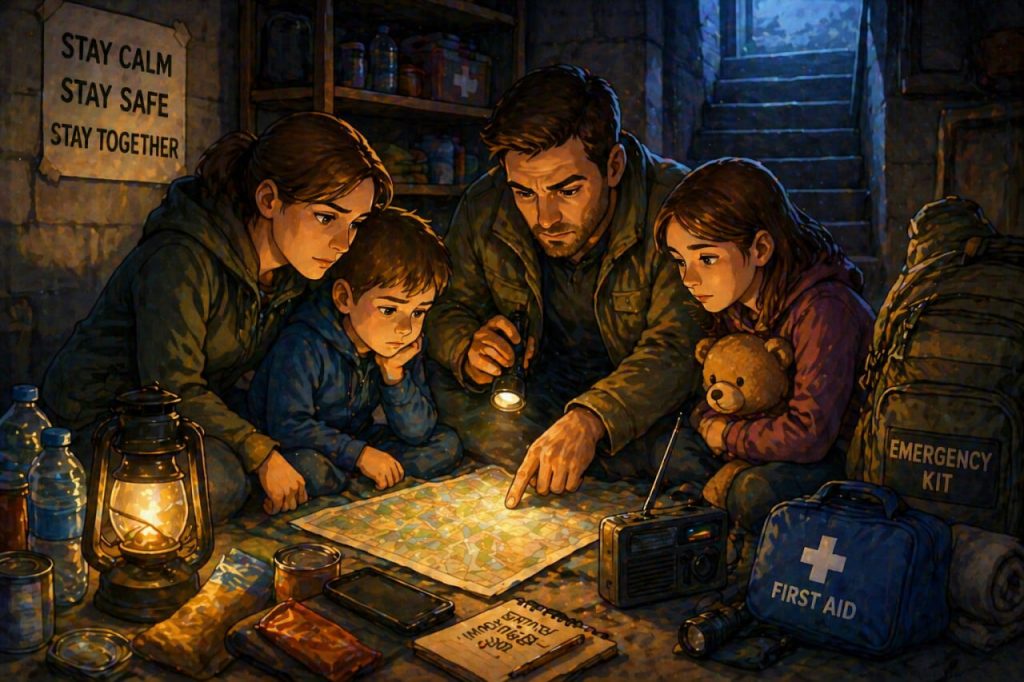
War is one of the most dangerous and unpredictable situations people can face. For civilians, the priority is survival, protection, and minimizing risk. While no guide can eliminate danger completely, understanding basic safety principles can significantly increase your chances of staying safe during armed conflict.
This article provides clear, practical, and responsible advice focused on civilian protection, preparedness, and risk reduction.
Understanding the Nature of Risk in War
War zones are unpredictable environments where threats can come from multiple sources, including explosions, infrastructure damage, and shortages of essential resources.
The key risks include:
- Airstrikes or shelling
- Lack of food, water, and medical care
- Disruption of communication
- Forced displacement
The goal is not to control the situation, but to reduce exposure to danger as much as possible.
Find and Prepare Safe Shelter
One of the most important steps is identifying a safe place to stay.
Safer shelter options include:
- Basements or underground spaces
- Interior rooms without windows
- Reinforced buildings made of concrete or brick
Avoid:
- Staying near windows
- Top floors of buildings
- Structures that can easily collapse
If possible, prepare your shelter in advance with essential supplies.
Prepare an Emergency Kit
Having a ready-to-use emergency kit can make a critical difference.
Basic items should include:
- Drinking water (at least for several days)
- Non-perishable food
- First aid kit
- Flashlight and batteries
- Phone charger or power bank
- Important documents (copies)
Keep the kit in a place that is easy to access in case you need to leave quickly.
Stay Informed Through Reliable Sources
Accurate information can save lives. During conflict, misinformation spreads quickly, so it is important to rely on trusted sources.
Stay updated through:
- Official government alerts
- Emergency services announcements
- Verified news channels
Avoid acting on rumors or unverified social media information.
Limit Movement and Avoid Dangerous Areas
Movement increases exposure to risk. Staying in a secure location is often safer than traveling.
If movement is necessary:
- Avoid military areas and infrastructure
- Stay away from crowds and checkpoints
- Move during safer times if advised by authorities
Always assess whether travel is truly necessary.
Protect Yourself During Explosions or Shelling
If you hear explosions or incoming fire, immediate action is critical.
Basic protective actions:
- Drop to the ground and cover your head
- Move away from windows
- Take shelter behind solid barriers
After the event:
- Stay in shelter until it is safe
- Avoid touching debris that may be dangerous
Maintain Communication and a Family Plan
Communication is essential for safety and coordination.
Important steps:
- Keep phones charged
- Agree on meeting points with family members
- Have a backup communication plan if networks fail
Children should know basic safety instructions and where to go if separated.
Manage Food, Water, and Hygiene
Access to basic resources may become limited during war.
Key practices:
- Store clean water in advance
- Use food supplies carefully
- Maintain basic hygiene to prevent illness
Even simple habits like handwashing can reduce health risks in difficult conditions.
Take Care of Mental and Emotional Health
War creates significant psychological stress. Fear, uncertainty, and isolation can affect mental well-being.
Helpful strategies:
- Stay connected with family or community
- Maintain simple daily routines
- Limit exposure to distressing news
Supporting emotional stability is important for making clear decisions.
Follow Evacuation Instructions Carefully
If authorities recommend evacuation, follow instructions promptly.
Before leaving:
- Take essential belongings only
- Turn off utilities if instructed
- Lock your home if possible
During evacuation:
- Follow designated routes
- Stay with your group
- Remain calm and alert
Evacuation plans are designed to reduce risk, even if they feel inconvenient.
Expert Perspective on Civilian Safety
According to the International Committee of the Red Cross (ICRC):
“The safest course of action for civilians during armed conflict is to reduce exposure to danger, stay informed, and follow guidance from trusted authorities.”
This reinforces the importance of preparation, awareness, and caution.
Why Preparedness Matters
Preparation does not mean expecting the worst—it means being ready to respond effectively. Simple actions taken in advance can prevent panic and reduce risk during critical moments.
Safety in war is about:
- Awareness
- Planning
- Calm decision-making
Even in extreme situations, informed choices can save lives.
Interesting Facts
- Most civilian injuries in war zones occur due to lack of shelter rather than direct conflict.
- Having a prepared emergency kit significantly increases survival chances during crises.
- Basements provide better protection from explosions than upper floors.
- Communication breakdown is one of the biggest challenges in conflict zones.
- Psychological resilience plays a major role in survival during prolonged crises.
Glossary
- Evacuation — The organized movement of people away from danger.
- Shelter — A safe place that provides protection from threats.
- Emergency Kit — A collection of essential supplies for survival situations.
- Infrastructure — Basic systems such as roads, electricity, and water supply.
- Crisis Situation — A dangerous or unstable condition requiring urgent action.