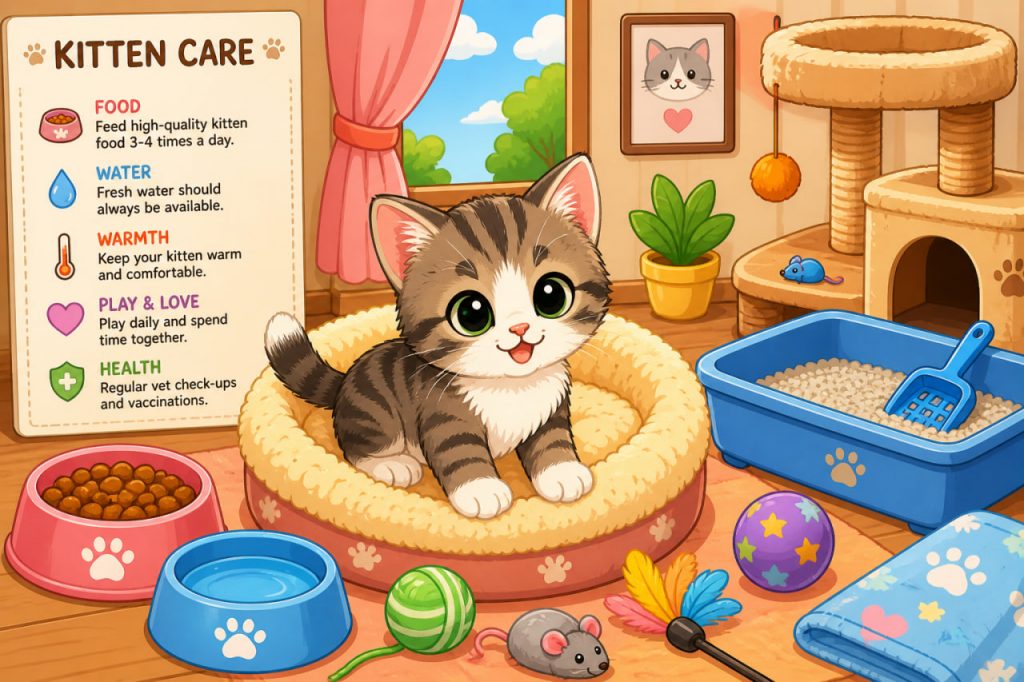
Taking care of a small kitten is both rewarding and demanding. Kittens require attention, proper nutrition, warmth, and social interaction to grow into healthy adult cats. Understanding their needs early on helps ensure strong development, good health, and a trusting bond with humans.
This guide covers everything you need to know about caring for a young kitten.
Preparing a Safe Environment
Before bringing a kitten home, it is important to create a safe and comfortable space.
A kitten’s environment should include:
- A warm sleeping area
- Soft bedding
- A quiet and secure location
- Protection from hazards like wires or small objects
Young kittens are curious and fragile, so safety is essential.
Feeding a Kitten Properly
Nutrition is one of the most important aspects of kitten care.
For Very Young Kittens
Kittens under a few weeks old need special milk formula designed for cats. Regular cow’s milk is not suitable and can cause digestive problems.
For Older Kittens
As kittens grow, they can transition to solid food:
- High-quality kitten food
- Balanced nutrients for growth
- Fresh water always available
Kittens need frequent meals because they grow quickly and require energy.
Keeping the Kitten Warm
Small kittens cannot regulate their body temperature well.
To keep them warm:
- Use blankets or soft fabric
- Keep them away from cold drafts
- Maintain a comfortable room temperature
Warmth is critical, especially for very young kittens.
Hygiene and Litter Training
Kittens naturally learn to use a litter box, but they may need guidance.
Steps for training:
- Place the kitten in the litter box after meals
- Keep the box clean
- Use soft, non-toxic litter
Cleanliness helps prevent illness and encourages good habits.
Health and Veterinary Care
Regular veterinary care is essential for a kitten’s development.
Important steps include:
- Vaccinations
- Parasite prevention
- Health check-ups
If a kitten shows signs of illness such as lethargy, loss of appetite, or unusual behavior, it is important to consult a veterinarian.
Socialization and Play
Kittens learn about the world through play.
Play helps:
- Develop coordination
- Build strength
- Improve social skills
Use safe toys and interact regularly. Gentle handling helps kittens become comfortable with people.
Grooming and Care
Kittens usually keep themselves clean, but some care is still needed.
Basic grooming includes:
- Brushing fur (depending on breed)
- Checking eyes and ears
- Keeping the living area clean
Regular care helps prevent problems and keeps the kitten comfortable.
Sleep and Rest
Kittens sleep a lot—often up to 16–20 hours a day.
Sleep is important for:
- Growth
- Brain development
- Energy restoration
A quiet and safe place to rest is essential.
Common Mistakes to Avoid
New kitten owners sometimes make simple mistakes.
Avoid:
- Feeding inappropriate food
- Ignoring early signs of illness
- Leaving dangerous objects within reach
- Handling too roughly
Being attentive helps prevent problems.
Building a Strong Bond
Spending time with your kitten is key to building trust.
- Speak softly
- Handle gently
- Be consistent with care
A positive relationship early in life leads to a friendly and confident cat.
Why Proper Care Matters
Early care shapes a kitten’s entire life. Providing the right conditions ensures healthy growth and emotional well-being.
A well-cared-for kitten becomes:
- Strong and healthy
- Social and confident
- Adapted to human environments
Interesting Facts
- Kittens are born blind and deaf.
- They begin exploring their surroundings after a few weeks.
- Play behavior helps them learn hunting skills.
- Kittens grow rapidly during the first months of life.
- Early socialization affects personality in adulthood.
Glossary
- Kitten Formula — Special milk replacement for young kittens.
- Litter Box — A container where cats go to the bathroom.
- Vaccination — Protection against diseases.
- Socialization — Learning to interact with others.
- Grooming — Basic care of fur and cleanliness.