As the world faces climate change and environmental challenges, the question becomes increasingly important: can humanity rely entirely on eco-friendly electricity? Renewable energy sources such as solar, wind, hydro, and geothermal power are rapidly expanding. Many experts believe that a future powered by clean electricity is not only possible, but necessary.
Understanding the potential and limitations of eco-friendly energy helps clarify whether a fully sustainable energy system is achievable.
What Is Eco-Friendly Electricity?
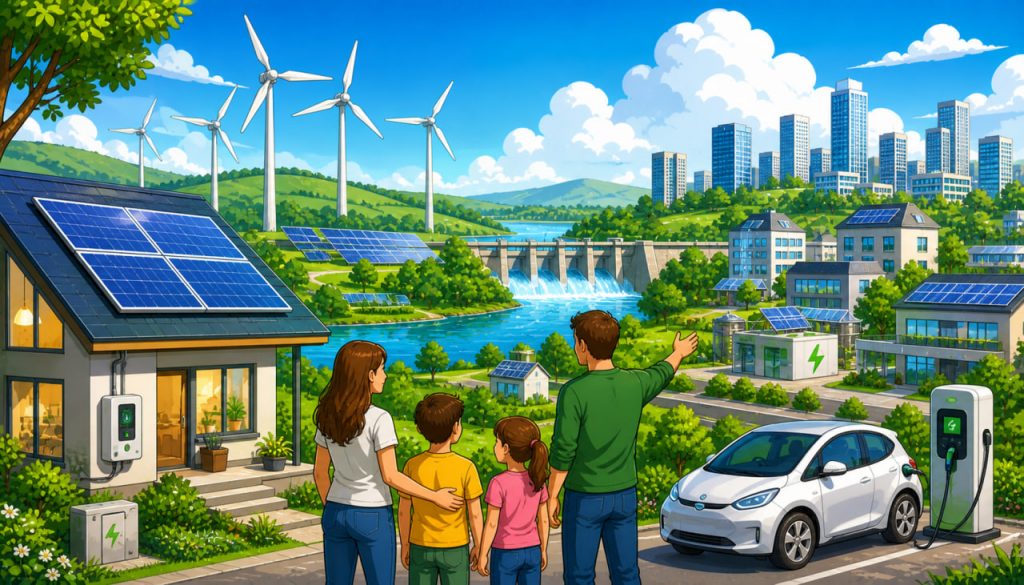
Eco-friendly electricity, also known as renewable or clean energy, is generated from natural sources that do not deplete over time and produce minimal environmental impact.
Common sources include:
- Solar energy (sunlight)
- Wind energy
- Hydropower (water flow)
- Geothermal energy (heat from the Earth)
These sources reduce greenhouse gas emissions compared to fossil fuels.
Why the World Is Moving Toward Clean Energy
Traditional energy sources like coal, oil, and gas:
- Produce large amounts of carbon dioxide
- Contribute to climate change
- Pollute air and water
Renewable energy offers:
- Lower emissions
- Sustainable supply
- Reduced environmental damage
The transition is driven by both environmental and economic factors.
Is 100% Renewable Energy Possible?
Many scientists and engineers believe that a fully renewable energy system is achievable.
However, it requires:
- Large-scale infrastructure
- Energy storage solutions
- Grid modernization
Countries like Iceland and Norway already generate most of their electricity from renewable sources.
The Challenge of Energy Storage
One of the biggest challenges is storing energy.
Renewable sources are not constant:
- Solar power depends on sunlight
- Wind energy depends on weather
To solve this, we need:
- Batteries
- Hydrogen storage
- Smart energy systems
Reliable storage is key to making renewable energy stable and consistent.
The Role of Technology
Technological advancements are accelerating the transition.
Innovations include:
- More efficient solar panels
- Advanced wind turbines
- Smart grids that balance supply and demand
These technologies improve reliability and efficiency.
Expert Insight
Energy researcher Mark Jacobson from Stanford University has stated:
“We can power the world with 100% renewable energy using existing technologies—it is mainly a matter of implementation and policy.”
His research supports the feasibility of a fully renewable system.
Economic Considerations
Renewable energy is becoming more affordable.
In many regions:
- Solar and wind are cheaper than fossil fuels
- Maintenance costs are lower
- Investment in clean energy is growing
The economics of energy are shifting in favor of renewables.
Environmental Benefits
Switching to eco-friendly electricity offers major environmental advantages.
It helps:
- Reduce greenhouse gas emissions
- Improve air quality
- Protect ecosystems
This transition is essential for combating climate change.
Limitations and Challenges
Despite its potential, renewable energy faces challenges:
- Intermittency (not always available)
- High initial investment costs
- Infrastructure development
- Resource distribution differences between regions
A balanced and well-planned system is necessary.
The Role of Individuals
Individuals can also contribute to the transition.
Actions include:
- Using energy-efficient appliances
- Supporting renewable energy providers
- Reducing overall energy consumption
Small changes can have a collective impact.
A Realistic Future
A fully renewable world is possible, but it will take time.
The most likely scenario:
- A mix of energy sources
- Gradual reduction of fossil fuels
- Continued technological progress
The transition is already happening and accelerating.
Why This Matters
Energy is the foundation of modern life. How we produce it affects the environment, economy, and future generations.
Eco-friendly electricity is not just an option—it is a necessity for sustainable development.
Interesting Facts
- Solar energy is the fastest-growing energy source worldwide.
- Wind turbines can generate power even at low wind speeds.
- Hydropower is one of the oldest renewable energy sources.
- Some countries already use nearly 100% renewable electricity.
- Battery technology is rapidly improving each year.
Glossary
- Renewable Energy — Energy from natural sources that replenish over time.
- Solar Power — Energy from sunlight.
- Wind Energy — Energy generated by wind turbines.
- Energy Storage — Methods of storing electricity for later use.
- Smart Grid — An advanced system for managing electricity distribution.