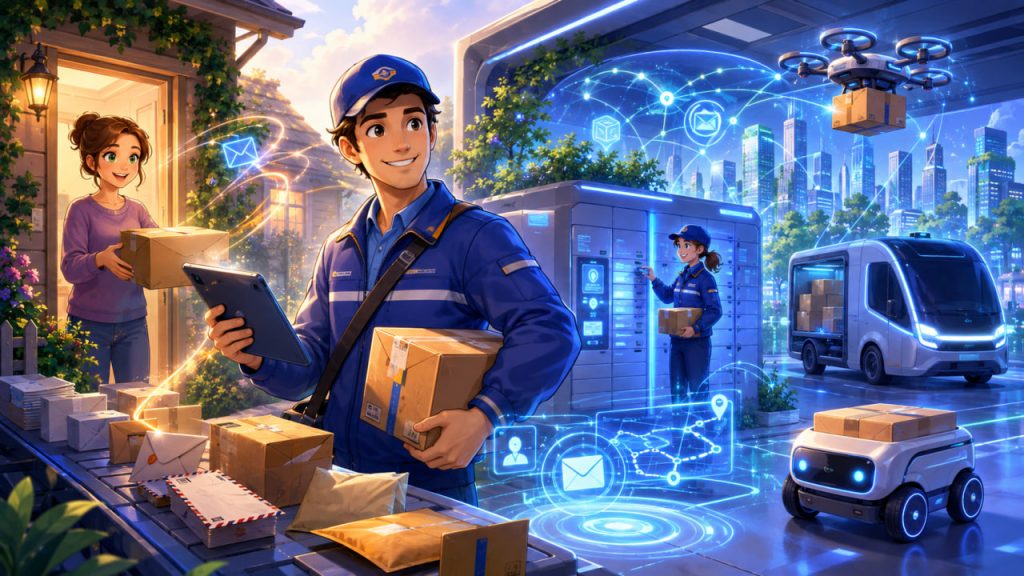
Modern mail is no longer just envelopes, stamps, and a delivery worker walking from house to house. Today, the postal system is becoming a powerful mix of logistics, e-commerce, digital identity, automation, sustainability, and last-mile delivery.
For many people, traditional letters feel old-fashioned. Bills arrive online, messages move instantly, and businesses rely on digital tools. Yet modern mail has not disappeared. It has changed its role.
The future of mail is not about choosing between physical and digital communication. It is about connecting both worlds into one reliable service system.
What Modern Mail Means Today
Modern mail includes far more than personal letters.
It now covers parcels, online shopping deliveries, registered documents, business logistics, government notices, medicine shipments, returns processing, secure identity services, and cross-border e-commerce.
Postal networks still matter because they reach places that many private delivery companies do not prioritize. Rural towns, remote regions, small businesses, older adults, and low-income communities often depend on postal infrastructure for essential access.
The Universal Postal Union describes the postal sector as a global network that supports communication, trade, financial services, and social inclusion in the digital age. Its 2025 postal sector research also emphasizes that postal services must modernize quickly to remain sustainable and relevant.
The Shift From Letters to Parcels
One of the biggest changes in modern mail is the decline of traditional letter volume and the rise of parcel delivery.
People send fewer personal letters, but they order more products online than ever before. This has transformed postal operators into major players in e-commerce logistics.
A modern postal service must now handle millions of packages with different sizes, delivery speeds, tracking requirements, customs rules, and return options.
The mailbox is no longer only a place for letters. It has become the final point in a global shopping chain.
This shift creates opportunity, but it also creates pressure. Customers expect fast delivery, accurate tracking, flexible pickup, easy returns, and low shipping costs. Postal operators must compete with private logistics companies while still maintaining universal service obligations.
Tracking Has Changed Customer Expectations
In the past, sending mail required patience. A person mailed a letter or parcel and waited.
Today, customers expect to see every step of the journey.
Tracking systems show when an item is accepted, processed, transported, out for delivery, and delivered. Some services provide estimated delivery windows, proof of delivery, location updates, and automatic notifications.
This level of transparency has changed the psychology of mail. People no longer see delivery as a mystery. They see it as a visible process.
For businesses, tracking is even more important. A delayed parcel can affect customer satisfaction, reviews, refunds, and repeat sales.
Automation and AI in Postal Operations
Modern postal centers increasingly rely on automation.
Sorting machines can scan addresses, read barcodes, organize parcels, and route items more efficiently than manual systems alone. Artificial intelligence can help predict demand, optimize delivery routes, detect address errors, manage customer service requests, and improve operational planning.
AI is especially useful in last-mile delivery, where small delays and inefficient routes can create large costs.
For example, route optimization can help delivery vehicles avoid unnecessary mileage. Predictive analytics can help postal operators prepare for holiday peaks, severe weather, or sudden increases in online shopping.
The smarter the postal network becomes, the more invisible its complexity feels to the customer.
Smart Lockers and Flexible Delivery
Another major trend is the rise of parcel lockers and pickup points.
Instead of waiting at home, customers can collect packages from secure lockers at supermarkets, apartment buildings, transport hubs, office centers, and neighborhood stores.
This solves several problems at once. It reduces missed deliveries, saves time for couriers, protects parcels from theft, and gives customers more control.
Smart lockers are especially useful in cities, where apartment access can be difficult and delivery density is high.
In the future, many people may no longer think of mail delivery as a single address-based service. They may choose between home delivery, workplace delivery, neighborhood lockers, pickup counters, and scheduled drop-off windows.
The Future of Digital Mail
Digital mail is also becoming more important.
Governments, banks, healthcare providers, insurance companies, and legal institutions need secure ways to send official information. Ordinary email is fast, but it is not always trusted for sensitive documents.
This creates a role for verified digital postal services.
Future postal systems may offer secure digital mailboxes linked to identity verification. These services could help people receive official documents, tax notices, medical information, contracts, and government messages in a trusted digital environment.
The challenge is security. Digital postal systems must protect privacy, prevent fraud, and remain easy enough for ordinary people to use.
Future mail will not only deliver objects. It will also deliver verified trust.
Sustainability and Green Delivery
Postal services operate huge fleets of vehicles and large networks of buildings. That makes sustainability a major part of their future.
Electric delivery vehicles, cargo bikes, renewable energy, smarter routing, low-emission sorting centers, reusable packaging, and carbon reporting are becoming more important.
The Universal Postal Union notes that postal organizations are transitioning fleets to alternative vehicles, generating renewable energy, and integrating sustainability into business operations.
In the United States, USPS fleet modernization includes major investment in new delivery vehicles, including battery-electric models, as part of its long-term modernization program.
Green delivery is not only about public image. It can reduce fuel costs, improve urban air quality, and prepare postal operators for stricter climate regulations.
Why Human Workers Still Matter
Technology will transform mail, but people will remain essential.
Postal workers do more than move envelopes and parcels. They understand neighborhoods, help vulnerable customers, notice delivery problems, manage exceptions, and maintain trust.
In many communities, the local post office is still an important public service point.
Future postal workers may use more digital tools, handheld devices, AI-assisted routing, and automated sorting systems. Their work may become less repetitive but more technical.
The future of mail is not worker versus machine. It is worker plus machine.
Expert Perspective
The Universal Postal Union has warned that the postal sector faces a major transformation challenge. Its recent analysis highlights pressure from digital communication, changing customer behavior, e-commerce growth, and the need for more diversified services. The organization argues that postal operators must modernize, collaborate, and rethink their role inside a broader logistics and digital service ecosystem.
This expert view reflects the central truth of modern mail: postal services cannot survive by protecting the past. They must expand into smarter logistics, secure digital communication, sustainable delivery, and customer-focused services.
What the Future Mail System May Look Like
The postal service of the future will likely be hybrid.
A customer may receive government documents through a secure digital mailbox, order products delivered to a smart locker, return items through a neighborhood post office, verify identity through a postal app, and track international packages in real time.
Businesses may use postal networks not only for shipping, but also for warehousing, returns, customs support, local delivery, and customer communication.
In some regions, drones, autonomous vehicles, and robotic delivery systems may support difficult routes. However, these technologies will probably grow gradually rather than replace traditional delivery everywhere.
The most successful postal systems will be those that combine reliability with flexibility.
They will not simply ask, “How do we deliver mail?” They will ask, “How do we help people, businesses, and governments exchange things safely, efficiently, and affordably?”
Interesting Facts
- The global postal network connects nearly every country and remains one of the widest service infrastructures in the world.
- Parcel delivery has become one of the most important growth areas for postal operators.
- Smart lockers can reduce failed delivery attempts and make parcel pickup more convenient.
- Electric delivery vehicles are becoming a key part of postal sustainability strategies.
- Digital mailboxes may become important for secure government, financial, and legal communication.
- Many postal services are no longer only mail companies; they are becoming logistics, identity, and digital service platforms.
- The last mile is often one of the most expensive and complex parts of delivery.
Glossary
- Modern Mail — Today’s postal system, including letters, parcels, digital services, tracking, logistics, and secure communication.
- Last-Mile Delivery — The final stage of delivery from a local facility to the customer.
- E-Commerce Logistics — The systems used to store, ship, deliver, and return products bought online.
- Smart Locker — A secure automated locker where customers can pick up or return parcels.
- Digital Mailbox — A secure online space for receiving official or sensitive digital documents.
- Route Optimization — The use of data and technology to find more efficient delivery routes.
- Universal Service — The principle that postal services should remain accessible to all people, including those in remote or less profitable areas.
- Fleet Modernization — The process of replacing older delivery vehicles with newer, safer, cleaner, or more efficient ones.
- Automation — The use of machines or software to perform tasks that were previously done manually.
- Hybrid Postal System — A postal model that combines physical delivery with digital services.