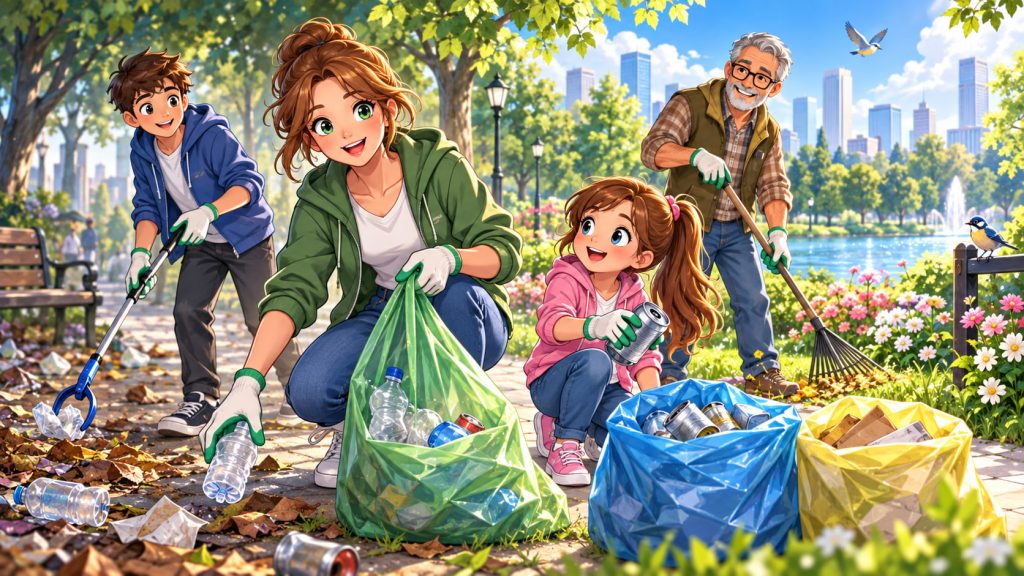
A subbotnik is a community cleanup day in which neighbors, coworkers, students, families, or volunteers gather to improve a shared space. The tradition is especially familiar across Eastern Europe and the former Soviet Union, but the basic idea exists worldwide under different names: neighborhood cleanup, volunteer cleanup, park restoration day, community workday, or litter-picking event.
At first glance, a subbotnik may seem like simple manual labor. In reality, a well-organized cleanup can combine physical activity, social interaction, environmental improvement, and civic participation in a single event.
The biggest benefits appear when the work is planned carefully, safety is taken seriously, and collected waste actually reaches the correct recycling or disposal system.
Why a Subbotnik Can Be Good for Your Health
Community cleanup usually involves moderate physical activity.
Walking, bending, carrying light bags, raking leaves, sweeping paths, and collecting litter all require movement.
For people who spend much of the week sitting at a desk, even a few hours of outdoor activity can increase daily movement significantly.
Physical activity supports cardiovascular health, muscle function, mobility, and energy balance.
However, a subbotnik is not automatically a safe workout.
Heavy lifting, repetitive bending, hot weather, cold conditions, sharp waste, and uneven ground can create injury risks.
The healthiest cleanup is one where participants work at an appropriate intensity rather than treating the event like a competition.
Outdoor Time Can Support Mental Well-Being
Community cleanups also provide psychological benefits.
Spending time outdoors can offer a break from screens, routine work, and indoor environments.
Natural surroundings, daylight, and social interaction may help reduce stress and improve mood.
There is also a strong sense of visible achievement.
A dirty park, courtyard, roadside, or riverbank can look dramatically different after only a few hours of coordinated effort.
That immediate result can make volunteering feel satisfying.
Seeing a cleaner place at the end of the day gives participants a tangible sense that their work mattered.
Social Connection Is Part of the Benefit
Subbotniks are often as much about people as they are about litter.
Neighbors who normally pass each other without speaking may work side by side.
Coworkers interact outside their usual professional roles.
Children can see adults taking responsibility for shared spaces.
Community activities can strengthen social connections, especially when organizers make the event welcoming rather than overly formal.
A cleanup can also become an educational event where participants learn about recycling, local wildlife, waste prevention, and environmental responsibility.
How Community Cleanups Help the Environment
The most obvious environmental benefit is the removal of litter.
Plastic bottles, cans, packaging, cigarette waste, broken glass, fishing line, and other debris can remain in public spaces for long periods.
Waste can enter storm drains, rivers, lakes, and eventually oceans.
Animals may swallow small plastic pieces or become trapped in discarded materials.
Sharp metal and glass can also injure wildlife and people.
Removing this waste reduces immediate local hazards.
A cleaner area is not only more attractive; it can also be safer for people, pets, and wildlife.
Plastic Waste Deserves Special Attention
Plastic is especially important because many plastic products do not biodegrade in the same way as leaves, paper, or food waste.
Instead, they can gradually break into smaller fragments.
These fragments may eventually become microplastics.
Cleaning plastic waste before it reaches rivers and other waterways is therefore particularly useful.
However, cleanup events address only the waste that has already escaped into the environment.
Long-term improvement also requires reducing unnecessary disposable products, improving waste collection, and designing better recycling systems.
Cleaning Is Not the Same as Recycling
One of the most common mistakes in volunteer cleanup events is putting everything into a single bag.
That makes collection faster, but it may make recycling impossible.
If local infrastructure allows, waste can be separated into categories such as:
- Recyclable plastic
- Glass
- Metal
- Paper and cardboard
- General waste
- Organic garden waste
The exact categories should match the local waste system.
Wet, dirty, or contaminated materials may not be recyclable even if the basic material normally is.
Sorting should be based on what local recycling facilities actually accept, not simply on what participants hope can be recycled.
Choose the Right Location Before Organizing
The best cleanup location is not always the dirtiest place.
Safety and accessibility matter.
Parks, school grounds, residential courtyards, riverbanks, beaches, forest edges, and pedestrian areas can all be suitable.
Before the event, organizers should inspect the area.
Look for dangerous traffic, steep slopes, unstable ground, abandoned structures, contaminated waste, needles, electrical equipment, or other hazards.
Some locations may require official permission.
Public authorities or landowners may also need to arrange collection of the filled bags afterward.
Plan the Waste Removal Before the Cleanup Starts
A cleanup is incomplete if dozens of filled bags are simply left beside the road.
Before volunteers arrive, organizers should know exactly where the collected material will go.
Arrange:
- Collection points
- Waste containers
- Recycling categories
- Vehicle access
- Pickup times
- Responsibility for leftover equipment
For larger events, coordination with municipal waste services can be extremely useful.
Planning disposal first prevents the strange situation in which litter is successfully removed from nature but then becomes a pile of unmanaged waste somewhere else.
Safety Equipment Is Essential
Participants should wear sturdy closed shoes and work gloves.
Depending on the location, useful equipment may include:
- Reflective vests
- Litter grabbers
- Rakes
- Brooms
- Durable waste bags
- Buckets
- First-aid supplies
- Drinking water
- Sunscreen
- Weather-appropriate clothing
Children should work under adult supervision.
Participants should never pick up suspicious chemicals, medical waste, needles, batteries, unidentified containers, explosives, or electrical equipment with bare hands.
Potentially hazardous items should be reported to the relevant local service.
Avoid Turning the Event Into Unnecessary Heavy Labor
Community cleanups often become less safe when participants try to move objects that are too heavy.
Large construction debris, refrigerators, metal structures, heavy branches, and abandoned machinery may require professional equipment.
Using volunteers for tasks beyond their physical capabilities creates unnecessary risk.
Organizers should divide the site into manageable zones and assign simple tasks.
Short breaks are important, especially in hot weather.
Water should always be easily available.
Make the Event More Environmentally Useful
A modern subbotnik can do more than collect rubbish.
Participants can also improve the area through carefully planned activities such as maintaining existing trees, removing invasive plants where appropriate, cleaning drainage areas, restoring paths, or installing approved waste bins.
Tree planting can be useful, but only when the species and location are suitable.
Planting large numbers of inappropriate trees without planning can create maintenance problems later.
Environmental restoration works best when the activity matches the ecology of the site.
Expert Perspective: Prevention Matters More Than Repeated Cleaning
Environmental specialists generally emphasize that cleanups are valuable but cannot replace good waste management.
If the same location fills with litter again every month, the deeper problem has not been solved.
Organizers can use the event to identify recurring waste sources.
Perhaps bins are missing.
Perhaps collection is too infrequent.
Perhaps nearby businesses generate packaging waste.
Perhaps cigarette litter concentrates around specific entrances.
This information can help communities move from repeated cleaning to prevention.
The best subbotnik leaves behind not only a cleaner place, but also a plan for keeping it cleaner.
How to Make People Want to Participate Again
Volunteer events work better when they are organized efficiently.
Set a clear starting time, explain the tasks quickly, provide enough equipment, and avoid keeping participants waiting.
Divide volunteers into small groups.
Give each group a specific area.
Photographs taken before and after the cleanup can show progress clearly.
A short social gathering afterward can strengthen the community aspect of the event.
Children may enjoy simple environmental activities, while adults may appreciate practical information about recycling and local waste collection.
A successful cleanup should leave people feeling energized rather than exhausted.
Interesting Facts
- Community cleanups can combine moderate physical activity with environmental volunteering.
- Litter near roads and waterways can eventually be transported long distances by wind and rain.
- Plastic waste often fragments into smaller particles rather than disappearing completely.
- Cigarette filters are a common form of urban litter and contain plastic fibers.
- Fishing line and packaging loops can trap birds and other animals.
- Broken glass can remain hazardous in parks and natural areas for many years.
- Waste sorting works best when it follows the requirements of the local recycling system.
- Community events can help identify recurring sources of litter that ordinary waste statistics may miss.
- A cleanup can sometimes prevent debris from entering storm drains and waterways during heavy rain.
- The environmental impact of a subbotnik can continue long after the event if it leads to better bins, education, and waste-management practices.
Glossary
- Subbotnik — A community volunteer workday traditionally associated with cleaning, maintenance, or improvement of shared public spaces.
- Community Cleanup — An organized event in which volunteers remove litter or improve a public area.
- Litter — Waste that has been improperly discarded in public or natural environments.
- Microplastics — Very small plastic particles created intentionally or through the breakdown of larger plastic items.
- Recycling — Processing used materials so they can become raw material for new products.
- Waste Stream — A category or flow of waste moving from its source toward recycling, treatment, or disposal.
- Hazardous Waste — Waste that may pose risks because it is toxic, corrosive, infectious, reactive, or otherwise dangerous.
- Invasive Species — A non-native organism that spreads and can damage local ecosystems.
- Environmental Restoration — Work intended to repair or improve damaged ecosystems or landscapes.
- Waste Prevention — Measures designed to reduce the amount of waste created in the first place.
- Civic Participation — Voluntary involvement by residents in activities that improve or support their community.