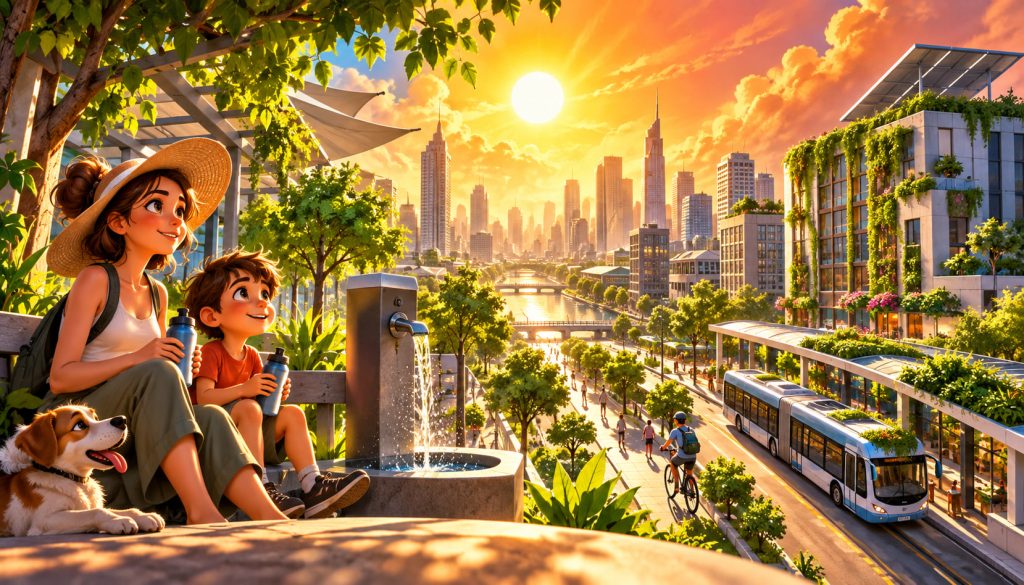
Extreme heat is becoming one of the greatest challenges facing modern cities. As global temperatures rise and heatwaves become more intense in many regions, millions of urban residents face increasing risks from dangerously high temperatures.
Concrete buildings, asphalt roads, limited vegetation, and densely populated neighborhoods can make cities considerably hotter than their rural surroundings.
The consequences extend beyond uncomfortable summer afternoons. Extreme heat threatens public health, increases electricity demand, disrupts transportation, and places enormous pressure on urban infrastructure.
Preparing cities for extreme heat requires more than installing additional air conditioners. It involves redesigning urban environments, protecting vulnerable populations, and developing infrastructure capable of withstanding increasingly severe heatwaves.
Why Cities Become Dangerous During Heatwaves
Urban areas experience a phenomenon known as the urban heat island effect.
Buildings, roads, and other artificial surfaces absorb solar radiation during the day and gradually release stored heat after sunset.
This process can prevent cities from cooling sufficiently overnight.
Tall buildings may also restrict airflow, while vehicles and air-conditioning systems release additional heat into the surrounding environment.
Neighborhoods with limited vegetation and extensive paved surfaces are especially vulnerable.
During prolonged heatwaves, the combination of high daytime temperatures and unusually warm nights can create serious health risks for urban populations.
Planting Trees and Expanding Urban Green Spaces
One of the most effective ways to reduce urban heat is to increase vegetation.
Trees provide shade, preventing sunlight from directly heating roads, sidewalks, and building surfaces.
They also cool their surroundings through evapotranspiration, a natural process in which water evaporates from soil and is released by plants.
Urban parks, green corridors, and tree-lined streets can create cooler environments and improve pedestrian comfort.
However, successful urban greening requires careful planning.
Cities must select suitable tree species, provide sufficient soil space, and maintain reliable irrigation during droughts.
Native and drought-tolerant plants can help reduce long-term water consumption.
Urban greenery works best when it is distributed throughout residential neighborhoods rather than concentrated exclusively in large central parks.
Cool Roofs and Reflective Building Materials
Traditional dark roofs absorb substantial amounts of solar radiation.
During hot weather, this energy raises roof temperatures and increases the amount of heat entering buildings.
Cool roofs use highly reflective materials or specialized coatings to reflect more sunlight and reduce heat absorption.
They can lower indoor temperatures and reduce the electricity required for air conditioning.
Reflective pavements can also reduce surface temperatures, although their effects on pedestrians depend on how reflected radiation interacts with the surrounding environment.
Building insulation, external shading, and energy-efficient windows provide additional protection.
Combining these technologies can substantially improve thermal comfort while reducing energy consumption.
Designing Buildings for Natural Cooling
Modern cities can reduce their dependence on mechanical cooling through climate-responsive architecture.
Buildings designed for hot climates often incorporate shaded windows, ventilated roofs, courtyards, and carefully positioned openings.
External shutters and adjustable sunshades prevent direct sunlight from entering rooms during the hottest parts of the day.
Where outdoor conditions permit, natural ventilation can remove accumulated heat.
Green roofs and vegetated walls offer additional benefits, including insulation, stormwater management, and habitat creation.
However, natural cooling alone may be insufficient during severe heatwaves, particularly when nighttime temperatures remain dangerously high.
The most resilient buildings combine passive cooling strategies with efficient mechanical systems and reliable emergency power.
Protecting Vulnerable Residents
Extreme heat does not affect everyone equally.
Older adults, infants, people with certain medical conditions, outdoor workers, and residents without access to adequate cooling face particularly high risks.
People living alone may also struggle to obtain assistance during dangerous heatwaves.
Cities can establish cooling centers in libraries, community buildings, schools, and other accessible public facilities.
These centers provide air-conditioned spaces where residents can escape extreme temperatures.
Public transportation to cooling centers, extended opening hours, and accessible facilities are essential for reaching vulnerable populations.
Community organizations can also coordinate welfare checks and distribute drinking water.
Early-Warning Systems and Emergency Preparedness
Heatwaves often develop over several days, creating opportunities for early intervention.
Weather forecasting allows authorities to issue warnings before temperatures reach dangerous levels.
Effective heat-health warning systems combine meteorological information with public-health guidance.
Municipal governments can activate emergency response plans, extend cooling center operations, and coordinate outreach to vulnerable residents.
Clear communication is particularly important.
Warnings should be understandable, available in multiple languages, and distributed through television, radio, mobile notifications, and community networks.
A well-organized early-warning system can turn weather forecasts into practical actions that protect lives.
Making Transportation and Infrastructure Heat-Resistant
Extreme temperatures can damage roads, deform railway tracks, and place additional stress on bridges and electrical equipment.
Public transportation systems may experience delays when infrastructure exceeds its safe operating temperature.
Cities can improve resilience by selecting heat-resistant construction materials, upgrading ventilation systems, and strengthening infrastructure monitoring.
Bus stops and pedestrian routes also require attention.
Shaded sidewalks, drinking fountains, covered waiting areas, and accessible public spaces can make everyday travel safer during hot weather.
Electricity networks must also be prepared for sudden increases in cooling demand.
Expert Perspective: Heat Is an Urban Planning Challenge
The World Health Organization emphasizes that heat-related health risks can be reduced through coordinated public-health measures, early-warning systems, and appropriate urban planning.
Its guidance highlights the importance of protecting vulnerable populations and reducing exposure to dangerous temperatures.
Urban climate researchers also recognize that individual cooling technologies cannot address every aspect of extreme heat.
Citywide approaches involving green infrastructure, building design, public transportation, and emergency preparedness offer broader protection.
Extreme heat resilience depends on coordinated action across urban planning, healthcare, energy management, and community services.
How Cities Are Already Adapting
Several major cities have introduced innovative approaches to extreme heat.
Singapore has invested extensively in urban greenery, including roadside trees, green roofs, and vegetation integrated into buildings.
Medellín, Colombia, has developed green corridors that connect urban spaces and help reduce temperatures in surrounding areas.
Paris has expanded its efforts to create cooler public spaces, improve urban vegetation, and provide accessible locations where residents can escape dangerous heat.
These initiatives illustrate how different climates and urban environments require different adaptation strategies.
Cities must consider local humidity, water availability, population density, and infrastructure when designing effective solutions.
Building the Heat-Resilient Cities of the Future
Long-term preparation requires integrating extreme heat adaptation into urban development.
New neighborhoods can incorporate shaded streets, energy-efficient buildings, parks, and accessible public transportation from the beginning.
Existing districts may require extensive renovations to improve cooling and reduce heat exposure.
Urban planners can use satellite observations, temperature sensors, and detailed climate models to identify neighborhoods experiencing particularly dangerous conditions.
Prioritizing these areas helps direct investment toward residents facing the greatest risks.
The cities that successfully adapt to extreme heat will be those that treat cooling, public health, and climate resilience as essential components of urban infrastructure.
Interesting Facts
- Urban heat islands can make cities several degrees warmer than surrounding rural areas, especially at night.
- Trees cool their surroundings through both shade and evapotranspiration.
- Dark asphalt surfaces can become substantially hotter than the surrounding air during sunny summer afternoons.
- Cool roofs can reduce building temperatures by reflecting more incoming solar radiation.
- Warm nights are particularly dangerous because they limit the body’s opportunity to recover from daytime heat.
- Green corridors can improve thermal comfort while supporting biodiversity and urban recreation.
- Satellite observations help scientists identify neighborhoods with unusually high surface temperatures.
- Access to parks and tree cover can vary significantly between neighborhoods within the same city.
Glossary
- Extreme Heat — Unusually high temperatures that can threaten human health, infrastructure, and ecosystems.
- Heatwave — A prolonged period of unusually hot weather, often defined relative to local climate conditions.
- Urban Heat Island — A phenomenon in which urban areas experience higher temperatures than their surrounding rural environments.
- Evapotranspiration — The combined process of water evaporation from surfaces and water vapor release by plants.
- Cool Roof — A roofing system designed to reflect more sunlight and absorb less heat than conventional roofing materials.
- Passive Cooling — Building design strategies that reduce indoor temperatures without relying primarily on mechanical cooling.
- Green Infrastructure — Networks of natural and vegetated spaces that provide environmental benefits within urban areas.
- Heat-Health Warning System — A coordinated system that uses weather forecasts and public-health information to warn communities about dangerous heat.
- Thermal Comfort — A person’s perception of satisfaction with the temperature and environmental conditions around them.
- Climate Resilience — The ability of communities, infrastructure, and ecosystems to withstand and recover from climate-related disturbances.
- Green Corridor — A connected strip of vegetation that provides shade, supports biodiversity, and can help cool urban environments.
- Urban Adaptation — Changes in city planning, infrastructure, and public services designed to reduce vulnerability to climate-related hazards.