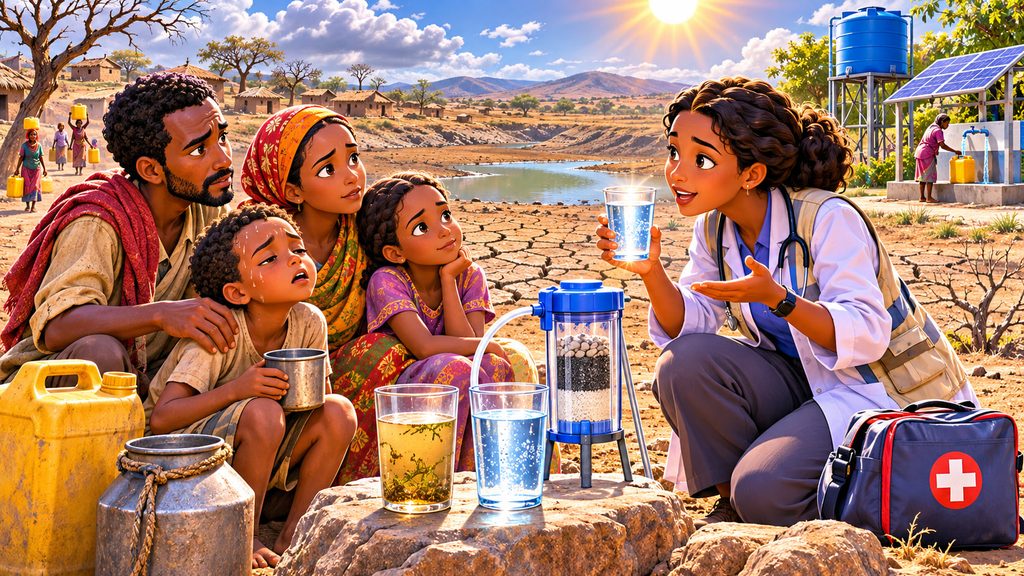
Imagine waking up every morning knowing that obtaining a single bucket of drinking water may require hours of walking. The nearest source could be a muddy river, an unreliable well, or a crowded public tap. Even after carrying the water home, there may be no guarantee that it is safe to drink. For millions of families, this is not an extraordinary emergency but an everyday reality.
Clean drinking water is essential for survival, yet access to it remains one of the greatest global public health challenges. According to estimates published by the World Health Organization and UNICEF in 2025, approximately 2.1 billion people lacked safely managed drinking water services in 2024. Behind this astonishing number are communities facing dehydration, infectious diseases, poor sanitation, and serious obstacles to education and economic development.
Why Is Safe Drinking Water Still a Global Problem?
Earth appears to possess an almost unlimited supply of water, with oceans covering approximately 71% of its surface. However, most of this water is salty, while much of the planet’s freshwater remains locked in glaciers, ice sheets, or underground reserves. Rivers, lakes, and accessible groundwater provide essential supplies, but these resources are distributed unevenly across different regions.
Water scarcity is not always caused by a complete absence of freshwater. In many communities, water exists but remains inaccessible because of inadequate infrastructure, contamination, poverty, or unreliable electricity. The global drinking water crisis is therefore both an environmental problem and a challenge involving public health, infrastructure, and economic inequality.
The Shocking Numbers Behind the Water Crisis
The scale of inadequate access to safe water is difficult to comprehend. WHO and UNICEF estimates for 2024 indicate that approximately one in four people worldwide lacked safely managed drinking water, meaning water available on their premises, accessible when needed, and free from specified contamination.
Among those without safely managed services, approximately 106 million people depended directly on surface water from rivers, lakes, and similar sources. Others had access to improved water sources but faced long collection times, unreliable availability, or uncertain water quality. These distinctions are important because having access to water does not necessarily mean having reliable access to water that is safe to drink.
How Contaminated Water Spreads Dangerous Diseases
One of the most immediate threats associated with unsafe drinking water is the transmission of infectious diseases. Water contaminated with human or animal waste may contain bacteria, viruses, and parasites capable of causing severe illness. Cholera, typhoid fever, dysentery, and several forms of infectious diarrhea are closely associated with inadequate water treatment and sanitation.
Cholera provides a particularly alarming example because severe infections can cause rapid fluid loss through watery diarrhea. Without timely treatment, dangerous dehydration can develop within hours. The disease remains a serious concern during humanitarian emergencies and in communities where water supplies become contaminated.
Access to clean drinking water, effective sanitation, and appropriate hygiene can prevent many infections before medical treatment becomes necessary.
Why Children Face the Greatest Health Risks
Children are particularly vulnerable to water-related illness because their bodies have smaller fluid reserves and can become dehydrated more quickly than adults. Repeated diarrheal infections may also interfere with nutrient absorption, contribute to malnutrition, and affect healthy growth and development.
The consequences can extend beyond individual episodes of illness. Children who frequently become sick may miss school, experience nutritional difficulties, and require medical care that places additional financial pressure on their families. Infants and young children face especially serious risks when water used for drinking or preparing food is contaminated.
Water insecurity can create a damaging cycle in which illness, poor nutrition, and limited educational opportunities reinforce one another.
Dehydration: The Hidden Danger of Water Shortages
Even when available water is not contaminated, an insufficient supply can threaten health. Water helps regulate body temperature, transport nutrients, maintain blood circulation, and remove waste through the kidneys. When fluid losses exceed intake, dehydration develops, potentially causing headaches, dizziness, weakness, and reduced concentration.
Severe dehydration can lead to dangerous disturbances in circulation and electrolyte balance, particularly during extreme heat or illness. People working outdoors, older adults, infants, and individuals experiencing vomiting or diarrhea may be especially vulnerable.
Water shortages can also encourage families to ration drinking water or prioritize certain activities over personal hygiene. The human body needs a reliable supply of safe fluids every day, not merely occasional access to water during emergencies.
How Water Scarcity Affects Women and Girls
The global water crisis also has profound social consequences. In many communities without household water connections, collecting water requires substantial daily travel. Women and girls frequently carry much of this responsibility, sometimes transporting heavy containers over considerable distances.
A WHO and UNICEF analysis found that women and adolescent girls were primarily responsible for collecting water in seven out of ten households where water had to be obtained away from the home. These journeys can consume time that might otherwise be spent attending school, working, or resting.
Limited water supplies can also make menstrual hygiene more difficult and increase health and safety concerns. Reliable household water access can improve not only physical health but also educational opportunities, personal safety, and independence.
Climate Change Is Making Water Security More Difficult
Climate change is altering rainfall patterns, increasing temperatures, and intensifying certain droughts and extreme weather events. In vulnerable regions, prolonged dry periods can reduce river flows, lower groundwater levels, and damage agricultural production. Flooding can create a different problem by overwhelming sanitation systems and contaminating drinking water sources.
Rapid population growth, expanding cities, agricultural demand, and excessive groundwater extraction can place additional pressure on limited supplies. Water scarcity therefore emerges from several interacting factors rather than one universal cause.
Communities with strong infrastructure and effective water management are generally better equipped to respond to these challenges. Climate resilience increasingly depends on protecting freshwater resources and maintaining reliable drinking water systems.
What Do Public Health Experts Say?
Dr. María Neira, a prominent public health specialist who has held senior environmental health responsibilities at the World Health Organization, has repeatedly emphasized the close relationship between environmental conditions and human well-being. Her work highlights the importance of safe water, sanitation, and healthy ecosystems in preventing disease.
This perspective reflects a fundamental principle of preventive medicine: protecting drinking water can benefit entire populations before illnesses occur. Water treatment systems, safe sanitation facilities, and reliable distribution networks reduce exposure to dangerous microorganisms while supporting hygiene in homes, schools, and healthcare facilities.
Investing in safe drinking water is therefore one of the most important ways to protect public health at the community level.
Can Technology Help Solve the Drinking Water Crisis?
Modern technology offers several promising approaches to improving water access. Filtration systems can remove many suspended particles and, depending on their design, certain microorganisms or chemical contaminants. Appropriate disinfection methods, including chlorination and ultraviolet treatment, can help make microbiologically contaminated water safer.
Desalination plants transform seawater into freshwater, providing an important resource for some water-scarce coastal regions. However, desalination requires substantial energy and infrastructure, while the disposal of concentrated brine presents environmental challenges.
Solar-powered pumping systems, improved groundwater monitoring, wastewater treatment, and efficient irrigation can also support water security. The most effective solutions combine suitable technologies with maintenance, environmental protection, and long-term community management.
What Can Be Done to Protect Future Generations?
Protecting freshwater resources requires coordinated action from governments, businesses, communities, and individuals. Repairing leaking water infrastructure, preventing industrial contamination, improving sanitation, and using water more efficiently in agriculture can reduce pressure on available supplies. Protecting wetlands, watersheds, and groundwater recharge areas is equally important.
At the household level, avoiding unnecessary water waste and disposing of hazardous chemicals properly can contribute to responsible water management. However, individual conservation alone cannot replace the large-scale investments needed to provide safe drinking water to underserved populations.
The encouraging news is that progress is possible. Between 2015 and 2024, approximately 961 million additional people gained access to safely managed drinking water. Expanding these gains could prevent illness, improve education, and transform the future of vulnerable communities.
If you could prioritize one solution to the global water crisis, would you invest first in drinking water infrastructure, affordable purification technology, or protecting natural freshwater sources? Share your thoughts in the comments!
Interesting Facts
- Approximately 2.1 billion people lacked safely managed drinking water services in 2024, according to WHO and UNICEF estimates published in 2025.
- Around 106 million people worldwide relied directly on surface water sources such as rivers and lakes.
- Roughly 97% of Earth’s water is salty, leaving only a small fraction as freshwater.
- Some severe cholera infections can cause life-threatening dehydration within hours without treatment.
- In households requiring water collection away from home, women and girls frequently carry most of the responsibility.
- Desalination can transform seawater into drinking water, although it requires significant energy and infrastructure.
- Nearly one billion additional people gained access to safely managed drinking water between 2015 and 2024.
Glossary
- Water Scarcity — A situation in which available water resources are insufficient to meet the needs of people, agriculture, industry, or ecosystems.
- Safely Managed Drinking Water — Drinking water from an improved source that is accessible on premises, available when needed, and free from specified contamination.
- Waterborne Disease — An illness transmitted through water contaminated with harmful microorganisms or other pathogens.
- Dehydration — A condition in which the body loses more fluid than it takes in.
- Sanitation — Systems and practices used to safely manage human waste and maintain hygienic conditions.
- Groundwater — Water stored beneath Earth’s surface within soil, sediment, and rock formations.
- Desalination — The process of removing dissolved salts from seawater or brackish water.
- Chlorination — The use of chlorine-based disinfectants to reduce harmful microorganisms in water.
- Water Security — Reliable access to sufficient quantities of acceptable-quality water for health, livelihoods, and environmental sustainability.
- Watershed — An area of land where rainfall and other water drain toward a common river, lake, or other water body.