Soil is one of the most essential components of life on Earth. It is much more than just dirt — it is a living, breathing system that supports plants, animals, and humans alike. Soil provides the foundation for ecosystems, agriculture, and the global climate cycle. Understanding what soil is, how it forms, and why it matters reveals the incredible complexity of the ground beneath our feet.
The Composition of Soil
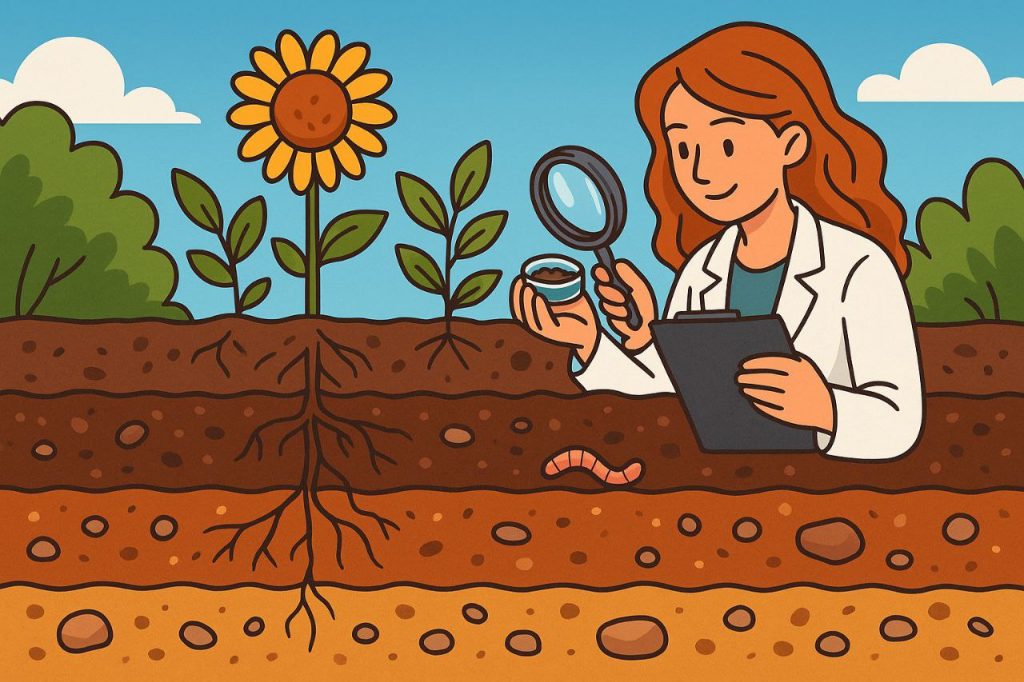
Soil is a mixture of minerals, organic matter, air, and water. The mineral part originates from weathered rocks and provides structure, while the organic matter — mainly decomposed plants and animals — enriches it with nutrients. Air and water occupy the spaces between soil particles, allowing roots to breathe and absorb essential elements. Scientists classify soils into layers called horizons, which together form a soil profile. The top layer, rich in organic material, is known as humus, and it plays a crucial role in plant growth.
How Soil Forms Over Time
Soil formation is a slow and complex process known as pedogenesis, taking hundreds or even thousands of years. It begins when rocks on the Earth’s surface are broken down by weathering — through wind, rain, ice, and temperature changes. Once the rock fragments accumulate, microorganisms, fungi, and lichens colonize them, gradually producing organic matter. Over time, this blend of minerals and decaying organisms transforms into fertile soil. The process also depends on climate, topography, parent material, biological activity, and time, all of which determine soil texture, color, and fertility.
The Role of Living Organisms
Soil is teeming with life. In just one teaspoon of healthy soil, there can be billions of microorganisms — bacteria, fungi, nematodes, and protozoa — working together to decompose organic matter and recycle nutrients. Earthworms and insects aerate the soil, while plant roots help stabilize its structure. This living community forms a symbiotic ecosystem where each organism contributes to the soil’s fertility and balance. According to soil ecologist Dr. Elaine Ingham, “Soil is not inert — it’s a dynamic system, a biological factory converting death into new life.”
Types of Soil and Their Characteristics
There are several main types of soil, each with unique properties:
- Sandy Soil – Drains quickly but lacks nutrients; common in deserts and coastal regions.
- Clay Soil – Rich in minerals but dense, making it hard for water to penetrate.
- Silt Soil – Smooth and fertile, often found near rivers.
- Loam Soil – A balanced mixture of sand, silt, and clay — ideal for agriculture.
The color and texture of soil often indicate its composition. For instance, dark soil suggests high organic content, while red or yellow soil indicates the presence of iron oxides.
The Importance of Soil for Life and the Environment
Soil plays a central role in supporting all terrestrial life. It anchors plants, stores nutrients, filters water, and regulates the planet’s carbon cycle. Soils act as one of the largest carbon sinks on Earth, storing more carbon than the atmosphere and vegetation combined. They also help prevent floods by absorbing rainwater and maintain biodiversity by serving as habitats for countless species. Without healthy soil, global food security, clean water, and climate stability would be impossible.
Human Impact and Soil Degradation
Unfortunately, human activities such as deforestation, overgrazing, industrial agriculture, and pollution have severely degraded soils worldwide. According to the Food and Agriculture Organization (FAO), over one-third of global soils are already damaged or depleted. Soil erosion removes nutrient-rich topsoil faster than it can regenerate, while chemical fertilizers and pesticides kill beneficial microorganisms. Scientists warn that if soil loss continues at the current rate, agricultural productivity could decline dramatically in the next few decades.
Restoring and Protecting Soils
Sustainable practices such as crop rotation, organic farming, cover cropping, and reforestation can restore soil health. Adding organic compost, reducing tillage, and planting deep-rooted vegetation help retain moisture and improve structure. Governments and organizations are now prioritizing soil conservation as part of climate change mitigation strategies. As soil scientist Dr. Rattan Lal, Nobel Peace Prize laureate, explains: “The health of soil, plants, animals, people, and the planet is one and indivisible.”
The Future of Soil Science
Modern soil research integrates remote sensing, nanotechnology, and AI-based monitoring to better understand soil dynamics. New methods allow scientists to measure carbon content, nutrient flow, and microbial activity in real time. These innovations aim to ensure that future generations inherit fertile, resilient soils capable of feeding the world. Education about soil’s importance is growing too — schools and environmental programs are increasingly teaching students that soil is a living, renewable resource that must be protected.
Interesting Facts
- It takes about 1,000 years to form just 2 centimeters of topsoil naturally.
- Healthy soil contains more living organisms per gram than there are humans on Earth.
- Soil stores about three times more carbon than the atmosphere.
- Earthworms can move up to 10 tons of soil per hectare per year.
- The Earth’s soils hold nearly 95% of global food production potential.
Glossary
- Pedogenesis – The natural process of soil formation from rock and organic matter.
- Humus – The dark, nutrient-rich organic material in topsoil formed from decayed organisms.
- Weathering – The breakdown of rocks into smaller particles by natural forces.
- Carbon Sink – A system that absorbs and stores more carbon than it releases.
- Soil Profile – The vertical section of soil showing its different layers (horizons).
- Loam – Fertile soil composed of sand, silt, and clay in balanced proportions.
- Topsoil – The uppermost and most fertile layer of soil.
- Biodiversity – The variety of living organisms in an ecosystem.
- Erosion – The process of soil being worn away by wind or water.
- Nutrient Cycling – The continuous movement and exchange of nutrients through the ecosystem.