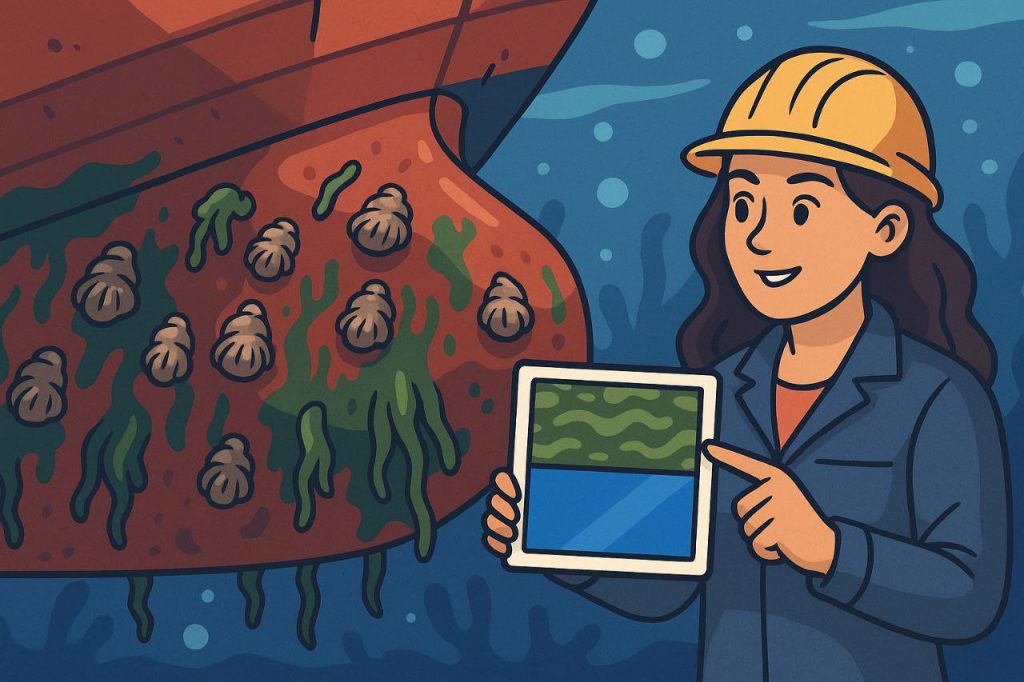
Every ship, submarine, and offshore structure that spends time in seawater eventually faces the same invisible enemy — biofouling. This process, where living organisms attach to and grow on submerged surfaces, may seem harmless at first, but it has significant economic and environmental consequences. Biofouling increases drag on ships, reduces fuel efficiency, damages underwater sensors, and disrupts marine ecosystems by transporting invasive species. Understanding how biofouling occurs, why it matters, and how scientists are combating it reveals one of the ocean’s most persistent and complex problems.
What Is Biofouling?
Biofouling is the accumulation of microorganisms, plants, algae, or small animals on wet surfaces, especially those exposed to seawater. It typically begins with a thin layer of organic molecules called a conditioning film, followed by the attachment of bacteria and microscopic algae that form a biofilm. Over time, larger organisms such as barnacles, mussels, and seaweeds colonize the surface, forming dense biological layers. This growth can occur on ship hulls, offshore oil platforms, aquaculture nets, pipelines, and even underwater sensors. The process affects nearly every human-made structure that interacts with marine environments.
The Science Behind Biofouling
The formation of biofouling is a multistage process. It begins within minutes after immersion, when proteins and carbohydrates from seawater adhere to a surface. These molecules create a sticky layer that attracts bacteria and diatoms, which secrete extracellular polymeric substances (EPS) — a glue-like matrix that anchors them in place. This microbial film provides a perfect foundation for larval settlement of larger organisms like barnacles and tubeworms. Once established, the biofouling community becomes highly resistant to removal, forming a miniature ecosystem that interacts dynamically with its surroundings.
The Economic and Environmental Impact
The global shipping industry spends billions of dollars each year combating biofouling. When marine organisms attach to a ship’s hull, they increase hydrodynamic drag, forcing the vessel to burn more fuel to maintain speed. Studies by the International Maritime Organization (IMO) estimate that biofouling can increase fuel consumption by up to 40%, leading to higher greenhouse gas emissions. In addition, biofouling can cause corrosion, block pipes, and interfere with sonar and sensor performance. Environmental impacts are also severe — biofouling enables the spread of invasive species, which hitchhike across oceans and threaten native marine biodiversity.
Traditional and Modern Antifouling Methods
For centuries, humans have sought ways to prevent fouling. Early sailors coated their ships with mixtures of tar, oil, and copper sheets to deter marine growth. In the 20th century, tributyltin (TBT)-based paints became widely used because of their effectiveness in repelling organisms. However, TBT was later banned worldwide for its toxic effects on marine life. Today, scientists are developing eco-friendly antifouling coatings that use physical, chemical, or biological strategies. These include silicone-based slippery surfaces, nanostructured materials, and enzyme-releasing coatings that prevent organisms from attaching without harming the environment.
Innovative Approaches in Biofouling Control
One promising field of research involves biomimicry — imitating nature’s own antifouling mechanisms. For example, the skin of sharks and dolphins has microscopic ribbed patterns that resist microbial attachment. Engineers have replicated these textures in shark-skin-inspired films, which significantly reduce fouling without chemicals. Other scientists are exploring electrochemical systems that release tiny electric currents to discourage biofilm formation or ultraviolet light emitters that sterilize underwater surfaces. Researchers at the University of Southampton are even experimenting with plasma-based coatings that create smooth, self-cleaning surfaces ideal for ships and underwater vehicles.
Biofouling Beyond Ships – Hidden Impacts
While ship hulls are the most visible victims, biofouling also affects marine renewable energy devices, such as offshore wind turbines, tidal generators, and floating solar panels. The weight and drag of biofouling can reduce energy efficiency and increase maintenance costs. In aquaculture, biofouling on fish cages restricts water flow and oxygen supply, promoting disease. Even medical and industrial water systems suffer from biofilm buildup, which can clog pipes and contaminate water supplies. This makes biofouling not just a maritime issue but a global engineering and environmental challenge.
Expert Perspectives
Marine biologist Dr. Serena Coetzee describes biofouling as “one of the most underestimated forms of pollution — not chemical, but biological.” Similarly, naval engineer Professor Paul Dyer notes that while total elimination of biofouling may be impossible, “the goal is smart management — coatings and technologies that keep organisms off long enough for efficient operation without damaging the ocean.” Many experts now advocate for integrated antifouling strategies combining surface design, biological control, and robotic cleaning systems.
The Future of Biofouling Research
Future antifouling strategies will likely combine AI-driven monitoring with sustainable materials. Autonomous underwater drones can already detect early signs of biofilm buildup and clean surfaces before they become heavily fouled. Scientists are also developing biodegradable coatings that naturally degrade after serving their purpose. As climate change warms the oceans, biofouling is expected to increase due to faster organism growth, making innovation in this field even more critical. Sustainable antifouling technologies could significantly reduce global emissions and protect marine biodiversity.
Interesting Facts
- Biofouling can begin within 30 minutes after a surface is submerged in seawater.
- A heavily fouled ship may burn up to 250,000 extra liters of fuel per voyage.
- Over 4,000 marine species are known to contribute to biofouling.
- Shark-skin-inspired materials can reduce biofouling by up to 85%.
- Some biofouling organisms can corrode metal surfaces through biochemical reactions.
Glossary
- Biofilm – A thin layer of microorganisms that adhere to a surface and produce a protective matrix.
- EPS (Extracellular Polymeric Substances) – Sticky molecules secreted by bacteria that help form biofilms.
- Antifouling – Methods or materials used to prevent marine organisms from attaching to surfaces.
- Biomimicry – The design of materials or systems inspired by nature’s biological processes.
- Hydrodynamic Drag – Resistance experienced by an object moving through water.
- Tributyltin (TBT) – A toxic compound formerly used in antifouling paints, now banned.
- Invasive Species – Non-native organisms that disrupt local ecosystems when introduced.
- Plasma Coating – A surface treatment using ionized gas to modify material properties.
- Nanostructure – A microscopic surface texture engineered at the nanometer scale.
- Marine Biodiversity – The variety of life forms found in ocean ecosystems.