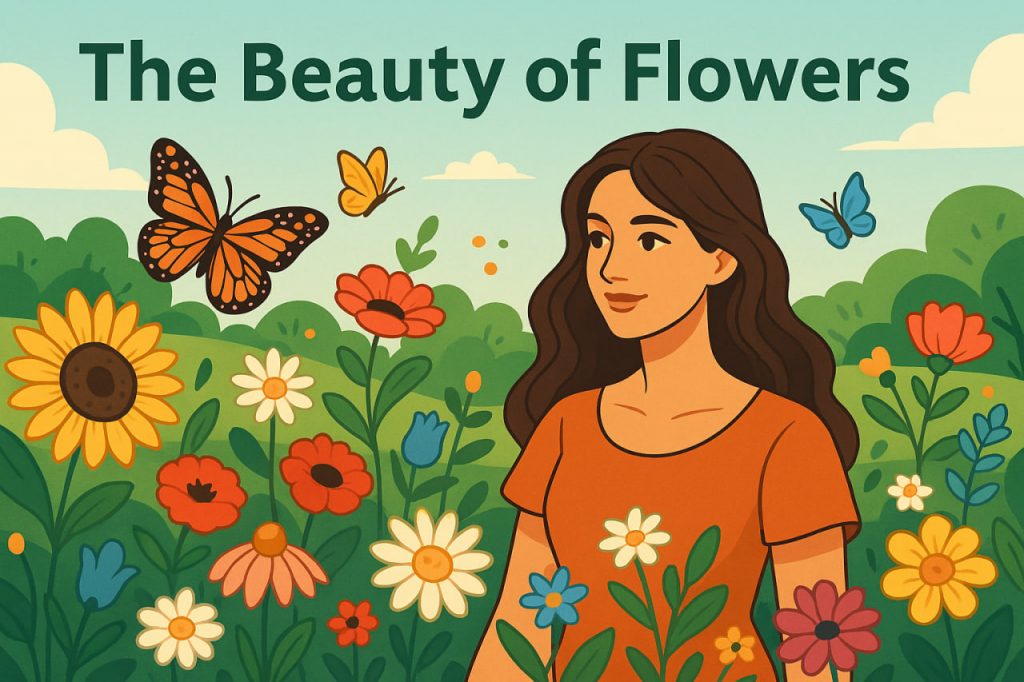
Flowers are among the most beautiful and diverse creations of nature, admired for their colors, shapes, and fragrances. They have been symbols of love, beauty, and rebirth across cultures and eras. Yet beyond their aesthetic appeal, flowers serve crucial biological functions, ensuring the survival of plant species and the balance of ecosystems. From wild blossoms in remote meadows to carefully cultivated roses and orchids, flowers bridge art, science, and emotion. They speak a universal language—one that connects humans to the rhythms of the natural world.
The Biology and Purpose of Flowers
At their core, flowers are the reproductive structures of flowering plants, or angiosperms. Their main function is to facilitate pollination—the transfer of pollen from the male part of the flower (the stamen) to the female part (the pistil). This process allows plants to produce seeds and reproduce. Flowers attract pollinators such as bees, butterflies, and birds through vibrant colors, patterns, and scents. Some flowers, like orchids, have evolved intricate shapes specifically designed for their preferred pollinators. Botanist Dr. Isabelle Cruz explains, “Each flower is a masterpiece of evolution, crafted to attract the right visitor and ensure the continuation of life.”
Diversity and Adaptation
There are more than 300,000 known species of flowering plants on Earth, each adapted to its environment in remarkable ways. Some flowers bloom only at night, like the moonflower, to attract nocturnal pollinators such as moths or bats. Others, like desert blossoms, can remain dormant for years, waiting for the rare rainfall that brings them to life. In tropical regions, flowers such as the bird of paradise or hibiscus exhibit striking colors and complex structures. Meanwhile, alpine flowers endure harsh cold by growing close to the ground. This diversity reflects the adaptability and resilience of nature’s designs.
The Role of Flowers in Ecosystems
Flowers are essential components of ecosystems, forming the foundation of many food chains. Through pollination, they enable the production of fruits and seeds that feed countless species, including humans. Insects, birds, and mammals rely on nectar and pollen for nourishment, while plants depend on these animals for reproduction. This symbiotic relationship has evolved over millions of years. Moreover, flowers contribute to biodiversity, helping ecosystems remain stable and productive. Environmental scientist Dr. Laura Benedetti notes, “Without flowers, ecosystems would collapse—pollinators would vanish, plants would fail to reproduce, and food webs would break down.”
Cultural and Symbolic Meaning of Flowers
Throughout history, flowers have carried deep symbolic meanings across cultures. In ancient Egypt, the lotus flower represented creation and rebirth. In Japan, cherry blossoms symbolize the fleeting beauty of life, celebrated annually during Hanami festivals. The rose, perhaps the most famous flower, represents love and passion in Western culture. During the Victorian era, people used “floriography”—the language of flowers—to express emotions that words could not convey. Even today, gifting flowers remains a universal gesture of affection, sympathy, or celebration. Their ability to convey emotion without speech makes them timeless messengers of the human heart.
Flowers and Human Well-being
Scientific studies have shown that flowers have a profound effect on human psychology. Their colors and scents can reduce stress, enhance mood, and stimulate creativity. Hospitals and workplaces that incorporate floral arrangements often report improved well-being among patients and employees. Aromatherapy, using essential oils from flowers like lavender and jasmine, promotes relaxation and emotional balance. In many ways, flowers remind us of our connection to nature—a relationship that nurtures both body and spirit. As psychologist Dr. Helena Moore observes, “Flowers are more than decoration—they are emotional medicine, reconnecting people to the harmony of the natural world.”
The Future of Flowers and Conservation
Despite their abundance, many wildflower species are under threat from habitat loss, pollution, and climate change. The decline of pollinators like bees poses a serious risk to both wild and cultivated plants. Conservation efforts are now focused on preserving native flower species and restoring pollinator habitats. Gardens, parks, and urban green spaces play an important role in maintaining floral biodiversity. By protecting flowers, humanity also safeguards the ecosystems and food sources that depend on them. The future of flowers—and of life itself—depends on our ability to coexist with and protect the natural world.
Interesting Facts
- The world’s largest flower, Rafflesia arnoldii, can grow over 1 meter in diameter and smells like rotting flesh to attract flies.
- Sunflowers always turn toward the sun, a phenomenon called heliotropism.
- The oldest known flower fossil dates back over 130 million years.
- Blue is one of the rarest natural flower colors, often achieved through special pigments.
- The titan arum, or “corpse flower,” blooms only once every few years and attracts pollinators with its foul odor.
Glossary
- Angiosperms — Flowering plants that produce seeds enclosed within fruits.
- Pollination — The process by which pollen is transferred from the male part of a flower to the female part.
- Stamen — The male reproductive organ of a flower that produces pollen.
- Pistil — The female reproductive part of a flower where seeds develop.
- Biodiversity — The variety of living species in an ecosystem, essential for environmental stability.