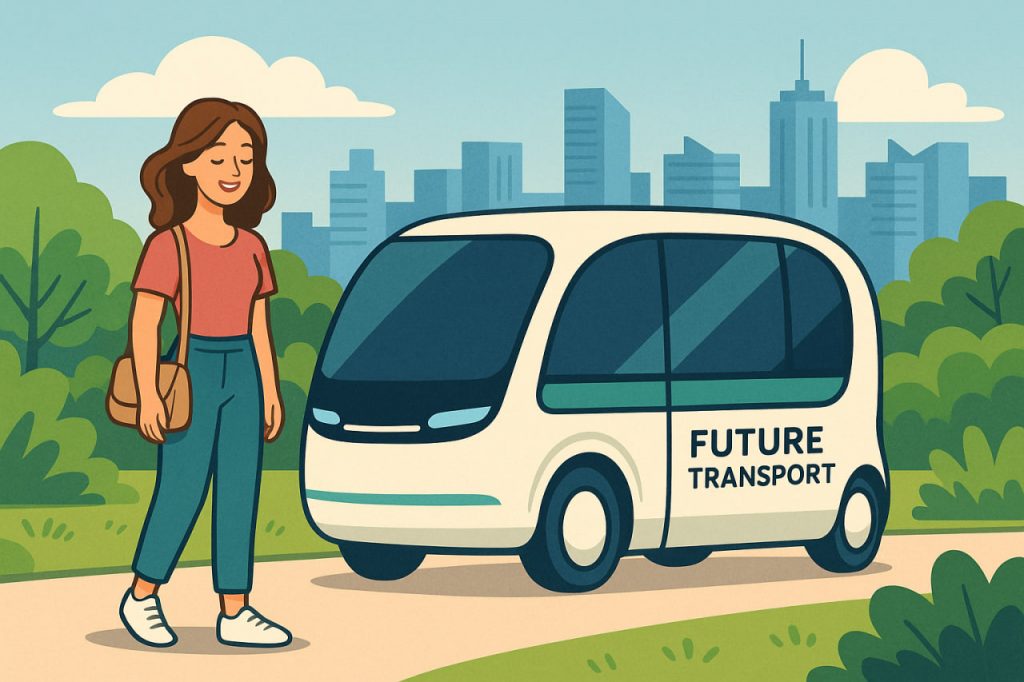
Public transportation of the future is expected to be faster, cleaner, smarter, and more comfortable than the systems we use today. As cities grow and populations increase, traditional forms of transit face challenges such as congestion, pollution, and long travel times. New technological innovations promise to transform how people move across urban environments, connecting regions more efficiently and sustainably. These future systems will likely rely on automation, renewable energy, and advanced network planning to reduce environmental impact and improve quality of life. Understanding what the future of transportation looks like helps us prepare for cities that are more livable, accessible, and eco-friendly.
Smart and Automated Transportation Systems
One of the most significant advancements in future transportation is automation. Driverless buses, trains, and shuttles are already being tested in several major cities. These vehicles use sensors, cameras, and artificial intelligence to navigate streets safely without human control. Automation reduces the risk of accidents caused by human error and makes transportation more predictable. Transportation systems engineer Dr. Valeria Kim notes, “The shift to automation is not only about convenience—it’s about creating a coordinated transit network that adapts in real time to demand.” In the future, automated fleets may communicate with traffic lights, road sensors, and digital maps to create a seamless and efficient travel experience.
Eco-Friendly and Sustainable Transit
Environmental sustainability is a major focus for future public transportation. Electric buses and trains already reduce pollution in many cities, but the next step is integrating renewable energy sources such as solar and wind. New hydrogen-powered vehicles are being developed to produce zero emissions while maintaining strong performance. Additionally, some cities are exploring vertical transportation systems and green mobility corridors that combine nature and transit infrastructure. Reducing carbon emissions is crucial for improving urban air quality and slowing climate change. As sustainability expert Dr. Nina Ortega explains, “Clean transportation is essential for public health and the survival of our planet’s ecosystems.”
Hyperloop and High-Speed Travel Innovations
One of the most exciting ideas for future transportation is the Hyperloop—a high-speed system that moves passengers through vacuum-sealed tubes at speeds exceeding 1,000 km/h (620 mph). This technology aims to dramatically reduce travel times between major cities, making long-distance commuting more feasible. High-speed maglev trains, which float above tracks using magnetic force, are also set to expand. These innovations rely on advanced engineering to minimize friction and maximize efficiency. If fully adopted, they could redefine what is considered “local travel,” shrinking distances and connecting regions more closely than ever before.
Personalized Mobility and Shared Travel Networks
Future public transportation will not only involve large vehicles but also small shared options, such as electric scooters, bike-sharing systems, and mini-shuttles. These tools allow people to complete the “last mile” of their journey—travel between a transit station and their final destination. Smart apps will coordinate these services to create personalized travel plans for each user based on time, cost, and comfort. This approach encourages people to reduce private car use, lowering congestion and improving safety. Cities will increasingly focus on designing walkable and bike-friendly networks that integrate smoothly with larger transportation systems.
Community Impact and Accessibility
Public transportation of the future aims to be more inclusive, ensuring that people of all ages and abilities can travel comfortably. Improved station design, clear digital signage, voice-guided navigation, and barrier-free access will make transit more welcoming. Community-centered planning also considers how transit affects neighborhoods, economic development, and cultural identity. Transportation is not just about movement—it is about connecting people to education, work, healthcare, and each other. By prioritizing accessibility and fairness, future transit systems support stronger and healthier societies.
Interesting Facts
- Some fully autonomous buses are already operating in Singapore, Sweden, and the United Arab Emirates.
- The Hyperloop concept was first publicly proposed in 2013 and has multiple prototypes being tested today.
- Modern electric buses can operate for up to 600 kilometers on a single charge.
- Maglev trains in Japan have reached speeds of 603 km/h during testing.
- Cities that invest in public transportation often experience reduced traffic accidents and improved air quality.
Glossary
- Automation — Technology that allows machines to operate without human control.
- Maglev — A train that uses magnetic levitation instead of wheels for movement.
- Hyperloop — A proposed high-speed transportation system using vacuum-sealed tubes.
- Sustainability — Practices that do not harm the environment and can be maintained over time.
- Shared Mobility — Transportation services that multiple people can use, such as bikes, shuttles, or scooters.