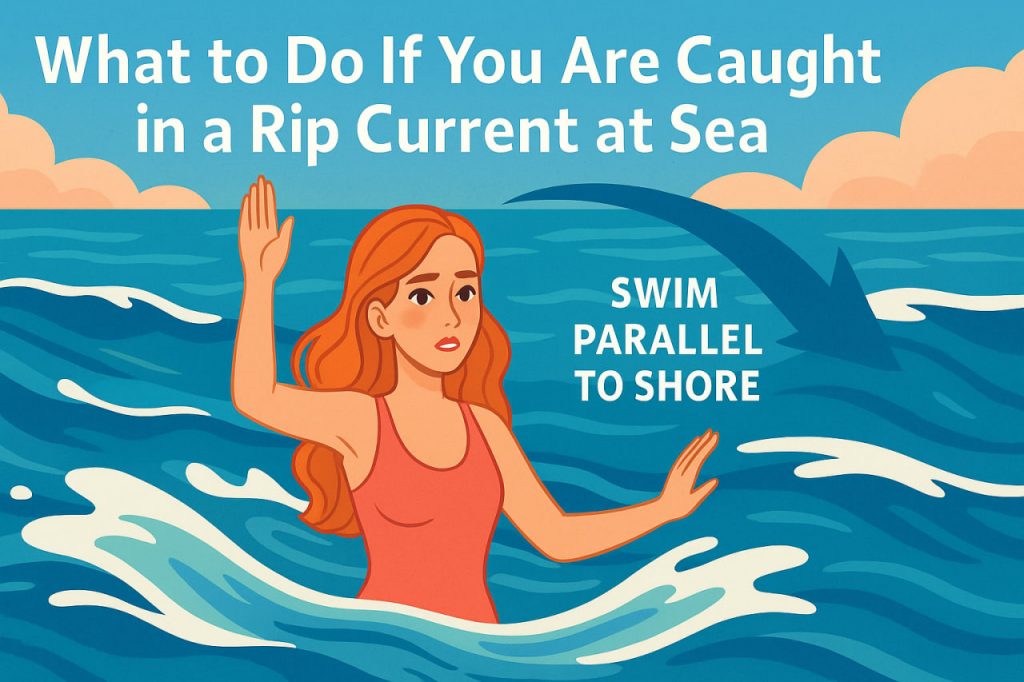
Finding yourself being pulled out to sea by a strong current can be frightening, but knowing how to respond can make the situation much safer. A rip current is a narrow, fast-moving channel of water that flows away from the shoreline. It does not pull you underwater, but it can carry you farther from the shore than expected. The key to dealing with a rip current is to remain calm, conserve energy, and use proven techniques to safely return to shallow water. Understanding how rip currents work helps swimmers and beachgoers stay confident and safe in the ocean.
Understanding Rip Currents
Rip currents form when waves push large amounts of water toward the shore, and that water needs to escape back to the sea. This creates a narrow pathway of fast-moving water that can pull swimmers away from the beach. These currents can move faster than even strong swimmers, which is why fighting against them directly is ineffective. Oceanographer Dr. Emily Carter explains, “You cannot outswim a rip current head-on. The safest strategy is to work with the water, not against it.” Recognizing this principle is essential for safe ocean behavior.
Stay Calm and Conserve Energy
If you feel yourself being pulled away from shore, the most important step is to stay calm. Panic causes rapid breathing, fatigue, and poor judgment. Instead of trying to swim directly back to the beach, which wastes energy and increases fear, allow the current to carry you briefly while you focus on floating or gently treading water. The current will eventually weaken once you are outside its strongest zone. Maintaining calm breathing and steady movement helps you stay in control.
Swim Parallel to the Shore
The safest way to escape a rip current is to swim parallel to the shoreline, not toward it. Rip currents are usually narrow, so swimming sideways allows you to exit the fast-moving water more easily. Once you are outside the current, you can swim diagonally back to the shore using relaxed and steady strokes. If you are tired, floating on your back while signaling for help is also a safe option. Lifeguards are trained to respond quickly and recognize signs of distress.
If You Need Help, Signal Clearly
If you are unable to escape the current due to exhaustion or distance, signal for help by raising one arm above your head and calling out when possible. Do not wave both arms or splash excessively, as this may cause further fatigue. Staying afloat and conserving energy increases your chances of being seen and assisted. For any troubling symptoms such as dizziness, water inhalation, or panic after returning to land, seeking assistance from a specialist or medical professional is recommended.
Interesting Facts
- Rip currents can move at speeds of 1–2 meters per second, faster than Olympic swimmers.
- Most rip currents are only 10–50 meters wide, which is why swimming sideways works.
- Many beach rescue calls are related to panic, not inability to swim.
- Floating is often the safest first response during a rip current.
- Lifeguarded beaches significantly reduce the risk of drowning incidents.
Glossary
- Rip current — A fast-moving narrow channel of water flowing away from the shore.
- Treading water — Moving legs and arms to stay afloat while staying mostly in one place.
- Parallel — Moving sideways alongside the shoreline.
- Diagonal return — Swimming back toward shore at an angle, not straight ahead.
- Oceanographer — A scientist who studies the physical and biological properties of the ocean.