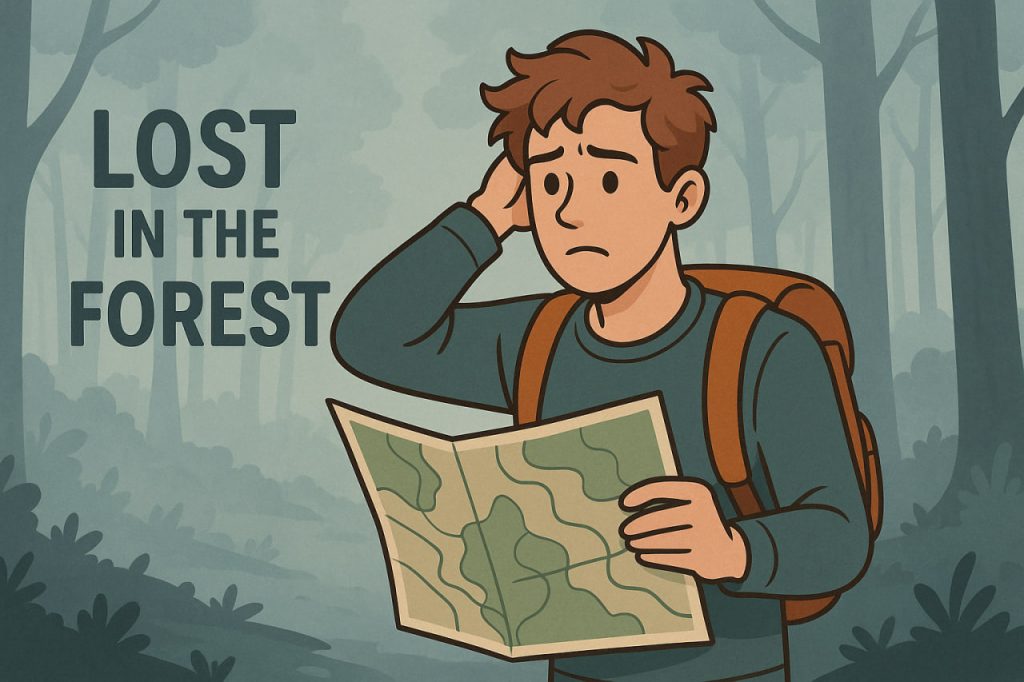
Getting lost in the forest can be stressful, but staying calm and making clear decisions is essential for your safety. Forest environments can be disorienting due to similar-looking trees, uneven terrain, and changing light conditions. However, understanding how to assess your surroundings, conserve energy, and use natural cues can help you navigate the situation more effectively. Many survival experts emphasize that the first steps you take after realizing you’re lost are the most important. Keeping a clear mind gives you the best chance of finding your way or being found by others.
Stay Calm and Stop Moving
The very first step is to stop, breathe, and avoid panicking. Panic leads to confusion and poor decisions. Staying still for a moment helps you think more clearly about where you came from and what landmarks you may have passed. Try to recall the path that led you to your current location without rushing to move again. Survival instructor Sarah Collins notes, “The moment you realize you’re lost is the moment to slow down. Your brain is your most important survival tool.” Taking time to calm your thoughts supports better judgment and reduces the risk of wandering deeper into unfamiliar areas.
Try to Reorient Yourself
Look and listen carefully. Sound can travel farther than sight in a forest — distant roads, water flow, or human activity may guide you. If you have a map or a smartphone with a remaining signal, compare terrain features like hills, rivers, or clearings. The sun’s direction may also help: it rises in the east and sets in the west. However, avoid taking unnecessary risks, such as climbing tall trees or navigating steep slopes. If reorientation does not help and the area seems unfamiliar, it is better to stay in one safe location rather than wander aimlessly.
Make Yourself Visible
If you cannot find your way, choose a visible and open area to stay in. Forest search teams look for signs of human presence, so visibility helps them locate you faster. Creating signals such as placing brightly colored clothing on branches, building a small signal fire if safe and allowed, or tapping loudly on rocks or trees at regular intervals can attract attention. Staying near your last known trail or resting spot increases the chance of being found.
Conserve Energy and Stay Warm
Avoid unnecessary movement, as it can consume energy and increase stress. If temperature drops, use leaves, grass, or extra clothing to insulate yourself. Staying dry is important for preventing hypothermia. If you are near a natural shelter such as a fallen tree or dry rock overhang, use it to protect yourself from wind and rain. If you feel weak, dizzy, or overly cold, it is important to rest and maintain warmth. For any serious health concerns, a trained specialist or emergency response team should be contacted once conditions allow.
Interesting Facts
- Many people get lost because they unintentionally walk in circles, even when they believe they are going straight.
- Search and rescue teams often follow water sources, as lost individuals naturally move toward streams or rivers.
- Forest animals usually avoid humans, and observing their movement can sometimes indicate nearby open areas.
- Carrying a whistle increases your chances of being found because it can be heard from long distances.
- Remaining in one safe location generally leads to rescue faster than continuous wandering.
Glossary
- Reorient — To regain awareness of direction or surroundings.
- Hypothermia — A dangerous condition caused by the body losing heat faster than it can produce it.
- Signal fire — A controlled fire used to attract attention from a distance.
- Terrain — The physical features of an area, such as hills, valleys, or forests.
- Insulate — To protect from heat or cold using a layer of material.