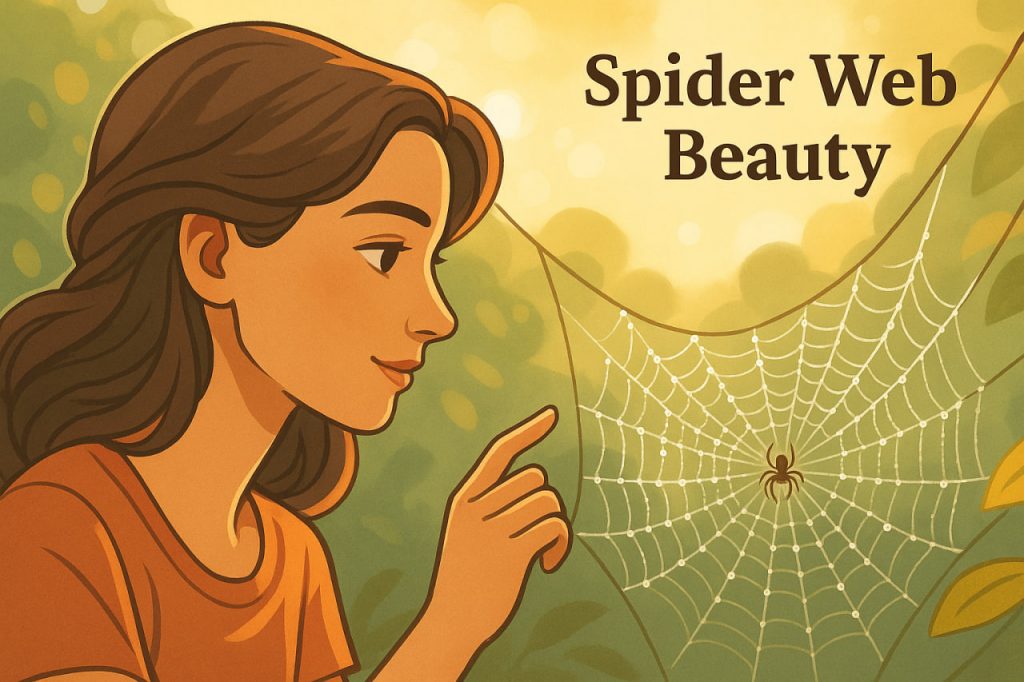
Spider webs are among the most impressive structures found in nature, showcasing extraordinary strength, precision, and purpose. Created from silk produced by specialized glands, spider webs serve multiple functions, including catching prey, protecting eggs, and providing shelter. Despite their delicate appearance, spider webs are remarkably strong—some types of silk can be tougher than steel when compared by weight. The design of a web reflects both instinct and environmental adaptation, revealing the remarkable abilities of spiders to solve complex structural challenges without conscious planning.
How Spider Webs Are Made
Spiders produce silk using silk glands connected to spinnerets, small appendages at the rear of the body. Different types of silk are used for different purposes: sticky silk for trapping insects, and non-sticky silk for structural support and movement. When creating a web, the spider begins by releasing a thin strand of silk that catches on the air. Once this strand attaches to a surface, the spider uses it as a base to develop the web’s framework. The spider then creates radial lines and spiral patterns that maximize strength and capture opportunities. According to biologist Dr. Marissa Hale, “Spider webs are not random—they follow mathematical principles that balance strength and flexibility.”
Strength and Flexibility
The strength of spider silk comes from its unique molecular structure. The silk combines rigid crystal-like regions with flexible strands, giving it both durability and elasticity. This allows webs to absorb the impact of flying insects without breaking. The silk can also stretch significantly before losing integrity, which enables webs to survive wind and weather. Many researchers study spider silk to inspire stronger synthetic fibers for medical sutures, protective clothing, and lightweight construction materials.
Environmental Importance
Spider webs help control insect populations, playing an essential role in maintaining ecological balance. Spiders are natural pest managers, capturing flies, mosquitoes, and agricultural pests. In gardens and forests, webs contribute to healthy ecosystems by supporting stable food chains and helping regulate species diversity. When people allow spiders to coexist peacefully in their environment, they help maintain natural cycles that benefit plants, animals, and humans alike.
Cultural Meaning and Symbolism
Across cultures, spider webs symbolize creativity, patience, fragility, and interconnection. Some mythologies portray the spider as a creator figure, weaving the universe like a web. In art and storytelling, webs often represent the complexity of relationships or the delicate balance of life. Yet, they also symbolize resilience—despite their fragile appearance, webs are rebuilt repeatedly, sometimes overnight, showing persistence and adaptability.
Interesting Facts
- Spider silk is five times stronger than steel when compared by weight.
- Some spiders build new webs every day.
- A spider can produce up to seven different types of silk for different tasks.
- Spider webs can act like natural air filters, catching dust and pollen.
- Not all spiders make webs—some hunt or trap prey in other ways.
Glossary
- Silk glands — Organs in spiders that produce silk.
- Spinnerets — Structures that release silk and shape it into strands.
- Elasticity — The ability of a material to stretch and return to its original form.
- Ecological balance — A stable relationship between living organisms and their environment.
- Sutures — Stitches used in medical procedures to close wounds or surgical cuts.