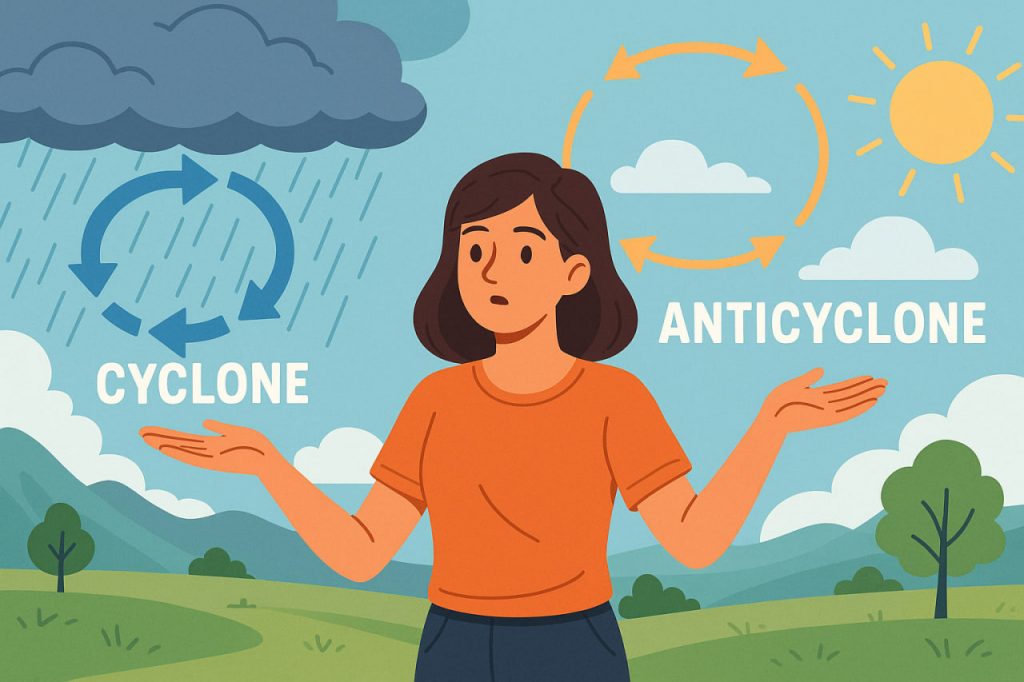
A cyclone and an anticyclone are two large-scale atmospheric pressure systems that play a major role in shaping weather patterns around the world. They influence wind direction, cloud formation, precipitation, and temperature changes. Understanding how these systems work helps explain why storms form, why some days are calm and clear, and how weather moves across regions. Cyclones are associated with low pressure, rising air, and unstable weather, while anticyclones involve high pressure, sinking air, and typically bring clear skies. By observing the behavior of these systems, meteorologists can forecast weather conditions and help communities prepare for significant weather events.
What Is a Cyclone?
A cyclone is a system of low atmospheric pressure where warm, moist air rises and cools, leading to cloud formation and often precipitation. Winds in a cyclone rotate counterclockwise in the Northern Hemisphere and clockwise in the Southern Hemisphere due to the Coriolis effect. Cyclones can vary greatly in size and intensity, from mild rain systems to intense tropical cyclones capable of producing strong winds and heavy rainfall. Because rising air encourages cloud formation, weather conditions within cyclones are often cloudy, windy, and sometimes stormy. Cyclones play a key role in distributing heat and moisture across the planet.
What Is an Anticyclone?
An anticyclone is a high-pressure system where air sinks toward the ground and warm air spreads outward. This sinking air prevents cloud formation, leading to clear skies and calm weather. Winds in an anticyclone rotate clockwise in the Northern Hemisphere and counterclockwise in the Southern Hemisphere, opposite to cyclones. Anticyclones are associated with stable weather conditions, often bringing sunny days and light winds. However, in some situations, prolonged anticyclones may lead to drought conditions or heatwaves, especially in warm climates or summer seasons.
Why These Systems Matter
Cyclones and anticyclones influence everyday life in many ways. Cyclones can bring much-needed rainfall to dry regions but can also cause flooding and strong winds. Anticyclones create good weather for outdoor activities but can trap pollution near the ground, affecting air quality in cities. Meteorologists track these systems using satellites, radar, and computer models to predict their movement. Accurate forecasting helps protect communities and supports planning in agriculture, aviation, and emergency management.
Interesting Facts
- Tropical cyclones are called hurricanes in the Atlantic and typhoons in the Pacific.
- Anticyclones often cause colder temperatures at night because clear skies allow heat to escape.
- The rotation direction of cyclones and anticyclones reverses depending on the hemisphere due to the Coriolis effect.
Glossary
- Low Pressure — A region where air rises, often leading to cloud formation and precipitation.
- High Pressure — A region where air sinks, usually bringing clear and calm weather.
- Coriolis Effect — The influence of Earth’s rotation that causes moving air to rotate around pressure systems.
- Precipitation — Any form of water falling from clouds, such as rain, snow, or hail.