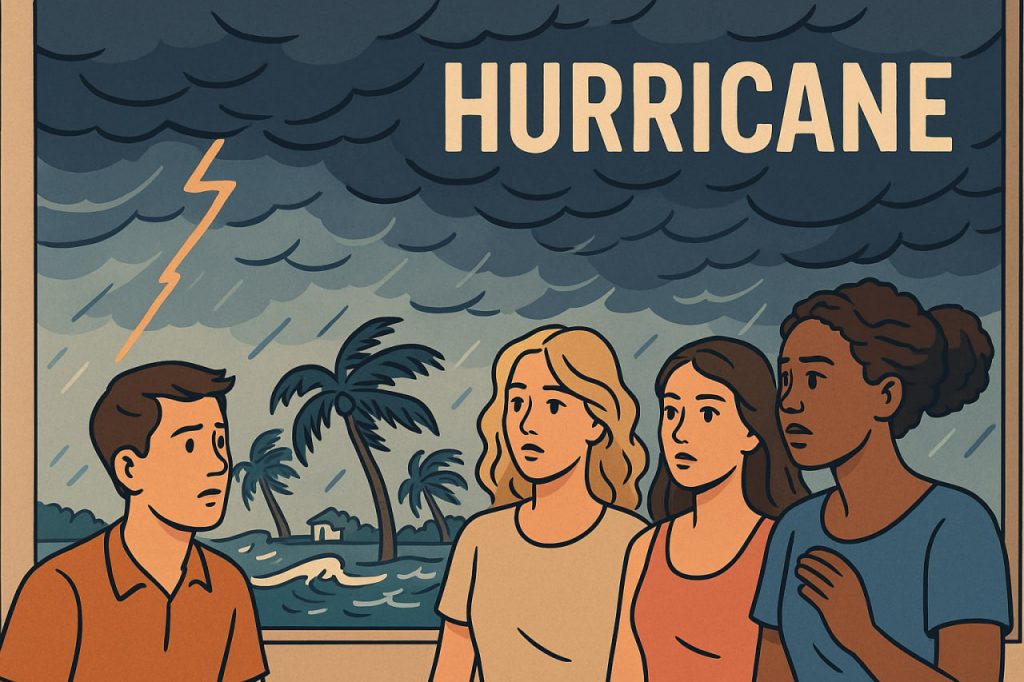
A hurricane is a large and powerful tropical cyclone characterized by strong winds, heavy rainfall, and a rotating storm system formed over warm ocean waters. Hurricanes develop when warm, moist air rises from the ocean surface and begins to spiral due to the rotation of the Earth, creating a low-pressure center known as the eye. As the storm intensifies, wind speeds increase and rain bands expand, often covering hundreds of kilometers. Hurricanes can cause significant damage when they make landfall, impacting coastal communities with storm surges, flooding, and structural destruction. Understanding how hurricanes form and behave is essential for preparing individuals and protecting infrastructure in vulnerable regions.
How Hurricanes Form
Hurricanes form over tropical oceans where sea surface temperatures are typically above 26°C (79°F). As warm air rises and cools, water vapor condenses into clouds, releasing heat that fuels the storm. This continuous cycle strengthens the system, causing the winds to rotate faster. The Coriolis effect, caused by Earth’s rotation, gives hurricanes their characteristic spiral shape. When wind speeds reach 39–73 mph (63–118 km/h), the system is classified as a tropical storm, and at 74 mph (119 km/h) or higher, it becomes a hurricane. The structure of a hurricane includes the eye, eye wall, and outer rain bands, each contributing to the storm’s intensity.
Environmental and Human Impacts
Hurricanes can significantly alter natural environments. Strong winds can uproot trees and reshape coastlines, while heavy rainfall can trigger floods and landslides. For human populations, hurricanes may lead to property damage, power outages, and disruptions to transportation and emergency services. Coastal areas face additional danger from storm surges, which occur when rising sea levels push water inland. Because hurricanes can vary greatly in intensity, the ability to forecast their path and strength is critical for public safety. Emergency agencies often coordinate evacuations, shelter support, and disaster response to minimize harm.
Expert Perspectives on Preparedness
Meteorologists emphasize the importance of monitoring hurricane forecasts and warnings as storm conditions can change rapidly. According to atmospheric researcher Dr. Elena Rivera, early detection and communication systems have significantly improved, allowing communities more time to prepare. Meanwhile, climate scientists note that rising global sea temperatures may influence the frequency and intensity of hurricanes in some regions. They encourage continued research to better understand long-term weather trends and improve predictive models. These expert viewpoints highlight the need for both scientific analysis and community-level preparedness.
Interesting Facts
- Hurricanes lose strength quickly once they move over land because they are no longer fueled by warm ocean water.
- The eye of a hurricane is calm and clear, while the strongest winds occur in the surrounding eye wall.
- Hurricanes in the Northern Hemisphere rotate counterclockwise, while those in the Southern Hemisphere rotate clockwise.
Glossary
- Storm Surge — A rise in ocean water level caused by a storm’s winds pushing water toward the shore.
- Eye — The calm center of a hurricane surrounded by the most intense storm activity.
- Coriolis Effect — The influence of Earth’s rotation that causes storms to spin in opposite directions depending on the hemisphere.
- Tropical Cyclone — A rotating storm system formed over warm ocean waters that may develop into a hurricane.