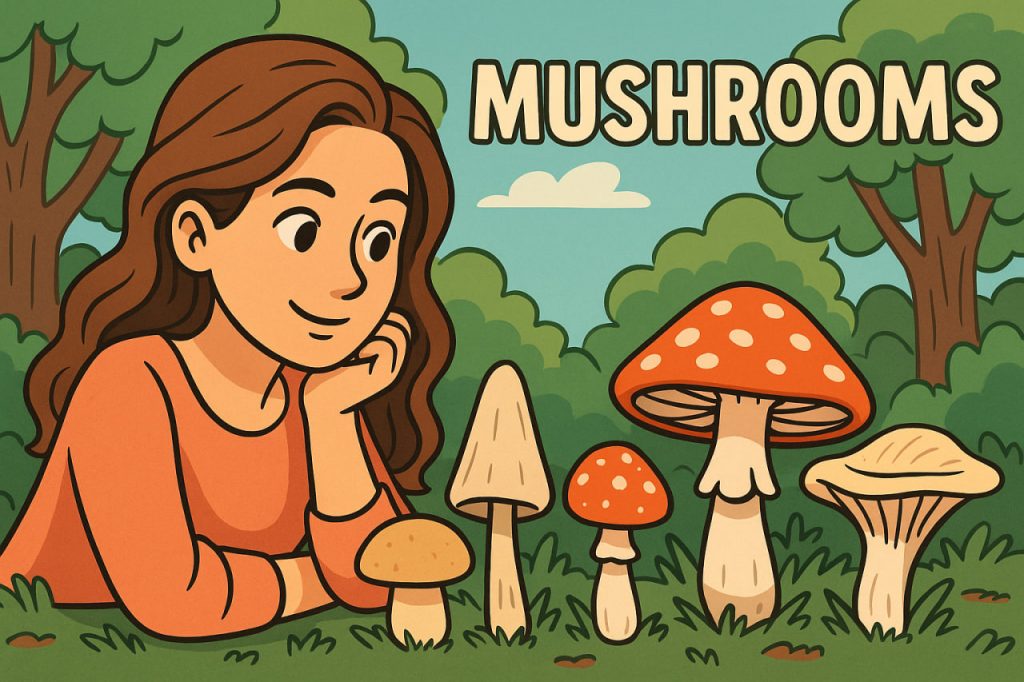
Mushrooms are a diverse group of fungi found in forests, grasslands, and even urban environments. Unlike plants, mushrooms do not perform photosynthesis; instead, they obtain nutrients by breaking down organic matter in soil, wood, or decaying leaves. This makes them essential contributors to natural ecosystems, especially in nutrient recycling and soil formation. Mushrooms vary greatly in shape, size, texture, and color, ranging from tiny coral-like formations to large umbrella-shaped caps. Many mushrooms are edible and widely used in cuisine for their unique flavors and nutritional value, while others are toxic and must be identified carefully. Their cultural significance spans thousands of years, appearing in medicine, folklore, and culinary traditions worldwide.
Ecological Role and Growth
Mushrooms play a crucial role as decomposers, breaking down complex organic materials that other organisms cannot easily digest. This process returns nutrients back into the soil, supporting plant growth and maintaining the health of entire ecosystems. Mushrooms grow from underground networks called mycelium, which are thread-like structures that spread through soil or wood. These networks can be extremely large; some are considered among the oldest and largest living organisms on Earth. Moisture, temperature, and organic matter availability influence mushroom growth patterns. Forest ecologist Dr. Leena Rodriguez notes that forests with rich fungal diversity tend to have healthier soils and more resilient plant communities.
Edible and Poisonous Varieties
Edible mushrooms, such as champignons, shiitake, and oyster mushrooms, are valued for their taste and nutritional benefits. They contain proteins, vitamins, fiber, and unique compounds that support digestive and metabolic health. However, distinguishing edible mushrooms from toxic varieties can be challenging, as some poisonous species closely resemble safe ones. For example, the highly toxic death cap mushroom looks similar to certain edible russula species. Mycology expert Dr. Erik Madsen emphasizes that mushroom foraging should be done only with proper knowledge, training, or guidance from experienced specialists to avoid health risks. Cultivated mushrooms or those purchased from reputable sources are the safest option.
Cultural and Practical Uses
Mushrooms have been part of human culture for centuries, not only as food but also in traditional practices and research. Some species are used in natural dye production, biodegradable materials, and soil restoration projects. Recent scientific interest has focused on the potential of fungi in environmental applications such as breaking down plastics or cleaning polluted environments, a process known as mycoremediation. Mushrooms are also featured in literature, art, and mythology, often symbolizing mystery and transformation due to their sudden appearance after rainfall and unique growth forms. Their cultural and scientific importance continues to expand as research reveals new possibilities for sustainable living.
Interesting Facts
- The largest known organism on Earth is a mycelium network of Armillaria fungus in Oregon, spanning more than 2,000 acres.
- Some mushrooms glow in the dark due to natural bioluminescent chemicals.
- Mushrooms can appear overnight because their cells absorb water rapidly, expanding their structure.
Glossary
- Mycelium — A network of fine fungal threads that absorbs nutrients and supports mushroom growth.
- Decomposer — An organism that breaks down dead organic matter to recycle nutrients into the ecosystem.
- Mycology — The scientific study of fungi.
- Mycoremediation — The use of fungi to break down or absorb pollutants from the environment.