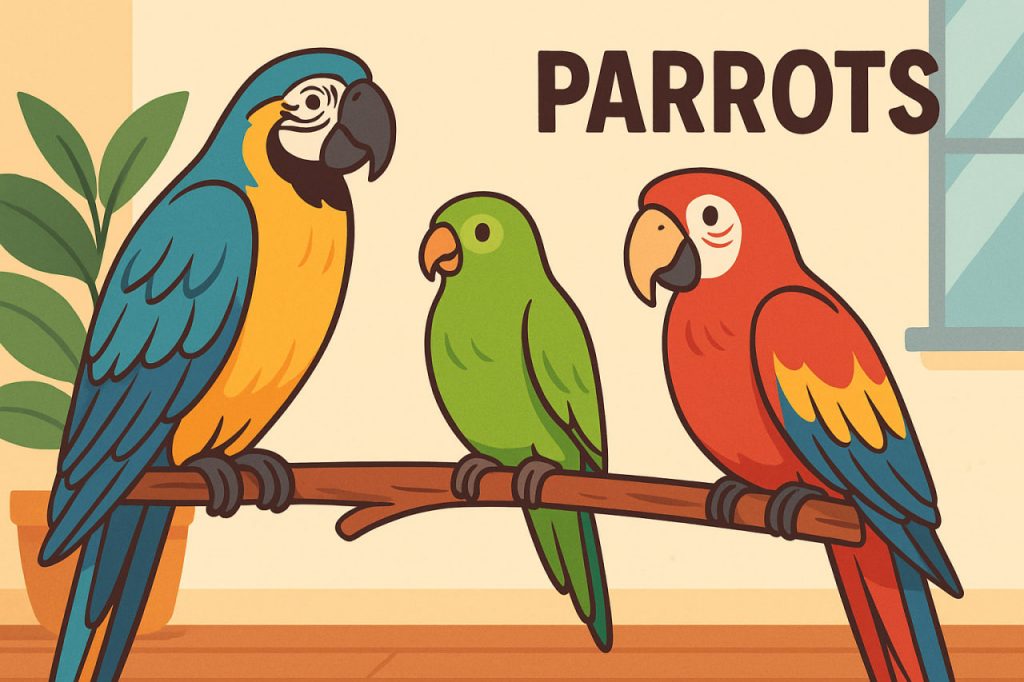
Parrots are intelligent and colorful birds known for their vibrant feathers, social nature, and in some species, the remarkable ability to mimic human speech. They belong to the order Psittaciformes, which includes more than 390 species ranging from small budgerigars to large macaws. Parrots typically live in warm climates, especially in tropical and subtropical regions where forests provide food and safe nesting environments. Their strong curved beaks and grasping feet allow them to climb, manipulate objects, and crack hard seeds. Because parrots are highly social animals, they communicate through vocalizations and body movements, forming strong bonds with flock members. As pets, they require attention, enrichment, and a stable environment to stay healthy and emotionally balanced.
Behavior and Communication
Parrots are known for their complex behaviors and active communication patterns. Many species use calls to coordinate group movement, warn of predators, or express emotions within their flock. Their ability to mimic sounds does not mean they understand language in a human sense, but rather that they are excellent at recognizing and repeating patterns. Cognitive studies show that parrots are problem-solvers capable of using simple reasoning to interact with their environment. According to avian cognition researcher Dr. Elena Foster, parrots demonstrate memory skills and social awareness comparable to young mammalian species. Keeping parrots in domestic settings requires understanding these behavioral needs to prevent stress or boredom.
Diet and Environmental Needs
In the wild, parrots consume a variety of seeds, nuts, fruits, and sometimes flowers or small insects. Their diet is closely tied to the environment they live in, where seasonal changes affect available food sources. In a home setting, providing a balanced diet is essential to prevent nutritional deficiencies. Parrots also require space to move, fly, or climb, as well as objects to chew on to maintain beak health. Environmental enrichment—such as branches, toys, and foraging opportunities—helps replicate natural conditions. Avian veterinarian Dr. Marcus Hall emphasizes that creating an environment similar to natural habitats supports both physical and psychological well-being in parrots.
Parrots as Companions
Parrots often form strong emotional connections with humans when raised in a household environment. Because of their social nature, they may become affectionate and interactive with their caregivers. However, this same trait means they can become lonely or stressed if left without attention. Owners should be prepared for long-term commitment, as many parrot species live for several decades. Proper care, patience, and understanding of their natural behavior are essential for ensuring a positive relationship. When well cared for, parrots can be playful, expressive, and deeply engaging companions.
Interesting Facts
- Some parrot species can live more than 60 years, making them one of the longest-living bird groups.
- The African Grey Parrot is known for exceptional sound mimicry and problem-solving abilities.
- Parrots rotate their heads up to 180 degrees due to flexible neck vertebrae.
Glossary
- Psittaciformes — The scientific order that includes all parrot species.
- Enrichment — Activities and objects that stimulate a pet’s natural behaviors.
- Avian — Relating to or characteristic of birds.
- Flock — A group of birds living or traveling together.