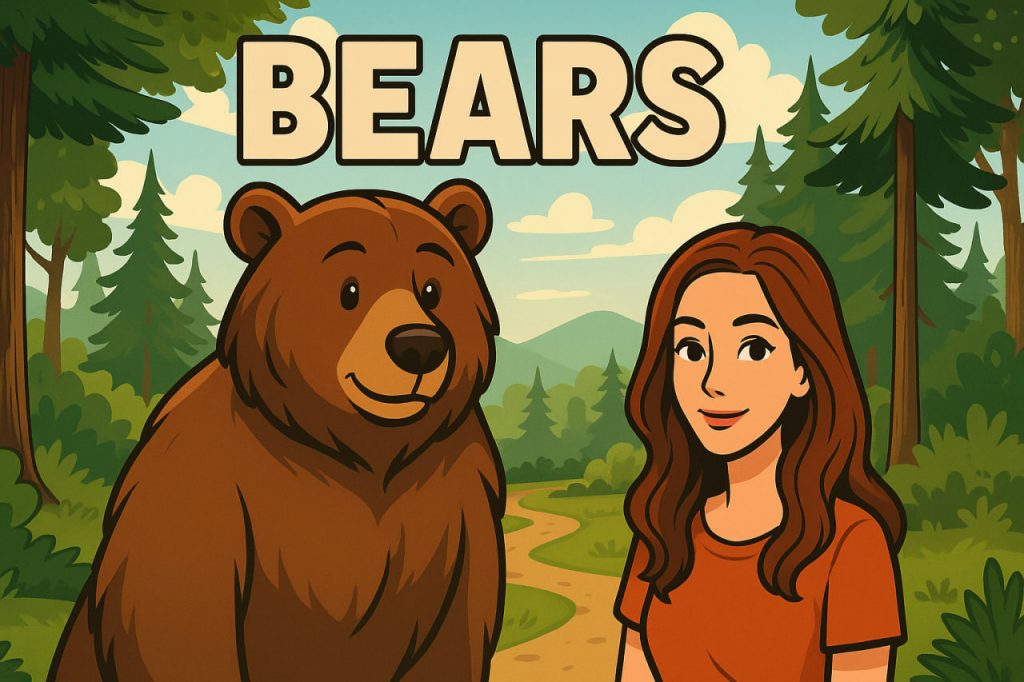
Bears are among the most recognizable mammals on Earth, known for their strength, intelligence, and adaptability across diverse habitats. Found in forests, mountains, tundra, and even coastal regions, bears belong to the family Ursidae and include species such as the brown bear, polar bear, black bear, and giant panda. Their evolutionary history spans millions of years, allowing them to develop a wide range of survival strategies, from omnivorous diets to highly specialized feeding behaviors. Bears play an important ecological role by dispersing seeds, regulating prey populations, and shaping plant communities. Scientists consider them keystone species in many ecosystems, meaning their presence significantly influences the balance of life around them. Understanding bear biology and behavior helps researchers and conservationists protect these remarkable animals as environmental pressures increase.
Biological Characteristics of Bears
Bears share several physical traits, including strong limbs, large bodies, and acute senses of smell and hearing, which help them survive in challenging environments. Most species are omnivores, feeding on plants, insects, fish, and small mammals, though the exact diet varies widely depending on habitat. Polar bears, for example, rely heavily on marine mammals, while giant pandas primarily consume bamboo. Bears also exhibit complex seasonal behaviors such as hibernation, during which their metabolism slows dramatically to conserve energy. Wildlife biologist Dr. Emily Foster notes that bears have remarkable cognitive abilities, capable of problem-solving and learning from experience. She explains that these traits contribute to their success across diverse ecological niches. Studying bear physiology reveals how well-adapted they are to extreme climate variations and resource availability.
Behavior, Social Structure, and Communication
Although often perceived as solitary animals, bears display rich behavioral repertoires that include communication, territorial marking, and parental care. Adults typically roam alone, but they gather in areas with abundant food, such as salmon-rich rivers or berry fields. Mothers invest heavily in raising cubs, teaching them essential survival skills during the first two to three years of life. Bears communicate through vocalizations, scents, and body language, allowing them to avoid conflict and establish dominance. According to animal behavior researcher Dr. Daniel Ruiz, bears demonstrate social awareness and emotional complexity, responding differently to threats, play, or resource competition. Their interactions reveal a nuanced understanding of their environment and the animals around them.
Ecological Importance and Conservation Challenges
Bears play a critical role in maintaining healthy ecosystems. By consuming berries and fruits, they disperse seeds over long distances, promoting forest regeneration. In coastal regions, bears transport nutrients from salmon-rich rivers into the forest ecosystem, enriching the soil. However, many bear species face threats from habitat loss, climate change, and human-wildlife conflict. Polar bears are particularly vulnerable due to the rapid decline of sea ice, which limits their ability to hunt seals. Conservation programs focus on habitat preservation, human education, and monitoring population trends to prevent further declines. Experts emphasize that protecting bears supports not only the species themselves but entire ecosystems associated with their presence.
Interesting Facts
Bears can detect scents from several kilometers away due to their highly developed sense of smell.
Polar bears are considered marine mammals because they depend on sea ice for hunting and travel.
Brown bears can run at speeds up to 50 km/h despite their large size.
Some black bears have been documented using tools, demonstrating advanced cognitive abilities.
Glossary
- Keystone Species — a species whose presence has a disproportionately large effect on its ecosystem.
- Hibernation — a seasonal physiological state of decreased metabolism and activity.
- Territorial Marking — behaviors used by animals to communicate boundaries to others.
- Omnivore — an organism that eats both plant and animal matter.