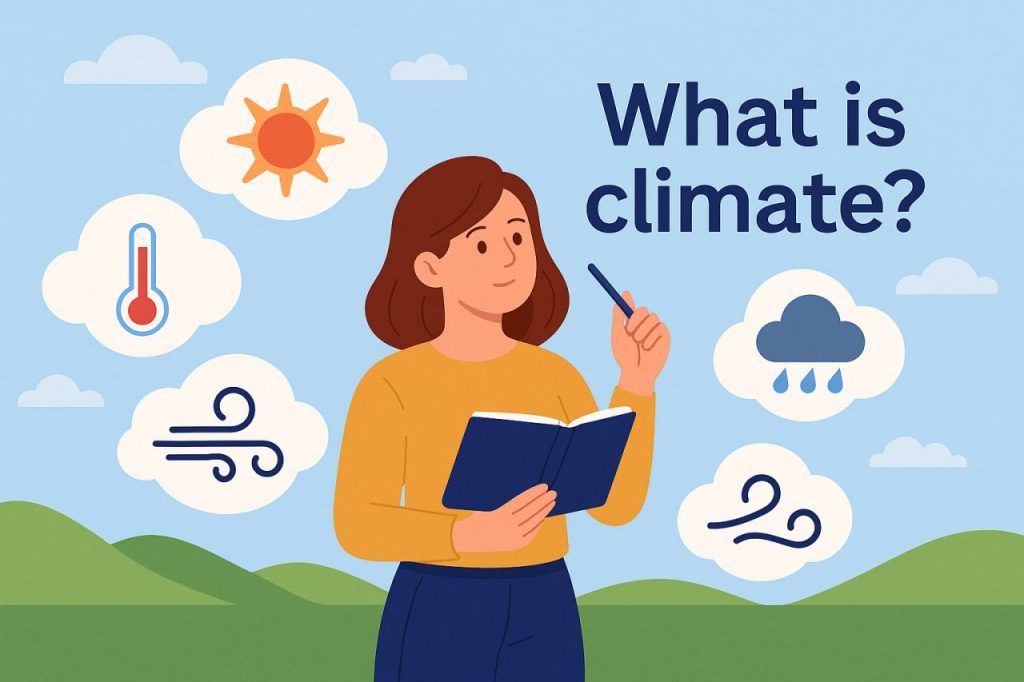
Climate is the long-term pattern of temperature, humidity, atmospheric pressure, wind, precipitation, and seasonal changes in a particular region or across the entire planet. Unlike weather, which describes short-term conditions such as daily temperatures or storms, climate reflects average conditions over decades or even centuries. By analyzing climate, scientists can understand how Earth’s atmosphere behaves over time, how ecosystems function, and how human activities influence global environmental stability. Climate determines the distribution of plants, animals, water resources, and even human civilizations. With modern climate change accelerating, understanding what climate truly means has never been more important for predicting future environmental challenges.
Climate vs. Weather: What’s the Difference?
Weather changes from day to day, but climate describes long-term conditions. Climate tells us what type of weather a location typically experiences—warm summers, cold winters, or frequent rainfall. Weather may vary dramatically within hours, while climate requires long-term observation to identify patterns. For example, a single heatwave does not change a region’s climate, but consistent warming over decades does. According to climate scientist Dr. Leah Hammond:
“Weather is your mood —
climate is your personality.”
This simple comparison highlights why climate trends matter more for understanding long-term environmental changes.
The Main Components of Climate
Climate is shaped by multiple interacting factors:
- Temperature — average heat levels over time
- Precipitation — long-term rainfall and snowfall patterns
- Humidity — moisture levels in the air
- Wind systems — global and regional air movements
- Sunlight — intensity and distribution of solar radiation
- Ocean currents — heat transport across the planet
These factors vary across regions, creating different climate zones such as tropical, arid, temperate, and polar.
What Determines Earth’s Climate
Earth’s climate is influenced by natural and human-driven processes. Key contributors include:
- Earth’s orbit and tilt, which shape seasons and long-term climate cycles
- Ocean circulation, distributing heat globally
- Volcanic activity, which can cool the atmosphere by releasing ash and aerosols
- Greenhouse gases, which trap heat and regulate surface temperature
Human activities such as burning fossil fuels, deforestation, and industrial emissions are now major drivers of global climate change, altering Earth’s natural balance.
Climate Zones Around the World
Different parts of the planet experience different climates based on latitude, altitude, and geography. For example:
- Tropical climates near the equator are hot and humid
- Arid climates receive very little rainfall
- Temperate climates have moderate temperatures and distinct seasons
- Polar climates are extremely cold with long winters
These variations influence agriculture, settlement patterns, wildlife, and natural resources.
Why Climate Matters
Climate affects nearly every aspect of life on Earth. It determines growing seasons for crops, health risks for populations, and biodiversity in ecosystems. Water availability, natural disaster frequency, and living conditions are all shaped by climate. As global temperatures rise, the risks of droughts, floods, storms, and ecosystem disruption increase. Understanding climate helps societies prepare for these challenges and develop strategies to protect the environment and human well-being.
Interesting Facts
- The warmest climate zone on Earth is the tropical belt, where temperatures stay high all year.
- Antarctica is technically a desert, receiving very little annual precipitation.
- Ocean currents transport over half of the planet’s heat, shaping climate worldwide.
- The Earth’s climate has gone through ice ages and warm periods for millions of years.
- Carbon dioxide levels are now higher than at any time in the past 800,000 years.
Glossary
- Climate — long-term patterns of temperature and environmental conditions in a region.
- Weather — short-term atmospheric conditions such as rain, wind, or storms.
- Greenhouse Gases — gases that trap heat in the atmosphere, affecting global temperature.
- Climate Zone — a geographic region characterized by specific climate conditions.
- Ocean Circulation — the movement of ocean currents that distribute heat around the world.