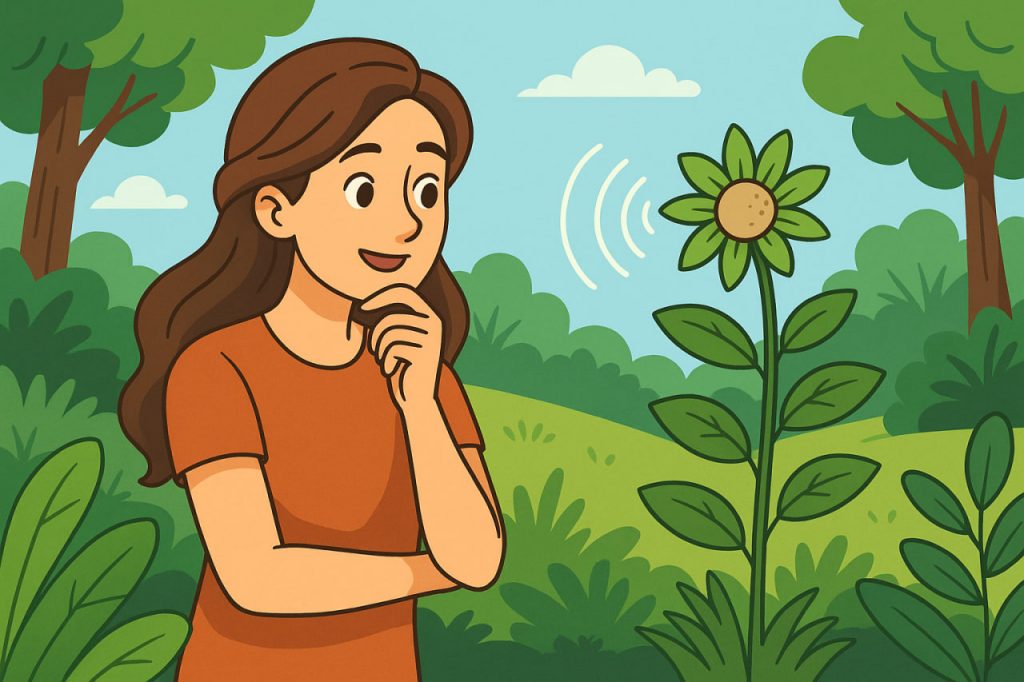
Plants may appear silent and passive, but modern science reveals that they are remarkably active communicators. Through chemical signals, electrical impulses, root networks, and even subtle acoustic vibrations, plants interact with their surroundings in ways that resemble a gentle “whisper.” This phenomenon, often called plant communication, describes how plants sense danger, share resources, warn neighbors, and adapt to environmental changes. Although plants lack a nervous system like animals, they use sophisticated biological pathways to exchange information and respond to stress. Exploring the “whisper of plants” offers a deeper understanding of nature’s hidden language and shows how interconnected ecosystems truly are.
Plants communicate through multiple channels, each designed for different purposes — defending against herbivores, attracting pollinators, or cooperating with nearby plants. These complex communication methods demonstrate that plants are far from passive: they actively participate in ecosystems using signals invisible to the human eye.
Chemical Signals: The Most Common Plant Language
Plants often communicate using chemical compounds called volatile organic compounds (VOCs). When a plant is attacked by insects, it releases specific chemicals into the air to warn nearby plants. These neighbors then activate their own defense mechanisms, thickening leaves or producing bitter-tasting compounds. Some plants even attract predators of the herbivores feeding on them. According to plant biologist Dr. Lila Ramirez:
“Chemical signaling is the plant equivalent of shouting a warning —
subtle to us, but unmistakable to the surrounding community.”
This invisible exchange forms a protective network that supports entire forests and agricultural systems.
Root Communication and the “Wood Wide Web”
Beneath the soil, plants use vast underground fungal networks — known as mycorrhizal networks — to exchange nutrients and signals. Through these connections, plants share carbon, nitrogen, and water with weaker or younger plants. They can also send distress signals when under attack or facing drought. This cooperative system is sometimes called the “wood wide web,” reflecting how interconnected plant communities truly are.
Electrical Impulses: Plant Responses in Real Time
Plants generate electrical signals similar to nerve impulses in animals. When leaves are touched, damaged, or exposed to sudden light changes, electrical waves travel through the plant’s tissues. These impulses help coordinate rapid responses, such as closing a Venus flytrap or releasing defensive chemicals moments after an attack. Electrical signaling shows that plants react internally much faster than previously believed.
Do Plants “Hear”? Acoustic Communication
Recent studies suggest that plants may respond to sound vibrations. For example:
- Some flowers produce more nectar when exposed to the sound of pollinating insects.
- Roots grow toward certain frequencies of vibration.
- Stressed plants release ultrasonic clicks that other plants may detect.
While research continues, early findings indicate that plants are sensitive to acoustic cues — a form of communication that humans cannot normally perceive.
Light, Touch, and Memory
Plants also respond to subtle environmental cues such as touch, changes in light direction, and circadian rhythms. Some plants even show short-term memory, adjusting their behavior based on past experiences, such as repeated harmless disturbances. These adaptive behaviors highlight the complexity of plant intelligence, even without a brain.
Why Understanding Plant Communication Matters
Studying how plants communicate has major applications in agriculture, ecology, and climate science. By understanding plant signaling, scientists can:
- reduce pesticide use,
- improve crop resilience,
- restore damaged ecosystems,
- support sustainable farming techniques.
The whisper of plants is more than a poetic idea — it is a vital natural mechanism that shapes the health of ecosystems worldwide.
Interesting Facts
- Plants under stress release ultrasonic sounds at frequencies humans cannot hear.
- Trees connected by mycorrhizal networks can share up to 40% of their nutrients.
- Some plants emit chemical signals that attract predators of harmful insects.
- Corn plants produce different scents depending on which insect is attacking them.
- Certain flowers can detect the sound of buzzing bees and increase nectar within minutes.
Glossary
- Volatile Organic Compounds (VOCs) — airborne chemicals released by plants for communication.
- Mycorrhizal Network — underground fungal networks that connect plant roots.
- Electrical Signaling — rapid internal communication used by plants to coordinate responses.
- Acoustic Vibrations — sound waves that some plants can detect or produce.
- Plant Intelligence — the ability of plants to sense, adapt, and respond to environmental stimuli.