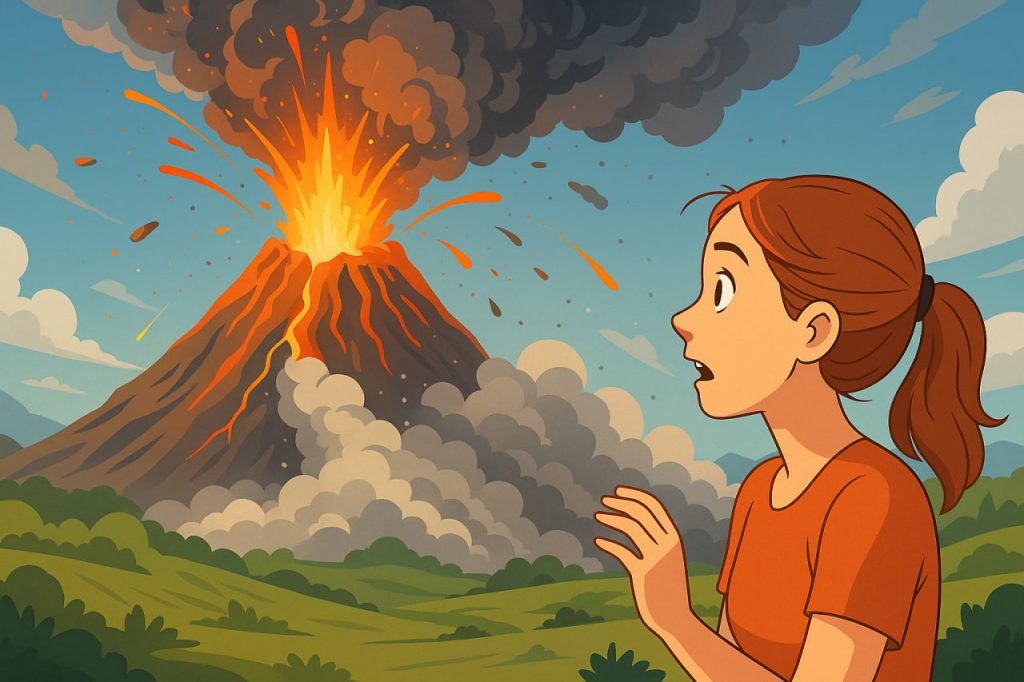
Explosive volcanic eruptions are some of the most powerful and destructive natural events on Earth. Unlike gentle lava flows that ooze slowly down volcanic slopes, explosive eruptions release enormous amounts of energy in a matter of seconds or minutes. These eruptions occur when magma rich in gas and silica becomes trapped beneath the Earth’s surface. As pressure builds, the magma chamber acts like a sealed container. When it finally ruptures, gas expands violently, forcing magma, ash, and volcanic rock into the atmosphere at incredible speeds. Explosive eruptions can devastate entire regions, disrupt global air travel, and even influence climate. Understanding why they occur and how they behave helps scientists predict potential hazards and protect nearby populations.
Explosive eruptions vary widely in size and intensity, but all share a common mechanism: rapid decompression of gas-rich magma. Their violence is measured using the Volcanic Explosivity Index (VEI), which ranges from 0 to 8. High-VEI eruptions can produce towering eruption columns, pyroclastic flows, and widespread ashfall capable of affecting areas hundreds or thousands of kilometers away.
Why Explosive Eruptions Happen
Explosive eruptions occur when rising magma contains high levels of dissolved gases such as water vapor, carbon dioxide, and sulfur dioxide. As magma moves upward, pressure drops, causing these gases to expand. If the magma is thick and sticky (high in silica), the gas becomes trapped, building extreme internal pressure. When the magma finally fractures, it unleashes a violent blast, ejecting material into the air. According to volcanologist Dr. Sandra Holt:
“Explosive eruptions are essentially the Earth’s pressure-release events —
when gas-rich magma can no longer stay contained, it bursts outward with tremendous force.”
The more gas trapped inside the magma, the more explosive the eruption.
Key Characteristics of Explosive Eruptions
Explosive eruptions produce several hazardous features:
- Eruption columns reaching up to 40 km high
- Pyroclastic flows, fast-moving avalanches of hot ash, gas, and rock
- Widespread ashfall that can blanket entire regions
- Volcanic bombs and rocks thrown kilometers from the vent
- Shockwaves capable of damaging structures and hearing over long distances
These features make explosive eruptions particularly dangerous compared to effusive eruptions, which produce flowing lava.
Examples of Famous Explosive Eruptions
History offers dramatic examples of explosive volcanic events:
- Mount Vesuvius (79 CE) buried Pompeii in ash and pyroclastic flows.
- Krakatoa (1883) produced one of the loudest sounds ever recorded and triggered massive tsunamis.
- Mount St. Helens (1980) released a lateral blast that flattened over 600 square kilometers of forest.
- Mount Pinatubo (1991) cooled global temperatures by approximately 0.5°C for nearly two years.
Each event demonstrated the dramatic power of rapid gas expansion and volcanic pressure release.
Environmental and Climate Impacts
Explosive eruptions can inject vast amounts of ash and sulfur aerosols into the stratosphere. These particles reflect sunlight, temporarily cooling the Earth’s surface. Large eruptions may disrupt air travel, damage crops, contaminate water supplies, and lead to long-term environmental changes. Ashfall can collapse roofs, contaminate air, and injure respiratory health. Climate effects from major eruptions can last for months or years.
Monitoring and Predicting Explosive Eruptions
Modern volcanology uses seismic sensors, gas measurements, satellite imagery, and ground deformation studies to monitor volcanic activity. These tools help scientists detect rising magma, increasing gas emissions, and changes in pressure — all indicators that an explosive eruption may be approaching. While predictions can never be perfect, improved monitoring saves lives by enabling timely evacuations.
Interesting Facts
- Explosive eruptions can eject ash above the cruising altitude of airplanes.
- Pyroclastic flows may travel at over 700 km/h, faster than a jetliner at takeoff.
- Some volcanic ash is so fine it can stay in the atmosphere for up to three years.
- The VEI scale is logarithmic — each increase represents ten times more material.
- A single explosive eruption can alter global climate for months or years.
Glossary
- Volcanic Explosivity Index (VEI) — a scale measuring the magnitude of volcanic eruptions.
- Pyroclastic Flow — a fast-moving, deadly mixture of hot gas and volcanic debris.
- Eruption Column — a towering plume of ash and gas rising from an explosive eruption.
- Silica Content — a factor that determines magma thickness; high silica increases explosiveness.
- Stratospheric Aerosols — particles injected into the upper atmosphere that affect climate.