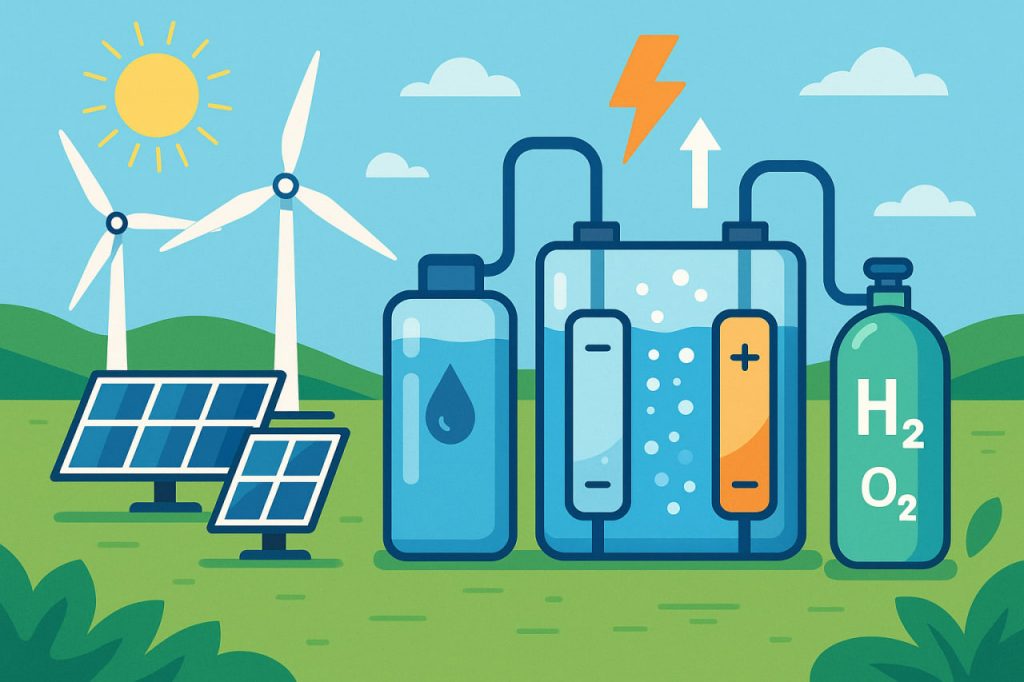
Green hydrogen is emerging as one of the most promising clean-energy technologies of the 21st century. Unlike conventional hydrogen, which is produced from fossil fuels and generates significant carbon emissions, green hydrogen is created using renewable energy sources such as solar, wind, or hydropower. Through a process called electrolysis, electricity splits water into hydrogen and oxygen without producing CO₂. This makes green hydrogen a powerful tool for reducing global emissions, supporting energy security, and accelerating the shift toward a sustainable future. Governments and industries around the world are investing heavily in hydrogen infrastructure, seeing it as a critical component of decarbonizing transportation, industry, and power generation.
Green hydrogen stands out because it can be stored, transported, and used in sectors that are difficult to electrify, such as steelmaking, aviation, and heavy shipping. It serves as both a clean fuel and a long-term energy storage solution. As global demand for renewable energy grows, green hydrogen offers a pathway to stabilize grids and power industries without relying on fossil fuels.
How Green Hydrogen Is Produced
Green hydrogen is generated using electrolyzers, devices that split water into hydrogen and oxygen using renewable electricity. The cleaner the electricity, the greener the hydrogen. Several types of electrolyzers exist — including PEM, alkaline, and solid oxide — each offering different benefits in terms of efficiency and cost. Large-scale production facilities are now being developed near wind farms, solar parks, and hydroelectric stations. According to energy systems expert Dr. Sofia Langford:
“Green hydrogen is the missing link
in building a fully decarbonized global energy system.”
By replacing fossil-fuel-based hydrogen with the renewable alternative, industries can eliminate millions of tons of carbon emissions annually.
Why Green Hydrogen Matters
Many sectors cannot transition easily to battery-powered systems. Heavy industry requires extremely high heat, and heavy-duty vehicles need dense, long-lasting energy storage. Green hydrogen offers:
- Zero-carbon fuel
- Long-term storage potential
- Compatibility with existing industrial processes
- High energy density for transport
- Global export opportunities for renewable-rich countries
It can also be blended with natural gas in pipelines to reduce emissions during the transition phase.
Applications Across Key Industries
Green hydrogen is already being tested in numerous critical sectors:
- Steel and cement production — using hydrogen instead of coal for high-temperature processes.
- Aviation — hydrogen-based synthetic fuels offer cleaner long-distance flights.
- Shipping — hydrogen-derived ammonia is emerging as a marine fuel.
- Transportation — fuel-cell buses, trucks, and trains operate on hydrogen with zero tailpipe emissions.
- Energy storage — hydrogen can store excess renewable energy for weeks or months.
These applications make hydrogen uniquely valuable in global climate strategies.
Challenges to Overcome
Despite its potential, green hydrogen faces several hurdles:
- High production cost compared to fossil-based hydrogen.
- Energy loss during electrolysis, storage, and transport.
- Infrastructure limitations including pipelines, refueling stations, and storage tanks.
- Large water requirements, which must be managed sustainably.
Research and global investment are rapidly closing these gaps, with production costs expected to fall sharply in the next decade.
A Key Player in a Sustainable Future
As nations commit to carbon neutrality, green hydrogen is becoming a cornerstone of long-term energy planning. It connects renewable energy, industry, transportation, and energy security into a single cohesive system. With continued innovation and international cooperation, green hydrogen may become one of the most influential energy sources of the future.
Interesting Facts
- Green hydrogen produces zero greenhouse gases — only water vapor when used.
- The global hydrogen market is projected to reach over $500 billion by 2050.
- Fuel-cell vehicles can refuel in 5 minutes and travel hundreds of kilometers.
- A single large hydrogen plant can replace millions of tons of CO₂ emissions.
- Hydrogen is the lightest element, which makes storage challenging but efficient when compressed.
Glossary
- Electrolysis — a process that splits water into hydrogen and oxygen using electricity.
- Fuel Cell — a device that converts hydrogen into electricity with water as the by-product.
- Decarbonization — reducing or eliminating carbon emissions from human activities.
- Energy Density — the amount of energy stored in a fuel relative to its weight.
- Hydrogen Economy — an energy system based on hydrogen as a major fuel source.