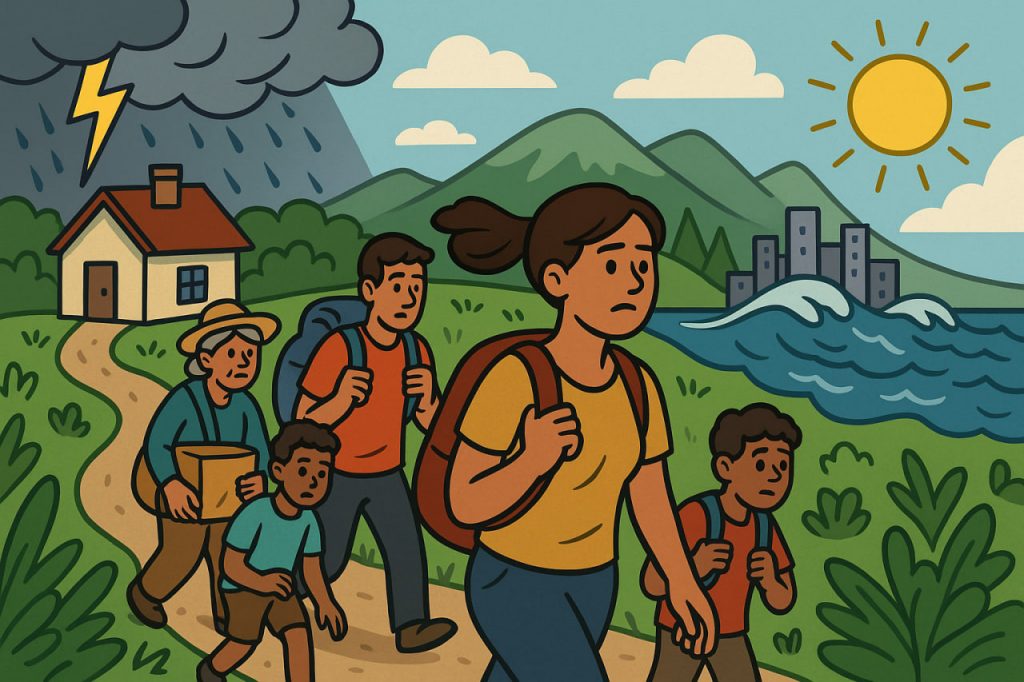
Climate migration refers to the movement of people driven by the impacts of climate change — rising sea levels, extreme weather, droughts, heatwaves, and ecological degradation. As global temperatures rise, millions of people face growing threats to their homes, health, and livelihoods. Unlike traditional migration, which is often caused by economic or political reasons, climate migration is triggered by environmental instability that makes certain regions increasingly difficult or unsafe to inhabit. Scientists and humanitarian organizations warn that climate migration is one of the defining challenges of the 21st century as communities around the world struggle to adapt to rapidly changing conditions. Understanding its causes, impacts, and potential solutions is essential for building a resilient future.
The number of climate-affected migrants continues to rise each year. Some move temporarily during extreme weather, while others are permanently displaced when their environment can no longer support life. These movements reveal how vulnerable human societies are to environmental stress and how urgently coordinated global action is needed.
Why People Become Climate Migrants
Climate change disrupts ecosystems and damages infrastructure in ways that make daily life increasingly difficult. Major drivers include rising sea levels, stronger storms, desertification, flooding, and prolonged droughts. Low-lying coastal areas and small island nations face the highest risks as rising oceans threaten to swallow entire communities. Inland regions may suffer from water scarcity or extreme heat that makes agriculture impossible. According to environmental sociologist Dr. Irene Lawson:
“Climate migration is not a distant future scenario —
it is already happening across every continent.”
People may relocate within their own country or cross borders to find safer and more stable environments.
Environmental Triggers Behind Climate Migration
The most common environmental drivers include:
- Sea-level rise destroying coastal settlements
- Extreme storms and hurricanes causing repeated damage
- Droughts reducing access to water and destroying crops
- Flooding from monsoons, melting glaciers, or heavy rainfall
- Desertification expanding uninhabitable regions
- Heatwaves making regions dangerous for work or outdoor activity
Many of these changes happen gradually, creating long-term pressure that forces families to relocate for survival.
Social and Economic Impacts
Climate migration affects not only those forced to move but also the communities they leave and join. Migrants may lose homes, land, and cultural ties, while host regions face challenges such as population increase, competition for resources, and infrastructure strain. Economic inequalities often intensify because the poorest communities are typically the least able to adapt or recover. In some regions, climate stress contributes to social conflict, making migration even more complex.
Health Consequences of Climate Displacement
People displaced by climate pressures face significant health risks. They may lack access to clean water, medical care, housing, and adequate nutrition. Heat-related illnesses, respiratory issues from wildfires, and disease outbreaks are increasingly common in climate-affected regions. Mental health challenges — including anxiety, trauma, and loss of identity — also impact migrants who have been forced to leave their homes and communities.
Adapting to Climate Migration
Governments, international organizations, and researchers are working to address climate migration by improving resilience and supporting communities at risk. Adaptation strategies include building stronger infrastructure, developing early-warning systems, restoring ecosystems, and creating climate-resilient agriculture. Some regions are exploring managed relocation programs to help communities move safely before conditions become dangerous. These efforts aim to reduce displacement and support long-term stability.
Looking Ahead
Climate migration will continue to grow as climate change intensifies. Although it presents significant challenges, it also offers an opportunity to rethink urban planning, develop sustainable living strategies, and support global cooperation. By investing in resilience and protecting vulnerable populations, societies can create safer futures for those affected by environmental change.
Interesting Facts
- The World Bank estimates that over 200 million people may become climate migrants by 2050.
- Small island nations such as Kiribati and Tuvalu may become uninhabitable within decades due to sea-level rise.
- Extreme weather displaces more people annually than wars and political conflicts combined.
- Drought is responsible for the majority of long-term climate migration, especially in Africa and Asia.
- Some cities are adopting “climate-smart” infrastructure to reduce future displacement.
Glossary
- Climate Migration — movement caused by environmental changes linked to climate change.
- Sea-Level Rise — an increase in ocean levels due to global warming and melting ice.
- Desertification — the process by which fertile land becomes desert.
- Displacement — forced movement of people from their homes.
- Climate Adaptation — strategies used to reduce harm from climate-related impacts.