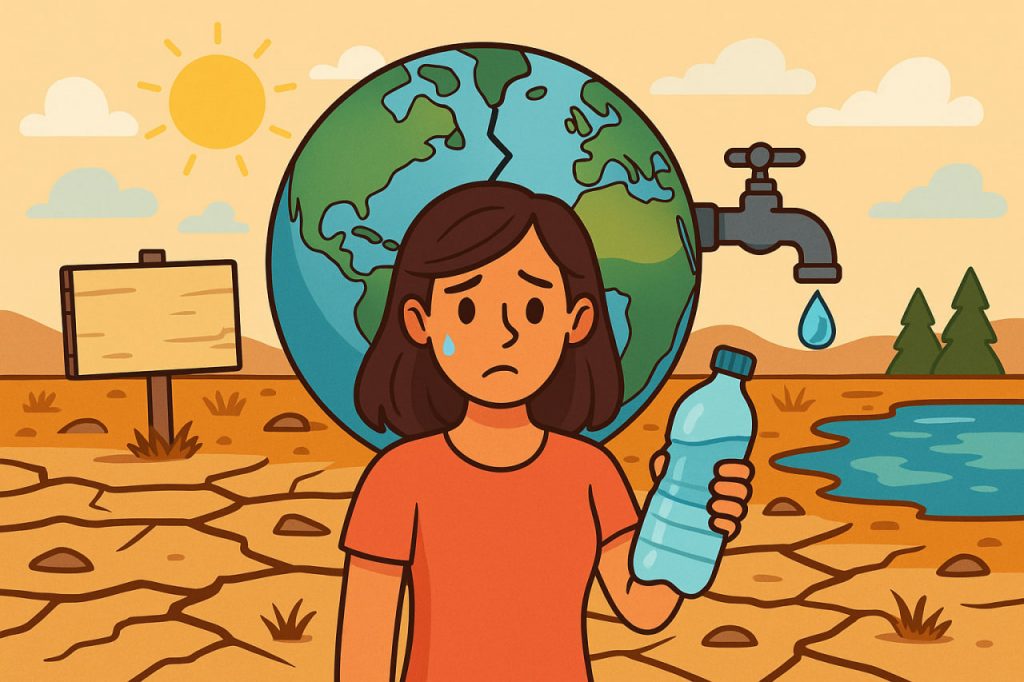
The world is facing one of the most urgent environmental and humanitarian challenges of the 21st century — the growing shortage of safe drinking water. Although Earth is often called the “blue planet,” less than 1% of its water is accessible freshwater suitable for human consumption. Population growth, climate change, industrial pollution, and unsustainable use of water resources have placed enormous pressure on rivers, lakes, aquifers, and glaciers. As a result, billions of people experience water stress each year. Understanding the causes and impacts of the drinking water crisis is essential for protecting human health, supporting ecosystems, and ensuring global stability.
The crisis is not limited to arid regions. Even areas with historically abundant water sources are experiencing droughts, contamination, and declining water quality. As water resources become more unpredictable, communities must adapt to new patterns of scarcity. Meanwhile, agricultural and industrial sectors — the largest water consumers — continue to draw heavily on groundwater, often faster than it can be naturally replenished. This unsustainable pattern threatens long-term supplies and increases the risk of environmental collapse.
Key Causes of the Global Drinking Water Crisis
Several interconnected factors drive today’s water shortages:
- Climate change: rising temperatures intensify droughts and reduce snowfall, shrinking rivers and reservoirs.
- Overuse of groundwater: aquifers worldwide are being depleted faster than they can recover.
- Pollution: chemicals, plastics, pharmaceuticals, and wastewater contaminate freshwater sources.
- Urbanization: expanding cities put pressure on aging water systems.
- Agricultural demand: irrigation accounts for about 70% of global freshwater use.
According to environmental hydrologist Dr. Helena Ward:
“Water scarcity is no longer a distant threat —
it is already reshaping ecosystems, economies, and human health.”
Each of these factors intensifies the strain on limited drinking water resources.
Consequences for Human Health and Society
The drinking water crisis has severe impacts on both individuals and communities:
- waterborne diseases spread when people rely on unsafe sources
- malnutrition increases as agriculture becomes less productive
- conflicts and migration rise in regions experiencing extreme water scarcity
- economic instability grows as industries and cities struggle to meet water demands
Children are especially vulnerable to dehydration, illness, and the long-term effects of contaminated water.
Environmental Impacts
Low water levels affect entire ecosystems:
- wetlands dry out
- fish populations decline
- soil becomes more prone to erosion
- forests face increased risk of fire
- biodiversity decreases as habitats disappear
When rivers stop flowing or lakes shrink, ecosystems lose their natural balance.
Where Water Stress Is Rising
Water scarcity now affects every continent. Some of the most vulnerable regions include:
- North Africa and the Middle East
- South Asia
- Western United States
- Australia
- Parts of South America and Southern Africa
Even in developed nations, infrastructure failures and contamination events highlight vulnerabilities in water systems.
Technological and Nature-Based Solutions
Innovative approaches aim to address the crisis:
- desalination for coastal regions
- rainwater harvesting
- water recycling systems
- smart irrigation technologies
- wetland restoration and watershed protection
As global water expert Dr. Marcus Levin notes:
“Solving the water crisis requires both technology and ecological restoration —
we must protect natural systems while modernizing human ones.”
Governments, organizations, and communities must work together to implement sustainable strategies.
Why Conservation Matters
Water is a finite resource, and every individual action contributes to long-term stability. Reducing water waste, improving sanitation systems, and protecting natural water sources are essential steps toward ensuring access for future generations. Awareness and responsible use can help slow the crisis while large-scale solutions are developed.
Interesting Facts
- About 2.2 billion people lack access to safely managed drinking water.
- Agriculture consumes 70% of all freshwater globally.
- Some major aquifers take thousands of years to recharge.
- Nearly one-third of global rivers no longer reach the sea for part of the year.
- Desalination provides drinking water for more than 300 million people.
Glossary
- Aquifer — an underground layer of water-bearing rock or sediment.
- Desalination — removing salt from seawater to produce drinking water.
- Water Stress — when water demand exceeds available supply.
- Watershed — a region that drains into a river or lake.
- Rainwater Harvesting — collecting and storing rainwater for later use.