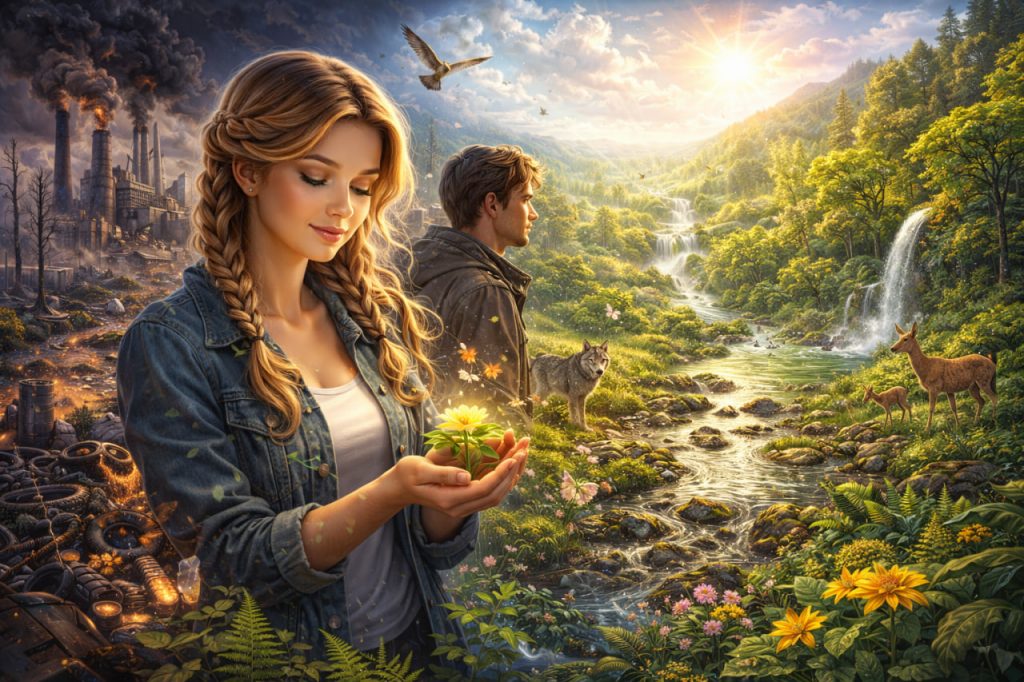
Nature has an extraordinary capacity for recovery, often surprising scientists with its ability to rebound after disturbance. Forests regrow after fires, rivers reshape themselves after floods, and wildlife can return to landscapes once thought permanently damaged. At the same time, modern human pressures—climate change, pollution, habitat fragmentation—raise an urgent question: can ecosystems still heal themselves under today’s conditions? The answer is complex and depends on scale, time, and the type of disturbance involved. Understanding how natural recovery works helps clarify when ecosystems can regenerate on their own and when human intervention becomes necessary. This topic lies at the heart of modern conservation and environmental science.
Natural Regeneration and Ecological Resilience
Ecosystems possess a property known as ecological resilience, which describes their ability to absorb disturbance and reorganize while retaining core functions. Natural regeneration relies on seed banks in soil, surviving organisms, and existing ecological interactions. After disturbances such as storms or wildfires, many ecosystems initiate recovery without external help. Plants recolonize open spaces, animals return as habitats stabilize, and nutrient cycles gradually re-establish themselves. Ecologist Dr. Fiona Martinez explains:
“Nature is not fragile in the short term;
it is remarkably resilient when key processes remain intact.”
This resilience allows ecosystems to recover from natural disturbances that have shaped life for millions of years.
When Nature Heals on Its Own
In many cases, ecosystems recover effectively when disturbances are temporary and key species remain present. For example, abandoned agricultural land can gradually transform back into forest through natural succession. Wetlands may regenerate once water flow is restored, and coral reefs can recover after storms if water quality remains high. These processes often take decades, but they require minimal human involvement. The critical factor is whether ecological connections—such as pollination, seed dispersal, and food webs—are still functional.
Limits of Self-Recovery
Nature’s ability to heal is not unlimited. When disturbances are too severe or persistent, ecosystems may cross ecological tipping points. Deforestation, soil degradation, invasive species, and climate-driven changes can disrupt recovery mechanisms. In such cases, ecosystems may shift into alternative states that are less diverse and less productive. Environmental scientist Dr. Thomas Nguyen notes:
“Once an ecosystem loses its foundational species,
natural recovery can stall or fail entirely.”
These limits highlight why prevention of damage is often more effective than restoration.
The Role of Keystone Species
Keystone species play a critical role in enabling natural recovery. Predators, pollinators, and ecosystem engineers help regulate populations and maintain habitat structure. When these species are lost, recovery slows dramatically. Reintroducing keystone species has, in some cases, allowed ecosystems to resume self-healing processes. Their presence restores balance, allowing natural interactions to rebuild ecosystems from within.
Human-Assisted Restoration
In heavily altered environments, active restoration may be required to restart natural processes. This can include replanting native vegetation, restoring water flow, or removing invasive species. Importantly, successful restoration often focuses on enabling nature to take over rather than controlling every outcome. Scientists increasingly emphasize working with natural dynamics instead of imposing rigid designs. Human-assisted restoration is most effective when it supports, rather than replaces, natural recovery mechanisms.
Time, Scale, and Patience
Ecosystem healing operates on timescales far longer than human planning cycles. Forests may take centuries to fully recover, and soils can require thousands of years to regenerate. This mismatch between ecological time and human expectations often leads to the false impression that nature cannot recover. In reality, recovery may simply be slow. Recognizing this timescale is essential for realistic conservation goals and long-term environmental stewardship.
Can Nature Heal Itself in the Modern World?
Nature can still heal itself—but only under the right conditions. Protecting remaining ecosystems, reducing ongoing stressors, and preserving biodiversity are essential for self-recovery to occur. In a rapidly changing world, the question is not whether nature can heal, but whether humans will allow it the space and time to do so. Ecosystem restoration ultimately depends on recognizing that human well-being is inseparable from the health of the natural systems we rely on.
Interesting Facts
- Some forests can begin natural regeneration within a few years after disturbance.
- Abandoned farmland has returned to forest in many regions without planting.
- Healthy ecosystems recover faster when biodiversity remains high.
- Keystone species can accelerate recovery across entire landscapes.
- Ecosystem restoration often costs far less than replacing lost ecosystem services.
Glossary
- Ecological Resilience — the ability of an ecosystem to recover from disturbance.
- Natural Succession — the gradual process by which ecosystems change and regenerate.
- Keystone Species — species that have a disproportionately large impact on ecosystem stability.
- Tipping Point — a threshold beyond which ecosystem recovery becomes difficult or impossible.
- Ecosystem Services — natural processes that support life and human societies.