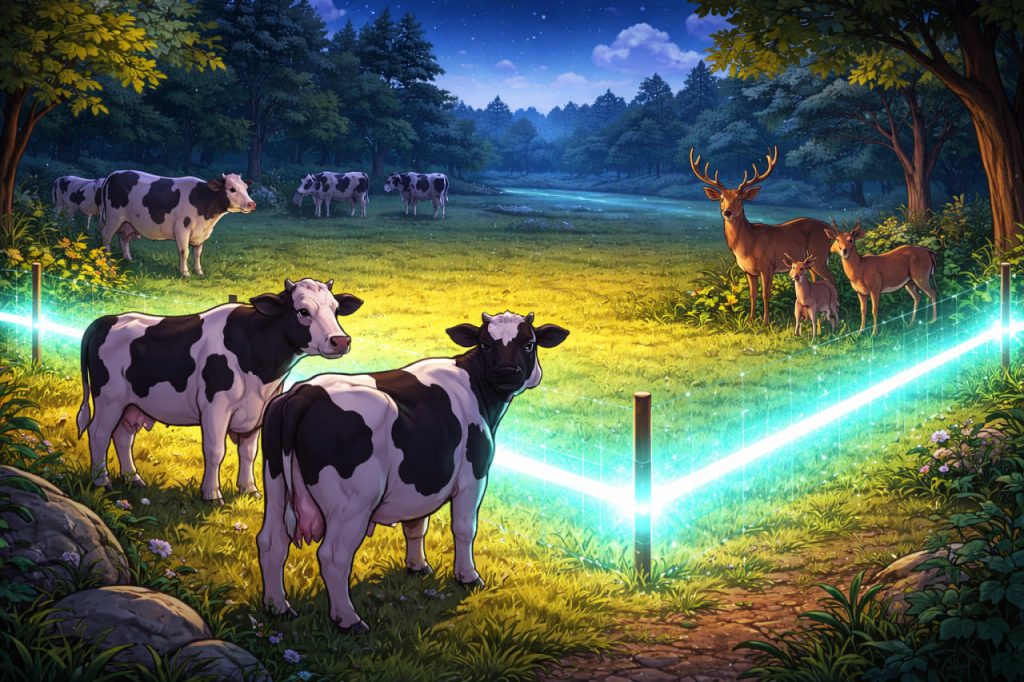
Light fences for animals are an unconventional but increasingly discussed method of guiding, restricting, or redirecting animal movement without using physical barriers. Unlike traditional fences made of wire or wood, light-based systems rely on visual cues, learned behavior, and animal perception. These systems are used experimentally in agriculture, wildlife management, and conservation to reduce conflicts between animals and human infrastructure. While not suitable for all species or environments, light fences reveal how behavior can be shaped through non-contact technologies. Their effectiveness depends less on force and more on understanding how animals interpret their surroundings.
What Are Light Fences
A light fence is a boundary created using lines, patterns, or fields of light projected onto the ground or environment. These can include laser lines, LED strips, or periodically moving light patterns. The fence does not physically block an animal, but instead creates a visual signal that the animal perceives as a boundary or threat. In many cases, animals learn to avoid crossing the illuminated area after repeated exposure. The concept relies on perception and conditioning rather than restraint.
How Animals Respond to Light Barriers
Different animals react to light in different ways depending on vision, behavior, and ecological niche. Some species are sensitive to contrast, movement, or unfamiliar visual patterns. For these animals, a sudden line of light may trigger hesitation or avoidance. Predatory species often respond to moving or flashing lights, while prey species may avoid brightly lit areas that feel exposed. According to wildlife behavior specialist Dr. Emily Ross:
“Light fences work not by stopping animals,
but by convincing them there is something to avoid.”
This psychological element is central to their function.
Applications in Agriculture and Conservation
Light fences have been tested in agriculture to deter livestock from entering restricted zones and to prevent wildlife from damaging crops. In conservation, they are explored as a way to guide animals away from roads, railways, or dangerous human structures. Because they do not physically trap or injure animals, light fences are considered low-impact interventions. They can also be deployed temporarily, making them useful during seasonal migrations or construction projects.
Advantages Over Physical Fences
One major advantage of light fences is flexibility. They can be activated or deactivated instantly and adjusted in shape or intensity. They do not fragment habitats permanently and allow humans to modify animal movement without altering the landscape. Maintenance requirements are often lower than physical fences, especially in rough terrain. Additionally, the absence of physical barriers reduces the risk of injury or entanglement.
Limitations and Ethical Considerations
Despite their promise, light fences are not universally effective. Some animals may become habituated and eventually ignore the light. Bright or flashing lights can also cause stress or disrupt natural behaviors, particularly in nocturnal species. Energy consumption, light pollution, and long-term ecological effects must be carefully considered. For these reasons, light fences are best used as complementary tools, not replacements for comprehensive wildlife management strategies.
Interesting Facts
- Some animals avoid light because it increases perceived predation risk.
- Light-based deterrents are already used to reduce bird collisions.
- Habituation can reduce effectiveness over time.
- Light fences can be deployed temporarily during migration periods.
- Visual barriers work best when combined with sound or scent cues.
Glossary
- Light Fence — a non-physical boundary created using light to influence movement.
- Habituation — reduced response to a repeated stimulus over time.
- Visual Cue — a signal interpreted through sight that influences behavior.
- Wildlife Management — practices used to balance animal populations and human activity.
- Light Pollution — excessive artificial light that affects ecosystems.