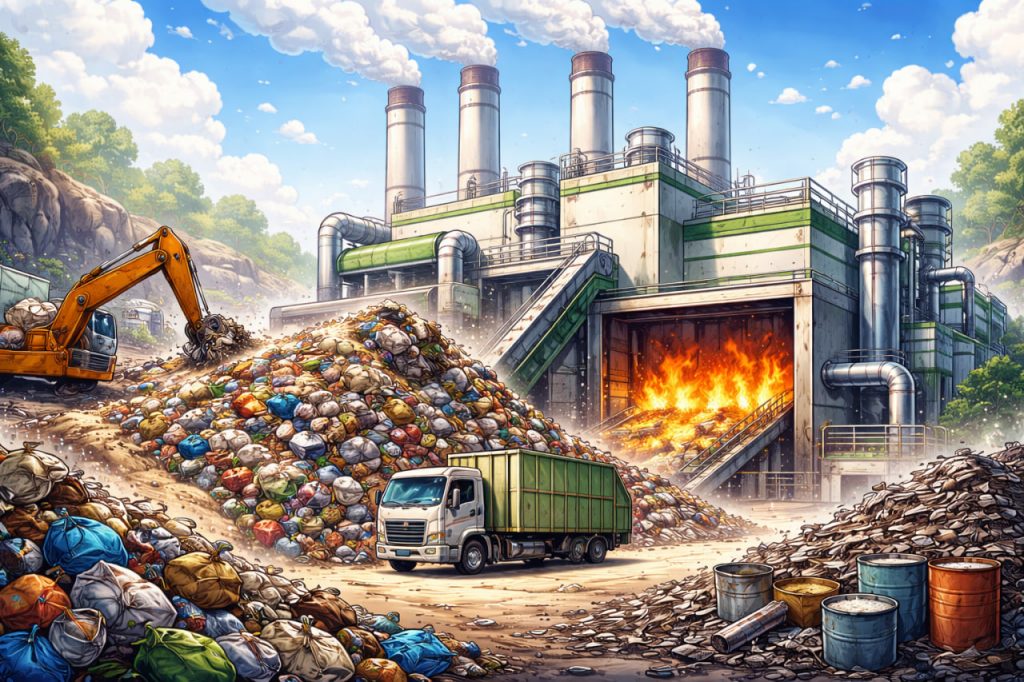
Waste incineration plants are facilities designed to burn solid waste in order to reduce its volume and, in many cases, generate energy. As urban populations grow and landfills become increasingly scarce, incineration is often presented as a technological solution to the global waste problem. However, these plants remain a subject of intense debate due to environmental, economic, and social concerns. Understanding how waste incineration works—and what its real advantages and limitations are—requires looking beyond simple claims of efficiency or danger. Like many large-scale technologies, waste incineration involves trade-offs rather than absolute solutions.
How Waste Incineration Plants Operate
At their core, waste incineration plants burn municipal or industrial waste at very high temperatures, typically above 850°C. This process significantly reduces the volume of waste, often by up to 90%, leaving behind ash and residues. The heat produced during combustion can be used to generate steam, which drives turbines to produce electricity or provide district heating. Modern plants are equipped with complex systems to control combustion conditions and manage byproducts. While the basic principle is simple, the technology involved is highly engineered and tightly regulated in many countries.
Energy Recovery and Efficiency
One of the main arguments in favor of incineration is energy recovery. Waste-to-energy plants convert non-recyclable waste into usable power, reducing dependence on fossil fuels. In regions with advanced infrastructure, incineration can contribute meaningfully to local energy supply. However, the overall efficiency varies widely depending on plant design, waste composition, and heat utilization. Critics point out that burning waste still destroys potentially reusable materials and may compete with recycling efforts if not carefully managed.
Environmental and Health Concerns
Environmental impact is the most controversial aspect of waste incineration. Burning waste produces emissions, including carbon dioxide and trace pollutants, that must be carefully filtered. Modern facilities use multi-stage filtration systems to capture particulate matter and neutralize harmful compounds. Despite these measures, public concern remains high, especially regarding long-term health effects near incineration sites. According to environmental engineer Dr. Laura Nguyen:
“Modern incinerators are far cleaner than older generations,
but public trust depends on transparency and continuous monitoring.”
Historical examples of poorly regulated plants continue to influence public perception.
Ash, Residues, and What Remains
While incineration reduces waste volume, it does not eliminate waste entirely. The process produces bottom ash and fly ash, which must be handled carefully. Some residues can be reused in construction, while others require secure disposal due to toxic content. Managing these byproducts safely is a critical part of the incineration system and contributes significantly to operating costs. Improper handling undermines many of the environmental benefits claimed by incineration advocates.
Role in Modern Waste Management
Most experts agree that waste incineration is neither a universal solution nor an inherent danger. Instead, it functions best as part of a hierarchical waste management strategy, where waste reduction and recycling come first. Incineration is typically reserved for materials that cannot be economically or safely recycled. Its role depends heavily on regulation, technology, and public oversight. When integrated responsibly, incineration can reduce landfill use, but it cannot replace sustainable consumption and recycling practices.
Interesting Facts
- Incineration can reduce waste volume by up to 90%.
- Some cities use waste incineration for district heating.
- Modern plants rely on multiple layers of emission control.
- Ash management is one of the most complex challenges of incineration.
- Public opposition often stems from older, poorly regulated facilities.
Glossary
- Waste Incineration — the process of burning waste to reduce volume and recover energy.
- Waste-to-Energy — conversion of waste heat into electricity or heat.
- Fly Ash — fine particles captured from flue gases during combustion.
- Emission Control — systems designed to reduce pollutants released into the air.
- Waste Hierarchy — prioritization of waste reduction, reuse, recycling, and disposal.