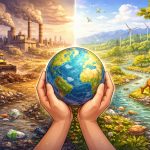
Human pollution of the natural environment is not the result of a single action, but the cumulative outcome of everyday activities scaled to billions of people. Modern society releases substances and energy into nature faster than many ecosystems can absorb or neutralize them. Pollution affects air, water, soil, and living organisms, often in interconnected ways. While some forms of pollution are visible and immediate, others act slowly and invisibly, accumulating over time. Understanding how humans pollute nature requires examining both direct actions and indirect systemic effects.
Air Pollution from Energy and Transport
One of the most widespread forms of pollution is air contamination caused by burning fossil fuels. Power plants, vehicles, and industrial processes release gases and particles that alter atmospheric composition. These emissions can travel long distances, affecting regions far from their source. Air pollution does not only affect climate; it also changes precipitation patterns and damages plant tissues. Because air circulates globally, local emissions often become part of a planetary-scale problem.
Water Pollution and Aquatic Systems
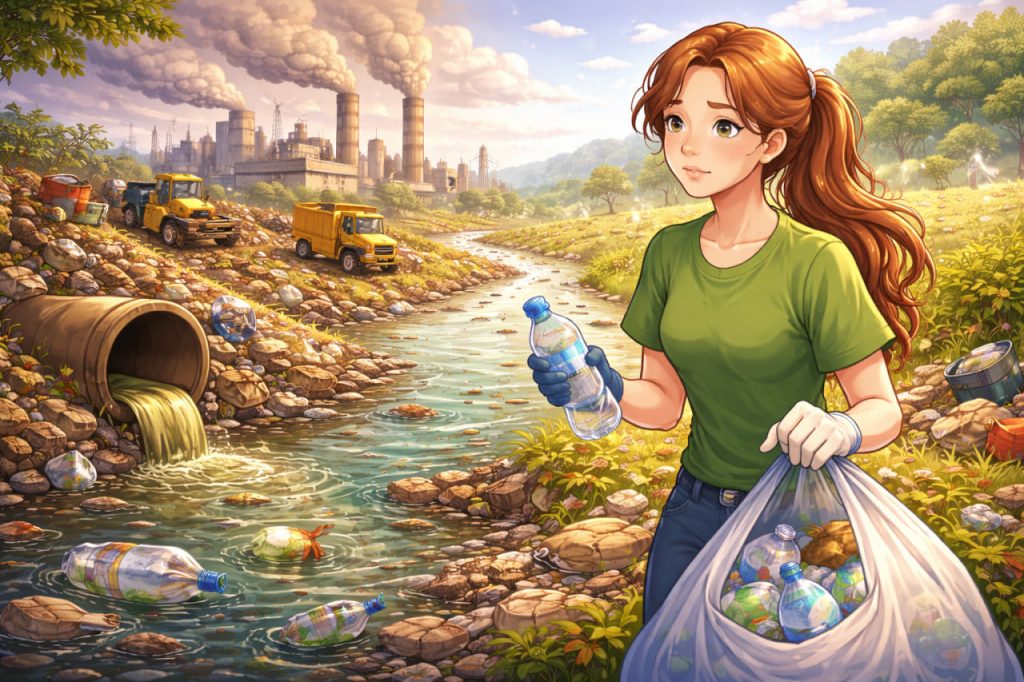
Rivers, lakes, and oceans receive pollutants from industrial discharge, agriculture, and urban runoff. Chemicals, nutrients, and waste enter water systems directly or through soil infiltration. Excess nutrients can disrupt aquatic ecosystems, leading to oxygen depletion and loss of biodiversity. Plastics and microplastics persist for decades, fragmenting into smaller particles rather than disappearing. Water pollution spreads through currents, connecting distant ecosystems into a shared environmental burden.
Soil Contamination and Land Degradation
Soil pollution often receives less attention, yet it plays a critical role in environmental health. Industrial waste, agricultural chemicals, and improper disposal of materials introduce toxins into the ground. These substances can remain active for long periods, affecting microorganisms, plants, and food chains. Degraded soil loses its ability to support vegetation and regulate water flow. Once damaged, soil systems recover slowly, sometimes over centuries.
Waste Generation and Material Accumulation
Modern consumption produces vast quantities of solid waste, much of which does not biodegrade. Landfills concentrate materials that can release pollutants into surrounding environments. Improper waste management allows debris to enter natural landscapes and waterways. Even when waste is contained, long-term storage alters land use and ecological balance. The scale of waste production often exceeds the capacity of natural systems to adapt.
Noise, Light, and Invisible Pollution
Not all pollution is chemical. Noise and artificial light alter natural rhythms for both humans and wildlife. Constant noise interferes with animal communication and stress regulation. Artificial lighting disrupts migration, reproduction, and circadian cycles. These forms of pollution leave no residue, but their biological effects are significant and persistent.
Cumulative and Long-Term Effects
Pollution rarely acts in isolation. Multiple stressors often overlap, amplifying their impact. Ecosystems may appear stable until thresholds are crossed, leading to sudden change. According to environmental scientist Dr. Paul Crutzen:
“Human influence on Earth is defined
not by single actions, but by accumulation.”
Recognizing cumulative effects is essential for understanding environmental change.
Interesting Facts
- Many pollutants travel far beyond their original source.
- Soil contamination can persist longer than air or water pollution.
- Microplastics are found in nearly all major ecosystems.
- Noise pollution affects both wildlife behavior and physiology.
- Environmental damage often becomes visible only after long delays.
Glossary
- Pollution — introduction of harmful substances or energy into the environment.
- Microplastics — tiny plastic particles formed from larger debris.
- Runoff — water that carries pollutants from land into water systems.
- Ecosystem — a network of organisms interacting with their environment.
- Cumulative Impact — combined effect of repeated or multiple stressors over time.