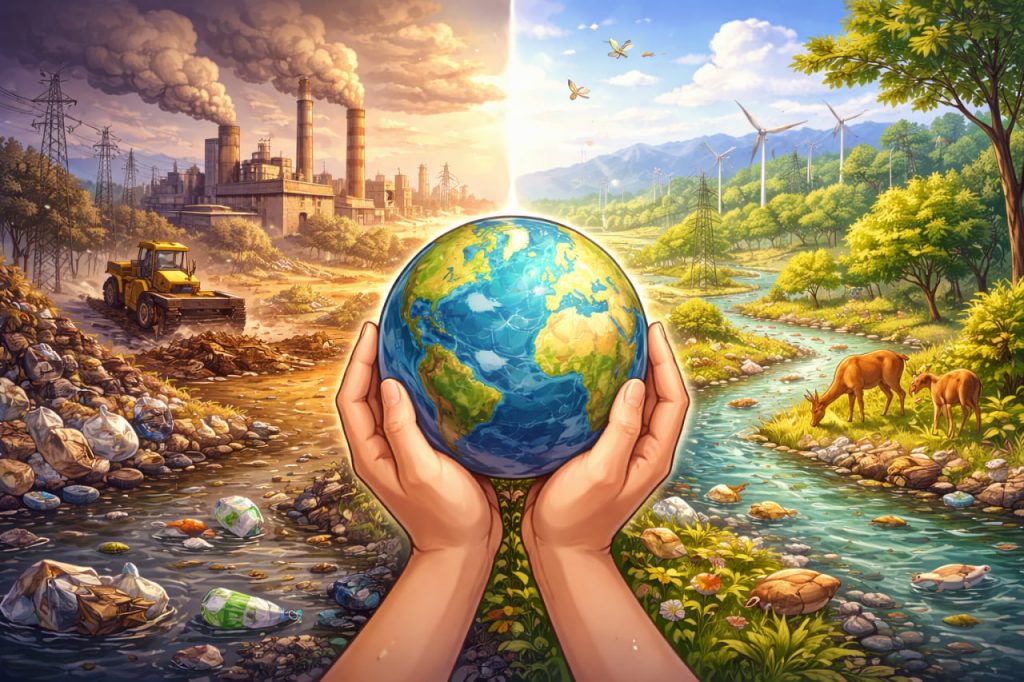
Human influence on nature is one of the defining forces shaping Earth in the modern era. Unlike natural processes that unfold over geological timescales, human activity can alter ecosystems within decades or even years. This impact is not limited to visible pollution or land use—it extends to climate systems, biodiversity, and biochemical cycles. Nature responds to these pressures in complex ways, often with delayed consequences. Understanding human impact requires viewing humanity as a geological and ecological force rather than an external observer.
Transformation of Landscapes
One of the most direct ways humans affect nature is through land transformation. Forests are cleared for agriculture and urban development, wetlands are drained, and rivers are redirected. These changes alter habitats, disrupt migration routes, and modify local climates. While land transformation supports food production and infrastructure, it also reduces ecosystem resilience. Once altered, landscapes rarely return to their original state without long-term recovery processes.
Biodiversity and Species Loss
Human activity has accelerated the rate of species extinction far beyond natural background levels. Habitat loss, pollution, overexploitation, and the introduction of invasive species all contribute to declining biodiversity. The loss of species weakens ecosystems, reducing their ability to adapt to change. Biodiversity is not only about the number of species, but about the stability of ecological relationships that support life systems as a whole.
Climate and Atmospheric Change
Industrial activity, energy use, and land-use change have altered the composition of the atmosphere. These changes influence global climate patterns, ocean circulation, and weather extremes. Climate change acts as a multiplier, intensifying existing environmental pressures rather than acting in isolation. Its effects are unevenly distributed, affecting ecosystems differently depending on location and sensitivity. The climate system responds slowly, which means current actions shape conditions decades into the future.
Pollution and Chemical Stress
Modern society introduces a wide range of chemical substances into air, water, and soil. Some pollutants break down quickly, while others persist and accumulate in ecosystems. Even low concentrations can disrupt biological processes when exposure is continuous. Pollution often travels far from its source, making environmental impact a global rather than local issue. These chemical stresses interact with other pressures, compounding their effects.
Nature’s Capacity to Adapt
Nature is not passive. Ecosystems can adapt, reorganize, and recover under certain conditions. However, adaptation has limits. When change occurs too rapidly or across too many dimensions at once, ecosystems may shift into new states that no longer support previous forms of life. According to environmental scientist Dr. Jane Lubchenco:
“Nature is resilient,
but resilience is not infinite.”
Recognizing these limits is essential for understanding long-term consequences.
Why Human Impact Matters
Human impact on nature ultimately feeds back into human well-being. Ecosystems regulate climate, support food systems, and maintain water cycles. When these systems are destabilized, the effects extend beyond environmental concerns into economic and social domains. Viewing human activity as part of nature—rather than separate from it—offers a clearer framework for understanding responsibility and consequence.
Interesting Facts
- Human land use affects more than half of Earth’s ice-free land.
- Species extinction rates are far above natural background levels.
- Pollution can travel across continents and oceans.
- Climate change amplifies existing environmental stresses.
- Ecosystem recovery often takes far longer than disruption.
Glossary
- Human Impact — changes to natural systems caused by human activity.
- Ecosystem — a network of organisms interacting with their environment.
- Biodiversity — the variety of life within an ecosystem or region.
- Pollution — introduction of harmful substances into the environment.
- Resilience — the ability of a system to absorb disturbance and recover.