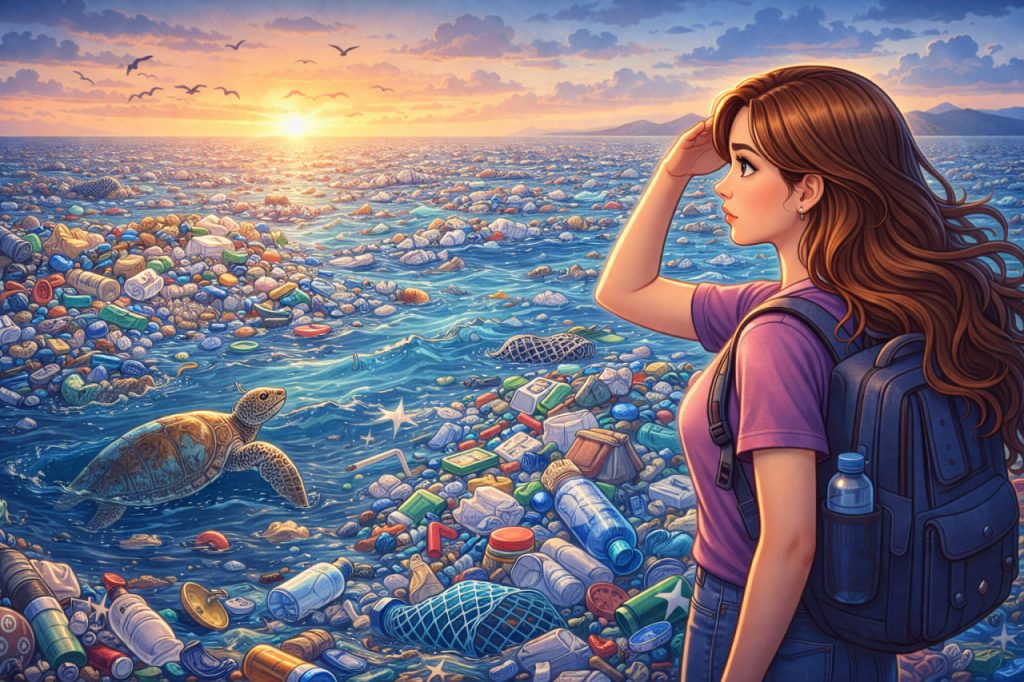
In the world’s oceans, a vast accumulation of floating waste has formed what is often called a “garbage continent.” This term does not describe a solid landmass, but rather enormous zones where plastic and other debris concentrate due to ocean currents. Over recent decades, these garbage patches have grown rapidly, reflecting rising global consumption and inadequate waste management. Although largely invisible from space, their environmental impact is profound. Marine ecosystems, food chains, and even human health are affected by this expanding pollution. Understanding how these garbage continents form and why they are growing is essential for addressing one of the most serious environmental challenges of our time.
How Garbage Continents Form
Garbage continents develop as a result of large-scale ocean circulation systems, known as gyres. These rotating currents act like slow-moving traps, drawing floating debris toward their centers. Plastics are particularly persistent because they are lightweight, durable, and resistant to natural decomposition. Over time, bottles, packaging, fishing gear, and microplastics accumulate in these regions. Sunlight and waves break larger items into smaller fragments, but do not eliminate them. As a result, the garbage patch becomes denser and more difficult to remove.
Why the Garbage Continents Are Growing
The growth of oceanic waste zones is closely linked to increased plastic production and improper disposal. Many plastics enter the ocean through rivers, coastal runoff, and poorly managed landfills. Once in the marine environment, they can circulate for decades. Global consumption of single-use plastics continues to rise faster than recycling capacity in many regions. Without systemic changes in production, waste handling, and consumption habits, these garbage zones continue to expand. Their growth reflects a mismatch between human activity and natural systems’ ability to absorb waste.
Impact on Marine Life
Marine organisms are among the most affected by oceanic garbage. Animals may become entangled in plastic debris, restricting movement or causing injury and death. Smaller fragments are often mistaken for food, leading to ingestion that blocks digestion or introduces toxins into the body. Microplastics can accumulate in tissues and move up the food chain. This disrupts ecosystems and alters species behavior and survival. According to marine ecologist Dr. Laura Jensen:
“Plastic pollution does not stay at the surface;
it infiltrates entire marine food webs.”
This widespread exposure makes plastic waste a long-term ecological threat.
Chemical and Biological Risks
Plastics in the ocean are not chemically inert. Over time, they absorb pollutants such as pesticides and heavy metals from surrounding water. When marine organisms ingest plastic, these substances can enter biological systems. Additionally, floating debris can serve as rafts for invasive species, transporting organisms far beyond their natural habitats. This can disrupt local ecosystems and reduce biodiversity. The combination of chemical contamination and biological disturbance amplifies the damage caused by garbage continents.
Consequences for Humans
Although garbage patches are far from most coastlines, their effects reach human populations. Microplastics have been detected in seafood, salt, and drinking water, raising concerns about long-term exposure. Coastal economies dependent on fishing and tourism suffer from polluted waters and declining marine health. Cleanup costs and environmental damage place additional strain on governments and communities. The ocean’s role as a global life-support system means that its pollution ultimately affects everyone.
Efforts to Reduce and Prevent Growth
Addressing garbage continents requires prevention more than cleanup alone. Reducing plastic production, improving waste management, and designing materials that degrade safely are key strategies. International cooperation is essential, as ocean pollution crosses national borders. Cleanup initiatives can remove some debris, but without reducing input, their impact remains limited. Long-term solutions focus on systemic change rather than temporary fixes.
A Global Responsibility
The existence and growth of garbage continents reflect collective human behavior rather than isolated actions. Oceans connect all regions of the planet, and pollution introduced in one area can affect distant ecosystems. Recognizing this interconnectedness is crucial for meaningful action. Protecting marine environments requires coordinated efforts from individuals, industries, and governments alike. The future of the oceans depends on choices made today.
Interesting Facts
- Garbage continents are not solid islands, but dense zones of floating debris.
- Plastics can persist in the ocean for hundreds of years.
- Most ocean plastic originates from land-based sources.
- Microplastics are found throughout the marine food chain.
- Ocean currents can trap debris in the same area for decades.
Glossary
- Garbage Continent — a large area of ocean where floating waste accumulates.
- Gyre — a large system of rotating ocean currents.
- Microplastics — plastic fragments smaller than 5 millimeters.
- Marine Ecosystem — a community of living organisms in ocean environments.
- Invasive Species — organisms introduced to areas outside their natural range.