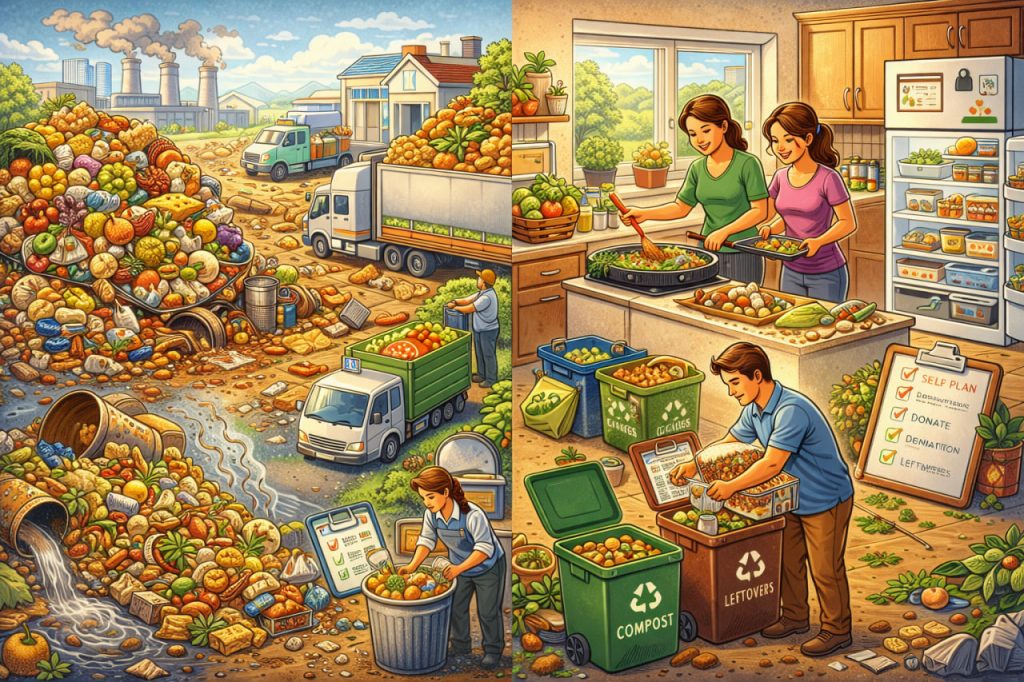
Food waste is one of the most overlooked environmental and social problems of the modern world. Every year, enormous amounts of edible food are discarded while millions of people face food insecurity. The issue is not limited to households; losses occur at every stage, from production and transportation to retail and consumption. Food waste contributes to unnecessary resource use, greenhouse gas emissions, and economic loss. Addressing this problem requires action both at the individual level and across entire national systems. Understanding where food waste occurs is the first step toward reducing it.
Why Food Waste Is a Serious Problem
Producing food requires land, water, energy, and labor. When food is wasted, all these resources are wasted as well. Decomposing food in landfills releases methane, a powerful greenhouse gas. At the same time, food waste represents lost economic value for farmers, businesses, and households. The problem is especially striking because much of the wasted food is still safe and nutritious. Food waste is therefore an environmental, economic, and ethical issue combined.
Food Waste at the National Level
At the national scale, food waste is often caused by inefficiencies in supply chains. Strict cosmetic standards lead to perfectly edible food being rejected. Poor storage and transportation infrastructure cause spoilage before products reach consumers. In retail, overstocking and short shelf-life expectations contribute to losses. National policies, subsidies, and regulations can either reduce or worsen these problems. Systemic solutions are essential to address waste before food reaches homes.
The Role of Policy and Infrastructure
Governments play a key role in reducing food waste through regulation and investment. Policies that encourage food donation, improve storage infrastructure, and support redistribution programs can significantly lower waste. Clear food labeling standards help consumers and retailers better understand expiration dates. Public awareness campaigns also influence behavior at scale. According to food systems researcher Dr. Elena Novak:
“Food waste is not a failure of individuals alone,
but a structural problem that requires coordinated national solutions.”
This highlights the importance of systemic change alongside personal responsibility.
Household Food Waste: Everyday Causes
At home, food waste often results from overbuying, poor meal planning, and misunderstanding expiration labels. Large portion sizes and lack of leftovers management also contribute. Many people discard food based on appearance rather than safety. Household waste may seem small, but collectively it represents a significant share of total food loss. Changing daily habits can make a measurable difference.
Practical Ways to Reduce Food Waste at Home
Reducing household food waste starts with planning. Buying only what is needed, storing food properly, and using leftovers creatively extend food life. Understanding the difference between “best before” and “use by” labels prevents unnecessary disposal. Freezing surplus food preserves it for later use. Composting unavoidable scraps reduces landfill impact. Small, consistent actions accumulate into meaningful results.
Economic and Environmental Benefits
Reducing food waste saves money for households and governments alike. Efficient food systems reduce pressure on natural resources and lower emissions. Food waste reduction also supports food security by making better use of existing production. These benefits show that waste prevention is often more effective than increasing production. Sustainability begins with using what is already available.
A Shared Responsibility
Food waste reduction requires cooperation between governments, businesses, and individuals. National strategies set the framework, but daily choices bring them to life. Awareness, education, and accessible infrastructure support lasting change. Treating food as a valuable resource rather than a disposable product shifts cultural attitudes. Combating food waste is not about perfection, but about responsibility at every level.
Interesting Facts
- Roughly one third of all food produced globally is wasted.
- Food waste contributes significantly to greenhouse gas emissions.
- Households account for a large share of total food waste.
- Clear labeling can significantly reduce unnecessary disposal.
- Preventing food waste is often cheaper than producing more food.
Glossary
- Food Waste — edible food discarded at any stage of the supply chain.
- Supply Chain — the system from food production to consumption.
- Methane — a potent greenhouse gas released from decomposing waste.
- Food Labeling — information indicating freshness and safety of food.
- Composting — biological decomposition of organic waste into soil material.