The pollution of the world’s oceans is one of the most serious environmental challenges of the modern era. Oceans cover most of the planet and play a crucial role in regulating climate, supporting biodiversity, and sustaining human life. Yet increasing amounts of pollutants are entering marine ecosystems every year. From large-scale oil spills to slowly accumulating plastic waste, pollution takes many forms and affects the ocean in different ways. Although some damage is highly visible, much of it happens quietly and over long periods. Understanding the full scope of ocean pollution is essential for recognizing its consequences and the urgency of addressing it.
Oil Pollution and Its Impact
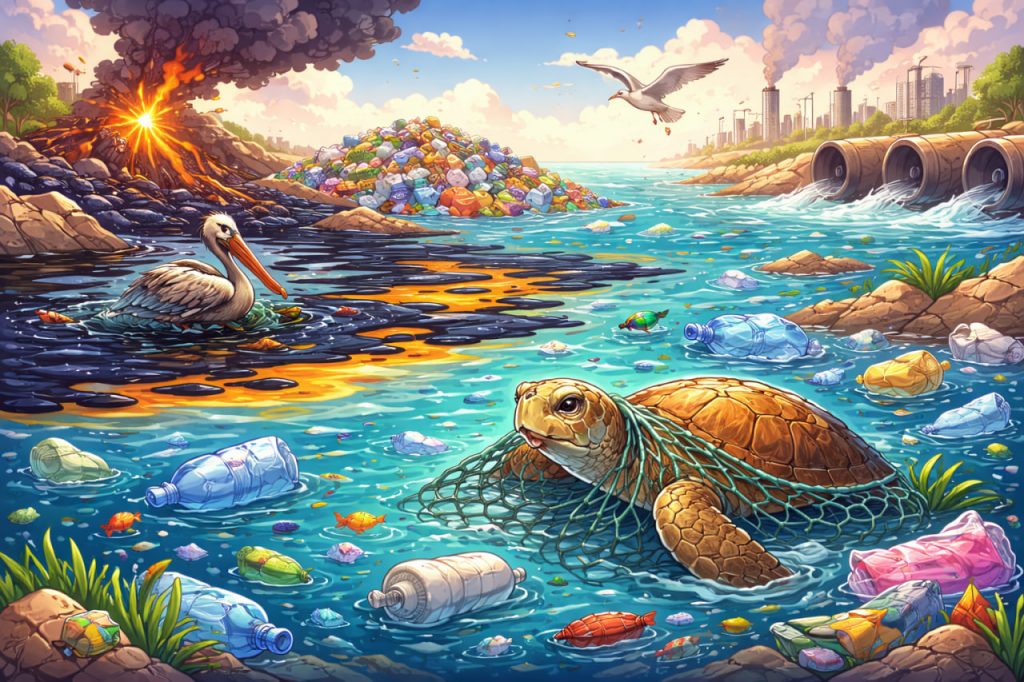
Oil pollution is one of the most dramatic and immediately destructive forms of ocean contamination. Large spills release vast quantities of oil into marine environments, coating coastlines and harming wildlife. Oil interferes with the insulation and buoyancy of birds and mammals, often leading to death from exposure or poisoning. Even smaller, chronic leaks from ships and offshore platforms contribute to long-term degradation. Oil does not simply disappear; it breaks down slowly and can persist in sediments for years. These events leave lasting ecological scars.
Plastic Waste and Marine Debris
Plastic pollution represents a different but equally serious threat. Millions of tons of plastic enter the ocean annually through rivers, coastal runoff, and improper waste disposal. Over time, plastics accumulate in large circulation zones, forming so-called garbage islands. Unlike organic waste, plastic does not biodegrade; it fragments into smaller pieces known as microplastics. These particles spread throughout the water column and are ingested by marine organisms. Plastic pollution is widespread, persistent, and extremely difficult to remove.
Microplastics and Invisible Pollution
Microplastics are among the most concerning forms of ocean pollution because they are largely invisible. They originate from the breakdown of larger plastic items and from synthetic fibers and microbeads. Marine organisms mistake these particles for food, introducing plastic into the food chain. Microplastics can carry toxic substances and accumulate in tissues over time. Their presence has been detected from coastal waters to the deepest ocean trenches. This form of pollution illustrates how human activity affects even the most remote environments.
Chemical and Industrial Contaminants
Beyond oil and plastic, oceans are exposed to a wide range of chemical pollutants. Agricultural runoff introduces fertilizers and pesticides, leading to nutrient overload and dead zones. Industrial waste can contain heavy metals and toxic compounds that persist in marine ecosystems. These substances disrupt biological processes and can accumulate through food webs. Chemical pollution often acts slowly, making its effects harder to detect but no less damaging. Long-term exposure alters ecosystem balance and reduces resilience.
Impact on Marine Life and Ecosystems
Ocean pollution affects marine life at every level, from microscopic plankton to large predators. Entanglement in debris, ingestion of pollutants, and habitat degradation all threaten survival. Coral reefs, coastal wetlands, and open-ocean ecosystems are particularly vulnerable. As ecosystems weaken, their ability to provide services such as fisheries and climate regulation declines. Biodiversity loss reduces the ocean’s capacity to recover from additional stress.
Consequences for Humanity
Human societies are closely connected to ocean health. Polluted oceans affect food safety, livelihoods, and coastal economies. Microplastics and contaminants can reach humans through seafood consumption. Tourism and fisheries suffer as ecosystems degrade. The ocean’s role in absorbing carbon and heat is also compromised by pollution. These impacts demonstrate that ocean pollution is not only an environmental issue but a social and economic one.
The Need for Global Action
Ocean pollution crosses national borders and cannot be solved by individual countries alone. Effective solutions require international cooperation, improved waste management, reduced plastic production, and stricter environmental regulations. Prevention is more effective than cleanup, as many pollutants are difficult or impossible to remove once dispersed. Addressing ocean pollution demands changes in production, consumption, and environmental responsibility. Protecting the oceans is essential for the planet’s future.
Interesting Facts
- Most ocean plastic originates from land-based sources.
- Oil pollution can affect ecosystems for decades after a spill.
- Microplastics are found even in deep-sea environments.
- Polluted oceans threaten global food security.
- Prevention is more effective than large-scale cleanup.
Glossary
- Ocean Pollution — contamination of marine environments by harmful substances.
- Oil Spill — the release of petroleum into the ocean.
- Microplastics — plastic particles smaller than 5 millimeters.
- Garbage Islands — large zones of accumulated marine debris.
- Dead Zone — an area with low oxygen where marine life cannot survive.