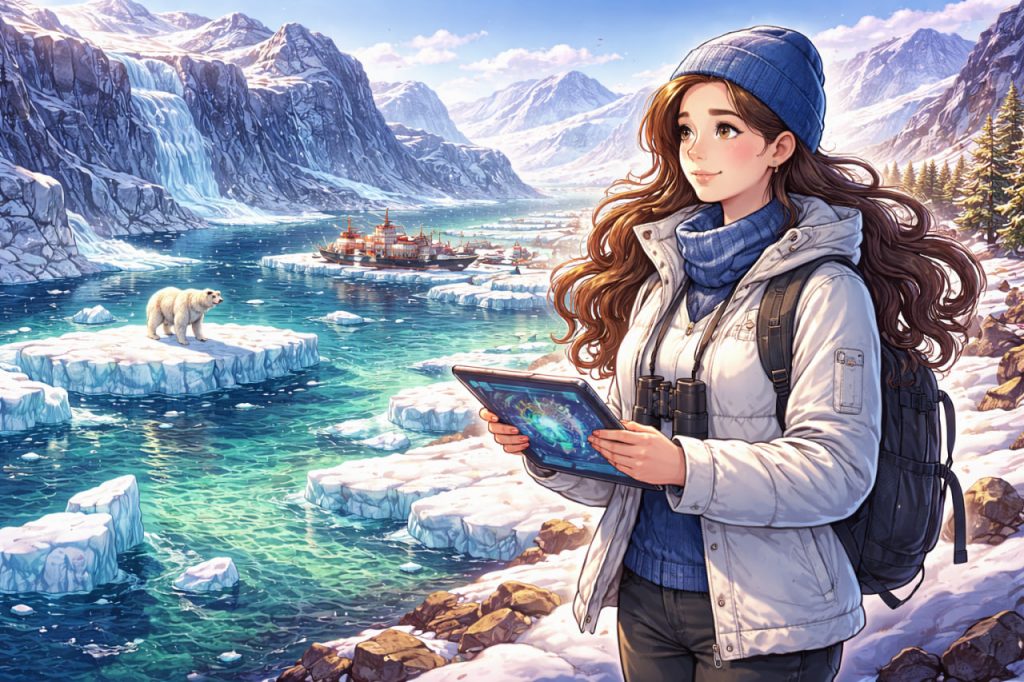
The Arctic is warming significantly faster than the rest of the planet, a phenomenon known as Arctic amplification. While global average temperatures continue to rise steadily, Arctic regions experience increases at two to three times the global rate. This rapid warming affects sea ice, permafrost, ecosystems, and global weather patterns. Scientists have identified multiple interconnected processes that accelerate heating in polar regions. Understanding why the Arctic responds so intensely to climate change is crucial for predicting global climate dynamics. The changes occurring there do not remain isolated—they influence ocean circulation, atmospheric systems, and communities worldwide.
The Albedo Effect and Sea Ice Loss
One of the primary drivers of Arctic amplification is the albedo effect. Ice and snow reflect a large portion of incoming solar radiation back into space. When temperatures rise and ice melts, darker ocean water and land surfaces absorb more heat instead of reflecting it. This additional heat accelerates further melting, creating a powerful feedback loop. Climate physicist Dr. Laura Mendes explains:
“When reflective ice disappears,
the Arctic shifts from cooling the planet to absorbing heat.”
This self-reinforcing cycle significantly increases regional warming.
Atmospheric and Ocean Circulation Changes
The Arctic’s atmosphere and ocean systems also contribute to accelerated warming. Warm air masses from lower latitudes increasingly reach polar regions. Ocean currents transport warmer water into Arctic seas, weakening sea ice from below. Thinner ice forms more easily and melts earlier each summer. These processes reduce seasonal ice coverage and extend the melt season. Changes in atmospheric circulation patterns can further trap heat over the Arctic, amplifying temperature anomalies.
Permafrost Thaw and Greenhouse Gas Release
Large areas of the Arctic contain permafrost, permanently frozen ground that stores vast amounts of organic carbon. As temperatures rise, permafrost begins to thaw, releasing carbon dioxide and methane into the atmosphere. Methane, in particular, is a potent greenhouse gas that intensifies warming. According to environmental systems analyst Dr. Martin Alvarez:
“Permafrost thaw creates a feedback effect,
where warming triggers emissions that cause further warming.”
This feedback adds another layer of complexity to Arctic climate dynamics.
Impact on Ecosystems and Global Weather
Rapid Arctic warming disrupts ecosystems that evolved under cold, stable conditions. Species such as polar bears, seals, and Arctic foxes face habitat loss. Indigenous communities experience changes in traditional hunting routes and seasonal patterns. Beyond the Arctic, temperature shifts may influence the jet stream, potentially affecting weather extremes in North America, Europe, and Asia. While research continues, evidence suggests that Arctic changes have global consequences.
Why Arctic Warming Matters Globally
The Arctic acts as a regulator in Earth’s climate system. Its reflective ice and cold air help balance global temperatures. As warming accelerates, sea-level rise from melting ice sheets and glaciers becomes more pronounced. International monitoring programs use satellites, ocean buoys, and climate models to track ongoing changes. Arctic amplification highlights how regional processes can intensify global climate trends. Addressing greenhouse gas emissions remains central to slowing these transformations.
Interesting Facts
- The Arctic has warmed more than 3°C in some regions since pre-industrial times.
- Summer sea ice coverage has declined dramatically over recent decades.
- Methane released from thawing permafrost is a powerful greenhouse gas.
- Arctic sea ice reflects up to 80% of incoming sunlight.
- Scientists monitor the Arctic using satellites and autonomous ice sensors.
Glossary
- Arctic Amplification — the accelerated warming of the Arctic compared to the global average.
- Albedo Effect — the reflection of sunlight by bright surfaces like ice and snow.
- Permafrost — ground that remains frozen for at least two consecutive years.
- Methane — a greenhouse gas stronger than carbon dioxide in trapping heat.
- Jet Stream — a fast-flowing air current in the upper atmosphere that influences weather patterns.