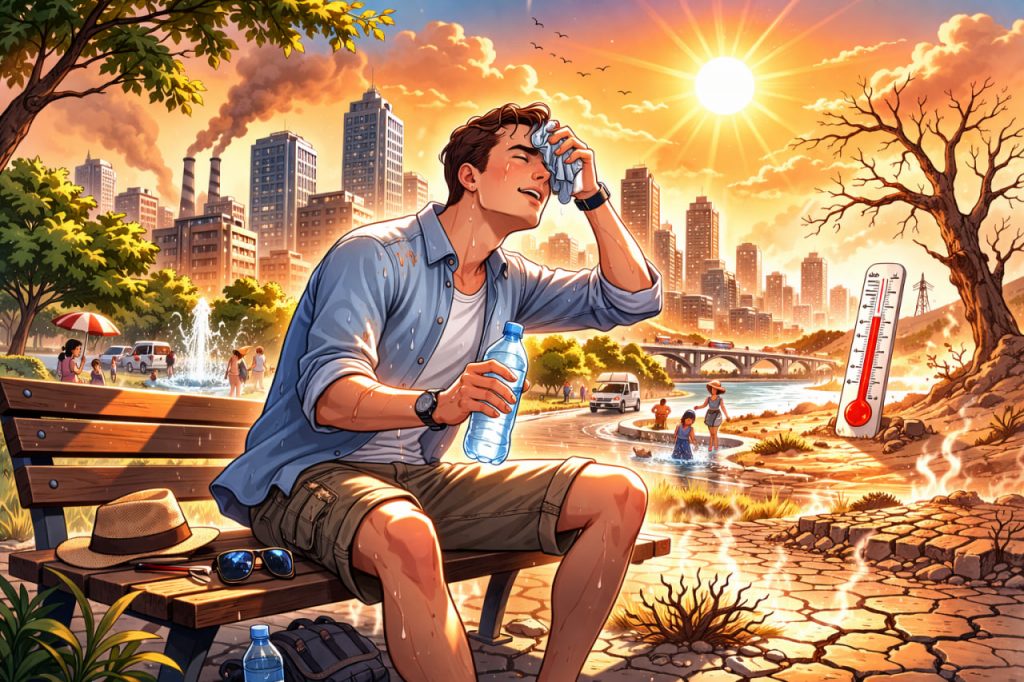
In recent years, extreme heat events have become more frequent, longer-lasting, and more intense across many regions of the world. Heatwaves that were once considered rare are now occurring with alarming regularity. Scientists define a heatwave as a prolonged period of unusually high temperatures relative to local climate norms. While natural variability always influenced weather patterns, climate research shows that rising global temperatures increase both the probability and severity of extreme heat. These events affect human health, agriculture, water systems, and energy infrastructure. The growing pattern of abnormal heat raises an important question: are heatwaves becoming a new climatic baseline?
Why Heatwaves Are Increasing
The primary driver behind the rising frequency of extreme heat is the accumulation of greenhouse gases in the atmosphere. Carbon dioxide and methane trap heat, raising average global temperatures. Even small increases in global averages can significantly amplify extreme events. Climate scientist Dr. Laura Mendes explains:
“A warmer baseline climate shifts the entire temperature distribution.
What was once rare becomes increasingly common.”
This shift means that record-breaking heat events are no longer statistical anomalies but expected outcomes of a warming system.
Urban Heat and Regional Amplification
Urban environments intensify heat through the urban heat island effect, where concrete and asphalt absorb and retain warmth. Cities often experience higher nighttime temperatures, reducing opportunities for cooling. Drought conditions can further amplify heat by reducing soil moisture, which normally helps regulate temperature. Some regions now experience compound extremes, where heatwaves coincide with wildfires or water shortages. These combined effects place additional stress on ecosystems and human populations.
Health and Environmental Impacts
Extreme heat poses direct risks to human health, particularly for vulnerable populations such as the elderly and those with chronic illnesses. Prolonged exposure can lead to dehydration, heat exhaustion, and cardiovascular strain. Agricultural productivity may decline when crops experience sustained high temperatures. Wildlife habitats also shift as species struggle to adapt. According to environmental systems analyst Dr. Martin Alvarez:
“Heatwaves are not isolated events.
They ripple through ecosystems, economies, and public health systems.”
Infrastructure such as power grids can also face overload during extended heat periods.
Are Heatwaves the New Normal?
Climate projections suggest that, without significant emission reductions, extreme heat events will continue to intensify throughout the 21st century. What was once considered a “once-in-50-years” heat event may occur far more frequently. However, adaptation strategies—such as urban greening, improved building design, and early warning systems—can reduce vulnerability. While heat extremes may become more common, policy decisions and mitigation efforts will shape their future severity. The concept of a “new normal” depends largely on collective climate action.
Adapting to a Warmer Future
Communities worldwide are implementing strategies to adapt to rising temperatures. Expanding green spaces, improving water management, and designing climate-resilient infrastructure are key responses. Scientific monitoring continues to refine projections and guide preparedness. Although extreme heat is increasing, it is not an unstoppable force; mitigation and adaptation remain powerful tools. Understanding the causes and consequences of heatwaves is essential for building long-term resilience in a changing climate.
Interesting Facts
- Recent decades include many of the hottest years on record globally.
- Urban areas can be several degrees warmer than surrounding rural regions.
- Nighttime temperatures are rising faster in some cities than daytime highs.
- Heatwaves can increase electricity demand due to air conditioning use.
- Some regions now experience longer heat seasons than in previous decades.
Glossary
- Heatwave — a prolonged period of unusually high temperatures.
- Greenhouse Gases — atmospheric gases that trap heat and warm the planet.
- Urban Heat Island — a phenomenon where cities are warmer than nearby rural areas.
- Climate Projection — a scientifically modeled estimate of future climate conditions.
- Mitigation — efforts to reduce or prevent greenhouse gas emissions.