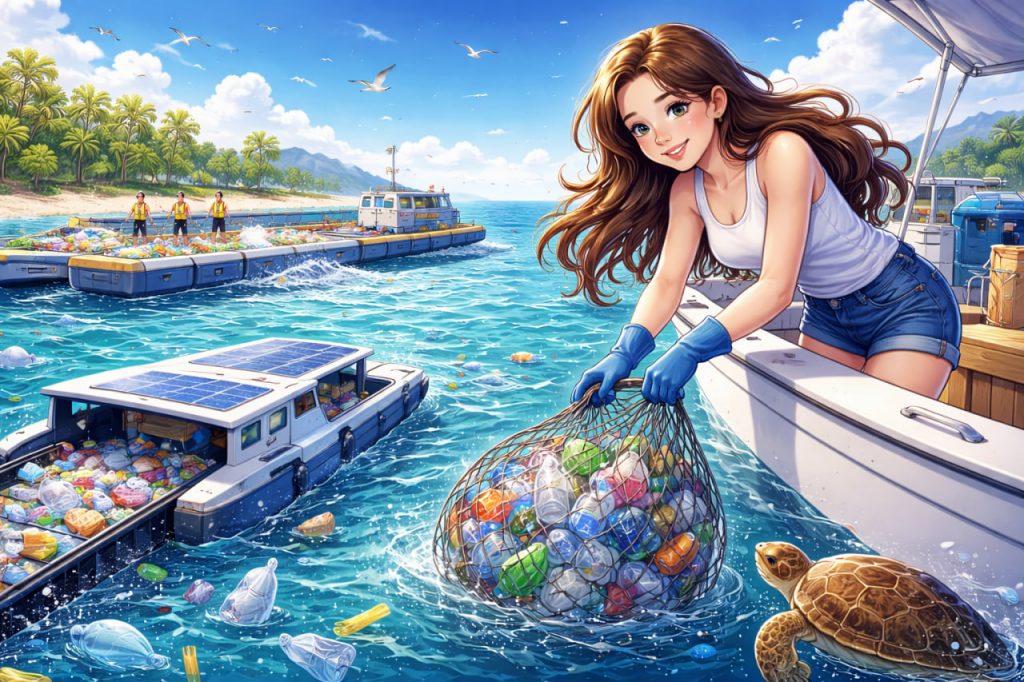
Plastic pollution has become one of the most visible environmental challenges of the 21st century. Every year, millions of tons of plastic waste enter the oceans, carried by rivers, wind, and inadequate waste management systems. Over time, larger debris breaks down into microplastics, which spread throughout marine ecosystems. These particles are consumed by fish, seabirds, and other marine organisms, entering the food chain. Cleaning the ocean is not a simple task, as plastic is dispersed across vast areas and at different depths. However, scientists, engineers, and policymakers are developing strategies that combine removal efforts with prevention.
Stopping Plastic at the Source
The most effective solution begins on land. Studies show that the majority of ocean plastic originates from rivers and coastal regions. Improving waste management infrastructure, reducing single-use plastics, and promoting recycling significantly decrease the flow of debris into the sea. Environmental systems analyst Dr. Laura Mendes explains:
“Ocean cleanup is important,
but prevention is far more efficient than removal.”
Policies that limit plastic production and encourage sustainable alternatives can reduce long-term accumulation.
River and Coastal Interception Systems
Technologies have been developed to capture plastic before it reaches open waters. Floating barriers and collection systems placed in rivers can trap debris while allowing boats and wildlife to pass safely. Coastal cleanup initiatives also remove waste from beaches and shallow waters, preventing it from dispersing further offshore. These localized solutions are practical because plastic is more concentrated near shorelines and river mouths than in the open ocean.
Open-Ocean Cleanup Technologies
In certain regions, plastic accumulates in large circulating systems known as ocean gyres. Engineering projects have designed floating systems that collect surface debris using passive movement driven by currents. These systems aim to remove larger plastic fragments before they degrade into microplastics. While promising, such efforts face logistical challenges due to scale, weather conditions, and maintenance requirements. Marine engineer Dr. Martin Alvarez notes:
“Open-ocean cleanup addresses visible waste,
but the smallest particles remain the hardest to remove.”
Microplastics dispersed throughout water columns require advanced filtration technologies that are still under development.
Biological and Innovative Approaches
Researchers are exploring innovative methods, including biodegradable materials and microorganisms capable of breaking down certain plastics. While these solutions remain experimental, they highlight the importance of scientific research in addressing pollution. Advances in materials science may reduce the persistence of future plastic products, minimizing long-term environmental impact.
Global Cooperation and Long-Term Solutions
Ocean plastic pollution is a global issue that crosses national boundaries. International agreements, coordinated waste reduction policies, and public awareness campaigns play a central role in progress. Cleanup efforts alone cannot solve the problem without systemic reduction in plastic production and consumption. Combining prevention, technology, and policy creates the most realistic pathway toward healthier oceans. Protecting marine ecosystems ultimately depends on sustained global collaboration.
Interesting Facts
- Millions of tons of plastic enter the oceans each year.
- Much ocean plastic originates from a limited number of major rivers.
- Plastic can take hundreds of years to degrade naturally.
- Microplastics have been found in deep-sea sediments and Arctic ice.
- Cleanup systems often rely on natural ocean currents to guide debris collection.
Glossary
- Microplastics — tiny plastic fragments resulting from the breakdown of larger debris.
- Ocean Gyre — a large system of circulating ocean currents.
- Waste Management Infrastructure — systems for collecting, processing, and disposing of waste.
- Biodegradable Materials — materials capable of decomposing naturally through biological processes.
- Marine Ecosystem — a community of living organisms within ocean environments.